Understanding Regenerative Braking Motorcycle Dynamics: How Electromagnetic Deceleration Reshapes EV Efficiency
In conventional internal combustion engine (ICE) motorcycles, kinetic energy accumulated during acceleration is systematically wasted as heat, noise, and airborne friction dust whenever the rider engages mechanical disc brakes. In sharp contrast, a regenerative braking motorcycle treats deceleration as an opportunity for energy harvesting. By leveraging field-oriented control (FOC) algorithms and permanent magnet synchronous motors (PMSM), electric motorcycles transform the drive motor into an high-efficiency electrical generator during coasting and braking phases.
For international procurement managers, fleet directors, and dealership groups evaluating light electric vehicle (LEV) platforms, understanding the technical mechanics, thermal limitations, and operational ROI of regenerative energy recovery is paramount. This comprehensive technical guide breaks down the core physics, software orchestration, battery management integration, and strategic purchasing considerations driving the global EV motorcycle market.
1. The Electromechanical Mechanics of Energy Recovery
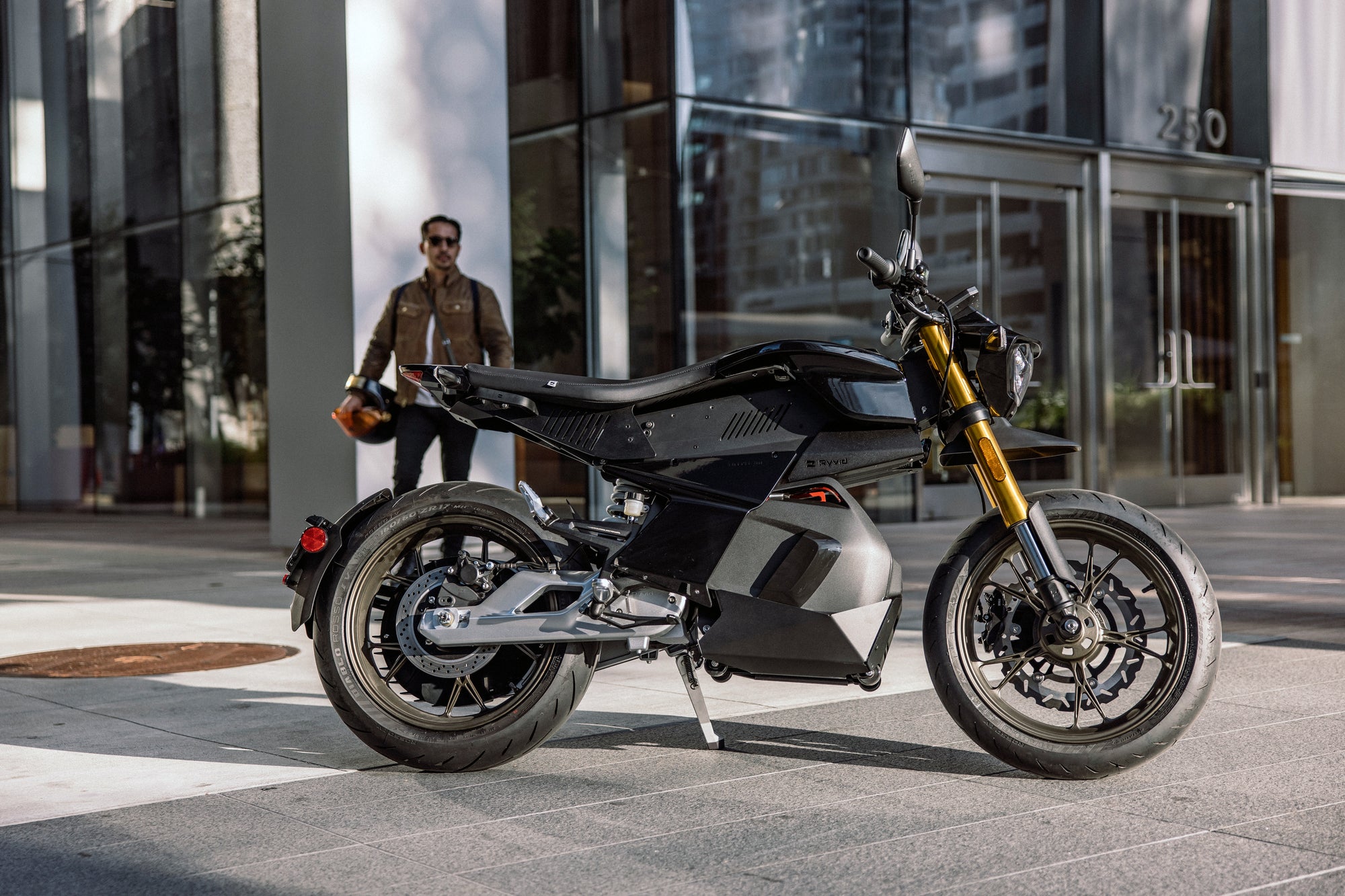
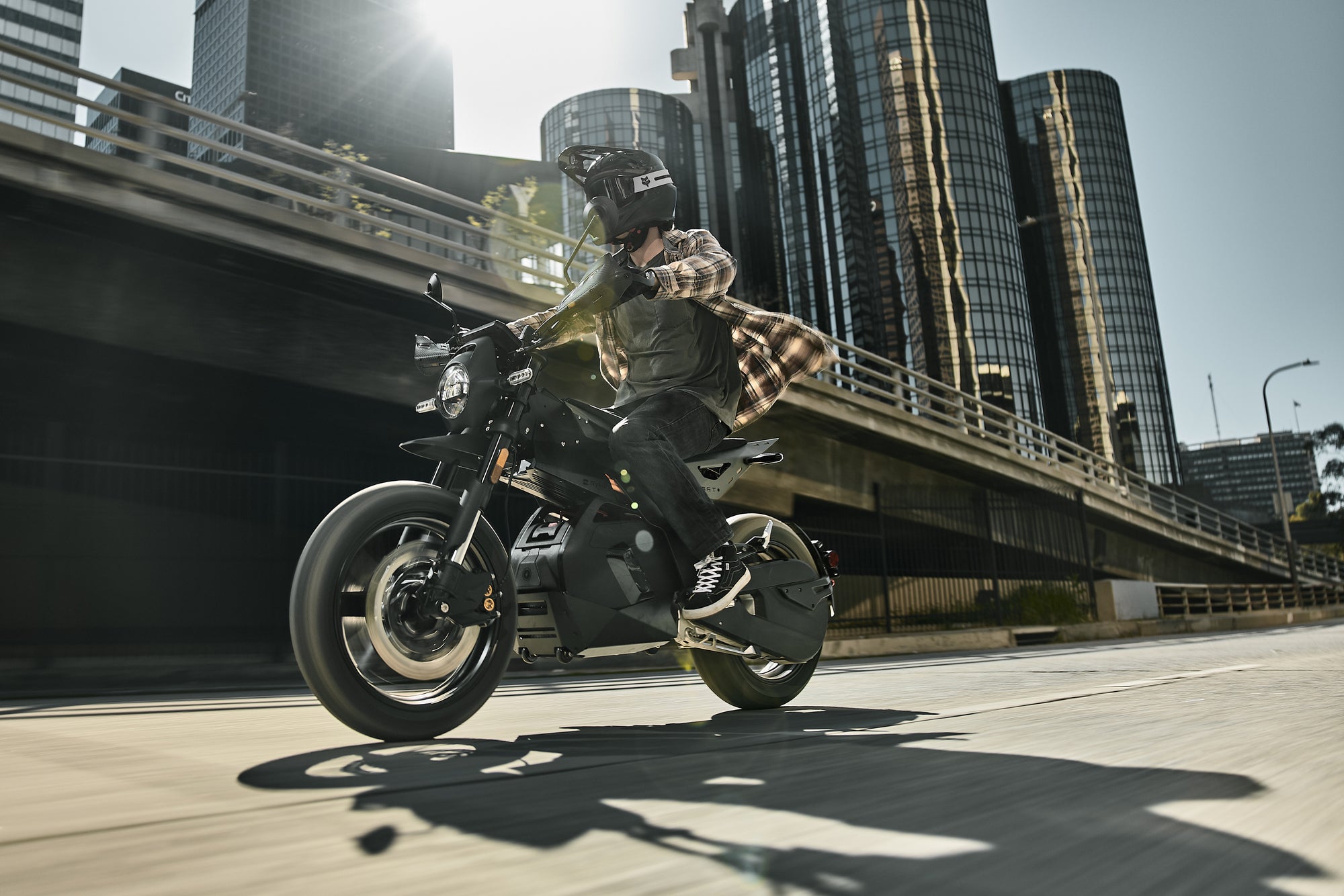
Regenerative braking in modern electric motorcycles operates through negative electromagnetic torque. When a rider releases the throttle or modulates the dedicated rear brake lever on a Ryvid motorcycle, the power inverter alters the phase angle of the stator current relative to the rotor’s permanent magnets. This shift creates a counter-electromotive force (counter-EMF) that retards rotor spin, generating mechanical resistance while pumping high-voltage direct current (DC) back through the motor controller into the battery pack.
- Throttle Roll-Off Regeneration: Simulates traditional internal combustion engine compression braking. As the rider backs off the twist-grip, gentle negative torque engages smoothly, slowing the chassis without abrupt weight transfer.
- Lever-Actuated Variable Regeneration: Utilizes sensor inputs from the rear brake lever or dedicated thumb-regen triggers to scale electromagnetic retarding power proportionally. This allows the rider to bring the motorcycle to a near-complete stop using zero friction braking.
- Kinetic Conversion Efficiency: Modern 72V architecture platforms achieve energy conversion efficiencies between 75% and 88% from kinetic energy to stored electrical energy at the battery terminals during typical urban deceleration cycles (15 mph to 45 mph deceleration curves).
Information Gain Note: Thermal Dynamics & BMS Safety Synchronization
Regenerative energy capture is not simply a matter of feeding unrestricted power back to the battery. Ryvid’s proprietary engineering integrates dynamic thermal monitoring within the 4.3 kWh removable lithium-ion battery enclosure. If cell temperatures exceed thermal thresholds or if the battery State-of-Charge (SOC) is above 95%, the controller automatically tapers regenerative amperage to prevent lithium plating and overvoltage tripping, guaranteeing cell longevity across thousands of charge-discharge cycles.
2. Solving Fleet Operational Friction: Mechanical Wear vs. Electromagnetic Retardation
For municipal police departments, urban last-mile delivery services, and commercial leasing operators, maintenance downtime is the single largest erosion of operational margin. Mechanical brake pad replacement, rotor re-surfacing, hydraulic fluid flush cycles, and caliper piston seals represent recurring labor and parts expenses.
By delegating up to 70% of routine slowing force to the motor’s electromagnetic field, a regenerative braking motorcycle dramatically extends component lifespans:
- Pad Lifespan Extension: Hydraulic brake pads that typically require replacement every 8,000 to 12,000 km in city courier cycles can routinely achieve 30,000 to 45,000 km when paired with active regenerative retardation.
- Rotor Temperature Management: Mechanical rotors remain cooler, eliminating thermal warping, brake fade during steep downhill descents, and fluid boiling under heavy continuous operation.
- Reduced PM (Particulate Matter) Dust: Zero brake dust accumulation on wheels and structural frames, contributing to cleaner fleet presentation and environmental compliance in zero-emission transport zones.
3. Structural Innovation Meets Power Electronics: The Ryvid Advantage
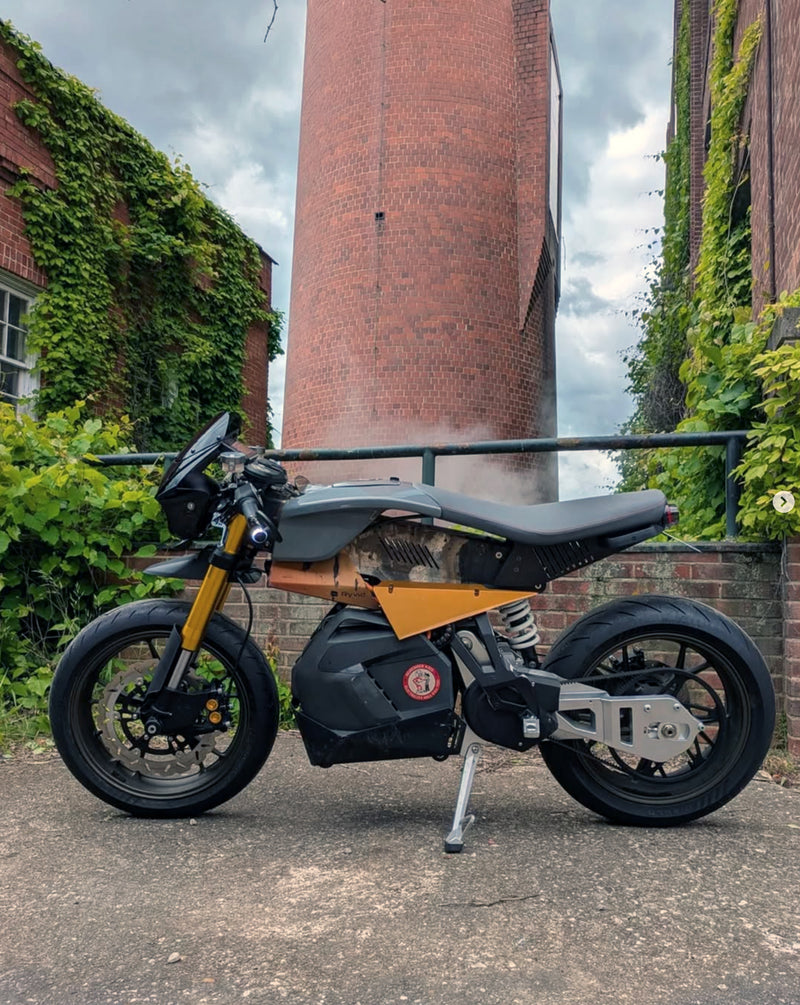
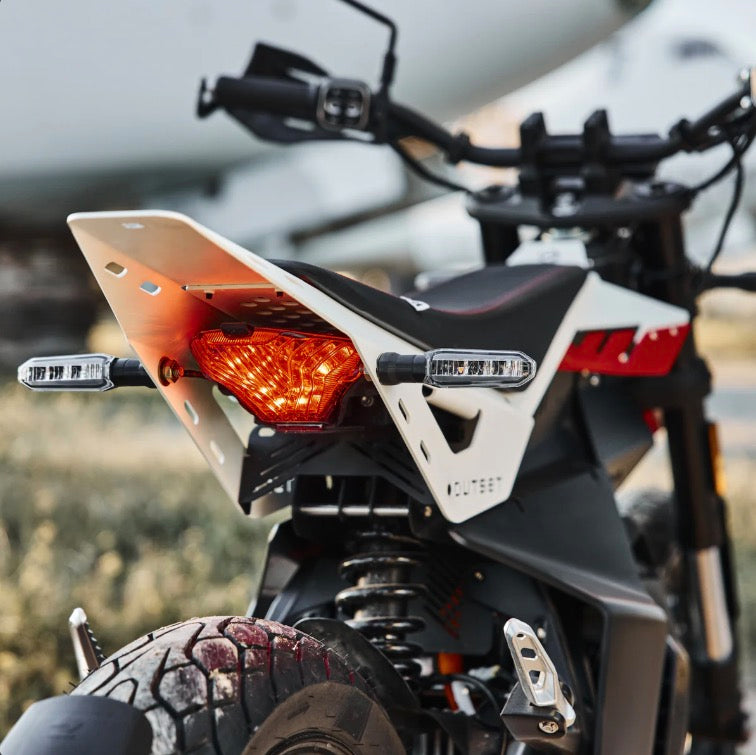
A superior regenerative braking system requires a rigid, lightweight chassis capable of withstanding instant reverse torque loads without structural flex or handling instability. Engineered by former aerospace design specialists in Southern California, Ryvid motorcycles feature an industry-first folded sheet stainless steel frame structure.
Rather than relying on heavy tubular steel spaceframes or expensive cast aluminum shells, Ryvid’s stainless steel chassis optimizes strength-to-weight ratios while serving as a rigid mounting backbone for the swingarm, central drive motor, and controller electronics. This structural rigidity ensures that electromagnetic braking torque is transferred cleanly to the rear tire’s contact patch, providing rock-solid stability during sudden deceleration.