Popular destinations
Popular destinations
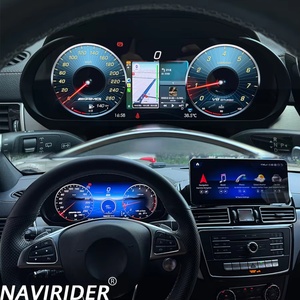
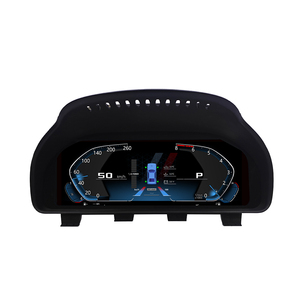
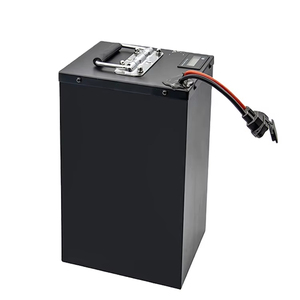
Directly supplying Netherlands assemblers and fleet builders with calibrated lithium storage, programmable brake controllers, high-speed telemetry clusters, and heavy-duty chassis assemblies.
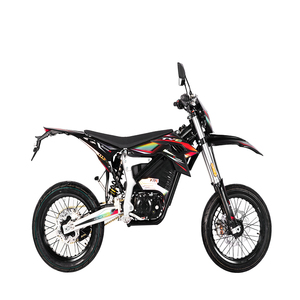
The Netherlands represents the most demanding micro-mobility and light electric vehicle (LEV) market in Europe. With over 35,000 kilometers of dedicated cycle paths (Fietspaden), high-density urban transit nodes in Amsterdam, Rotterdam, and Utrecht, and continuous wet maritime climate conditions, electric motorcycle braking systems require vastly superior calibration compared to standard ICE-equivalent commuter cycles. As a leading manufacturer and specialized supplier of electric motorcycle rear brake calibration systems, our aerospace-inspired engineering framework solves the critical challenge of dynamic rear-wheel lockup, regenerative energy blending, and thermal fade under wet Dutch asphalt conditions.
Dutch brick roads (klinkers) and rain-slicked asphalt dramatically reduce tire adhesion coefficient (μ = 0.35). Our rear brake calibration maps pressure ramp rates to prevent rear step-out during sudden city braking.
Seamlessly merging 72V controller regenerative braking (Curtis/ASI protocol) with rear hydraulic disc pressure. Transition curves are smoothed down to 2 km/h without harsh mechanical judder.
Engineered to satisfy EU Regulation 168/2013 and RDW type approval testing. Our factory calibration rigs guarantee CBS (Combined Braking System) compliance for L1e-B and L3e speed-pedelecs and e-mopeds.
Unlike legacy braking setups that rely purely on mechanical proportioning valves, our OEM rear brake calibration platform leverages real-time CAN-bus telemetry, 6-axis IMU pitch angle detection, and hall-effect pressure sensor feedback to adjust braking force dynamically.
Monitors rear master cylinder line pressure against motor back-EMF, maintaining strict anti-lock boundaries without the weight penalty of full automotive ABS hardware.
Algorithmically compensates for brake fluid expansion and pad glaze during continuous stop-and-go commercial delivery cycles in dense Dutch city centers.
Pre-flashed software curves tailored for 48V, 60V, and 72V architectures, matching rear hub or mid-drive motor torque output to instant brake lever modulation.
Dual-redundant sensor polling prevents unintended regenerative lockup if motor controller throttle signals experience unexpected noise or voltage dropouts.
Customized calibration profiles developed for the unique operational demands across Benelux municipalities.
Cargo electric motorcycles carrying up to 150 kg payload demand heavy rear-bias calibration. Standard stock brakes wear out within weeks on brick-paved canals. Our factory-calibrated system uses regenerative deceleration to execute 60% of retarding force, increasing brake pad lifespan by up to 3x while stabilizing the rear chassis frame under full load.
For L3e category electric motorcycles operating on Dutch provincial roads (N-roads) at speeds up to 90 km/h, emergency stopping distance is critical. Calibration focuses on anti-rear-lift compensation, modulating rear hydraulic caliper bite in synchronization with front brake application to keep the rear tire firmly planted.
Comparative calibration parameters utilized in our factory testing dynos for Benelux market delivery:
*Our custom factory ECU maps automatically dynamically adjust brake force ramp rates based on sensor slip-ratio detection.
The Dutch government has established zero-emission zones (Zero-emissiezones) in over 30 cities starting in 2025. This regulatory shift forces light commercial vehicles, urban delivery scooters, and commuter motorcycles to fully transition to electric powertrains. Concurrently, safety inspection bodies like RDW are enforcing stringent braking force distribution standards.
Under EU 168/2013 Annex VIII, L3e-A1 motorcycles require ABS, while L1e-B vehicles demand CBS. Our factory rear brake calibration hardware fulfills all mechanical and electronic pressure ratio mandates out of the box.
Under new EU Battery Regulations, energy efficiency compliance requires maximum brake energy recovery without compromising rider safety. Our proprietary firmware returns up to 18% energy back into 48V/60V/72V lithium packs during urban braking cycles.
Dutch municipal noise regulations prohibit loud mechanical squeals in pedestrian zones. Our organic-ceramic compound pads combined with high-frequency pulse modulation guarantee silent operations down to 0 dB ambient noise.
Combining aerospace-inspired frame dynamics with high-volume automated manufacturing. We provide full-stack braking hardware, software calibration tools, and local Benelux technical support.
Every rear brake caliper assembly, master cylinder, and controller mapping undergoes 100% automated pressure transducer testing before dispatch to Dutch ports (Rotterdam / Amsterdam).
We supply Dutch development teams with graphical user interface (GUI) diagnostic software to fine-tune regenerative braking thresholds, lever dead-band resistance, and hydraulic ratio curves in real-time.
Utilizing CNC-machined 6061-T6 aluminum master cylinders, stainless steel braided lines, and heat-treated stainless steel brake rotors designed to resist maritime salt corrosion along the North Sea coastline.
Low minimum order quantities (MOQ) for boutique Dutch custom builders combined with high-capacity container manufacturing for commercial vehicle fleets across Benelux.
Frequently asked technical and commercial questions from Dutch electric motorcycle manufacturers, fleet managers, and engineering teams.
Whether you are designing a high-performance L3e electric motorcycle, assembling a commercial last-mile delivery fleet for Amsterdam, or seeking RDW-compliant OEM brake hardware, our engineering team is ready to assist.