
Popular destinations
Popular destinations
Engineered specifically for heavy-duty commercial deployment, Korean KC-compliance standards, urban delivery maneuvers, and high-frequency dispatch operational requirements.
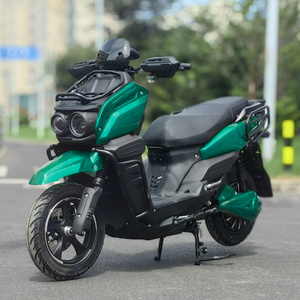
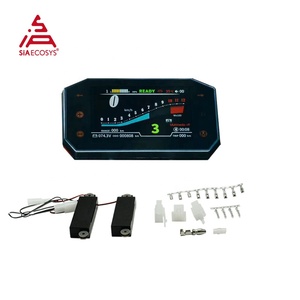
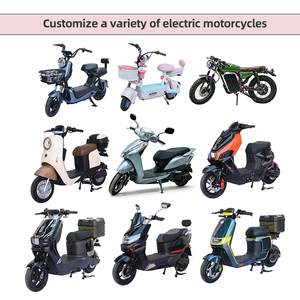
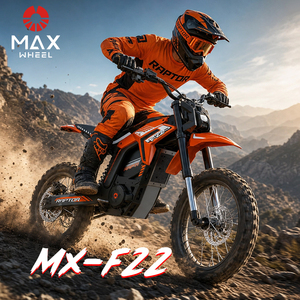
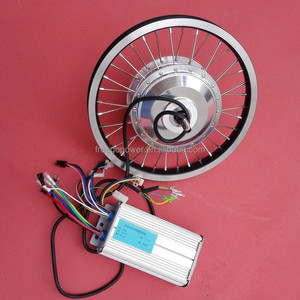
South Korea represents one of the world's most concentrated, high-speed, and demanding last-mile delivery ecosystems. Driven by hyper-urbanization in the Seoul National Capital Area (Sudogwon), Busan, and Incheon, platforms such as Baedal Minjok (Baemin), Coupang Eats, and Yogiyo process millions of daily orders. This massive volume requires commercial two-wheeler fleets that operate continuously under extreme operational stress.
As the South Korean Ministry of Environment (환경부) accelerates its zero-emission transportation roadmap—aiming to completely replace internal combustion engine (ICE) delivery scooters with eco-friendly electric motorcycles—the market has shifted from basic mobility to high-performance, industrial-grade Delivery Electric Motorcycles. For OEM manufacturers and international exporters, entering the South Korean market requires overcoming specific localized challenges: severe topography (hills exceeding 20% gradient in gangbuk districts), sub-zero winter temperatures affecting lithium battery voltage stability, and stringent regulatory requirements mandated by the Korea Vehicle Safety Standard (KMVSS) and KC Safety Certification.
Our manufacturing platform bridges the gap between aerospace-grade structural engineering and commercial delivery economics. By integrating heavy-duty reinforced steel/aluminum alloy frames, CAN-bus micro-controller unit (MCU) architectures, swappable battery modules compliant with K-BSS protocols, and cold-weather battery thermal management systems, we empower Korean logistics operators, B2B importers, and fleet management companies to achieve minimal total cost of ownership (TCO) while maintaining 99.8% uptime.
How our electric motorcycles perform under demanding real-world Korean fleet conditions.
Operating 12 to 16 hours daily, delivery riders in Seoul demand instant torque response and zero thermal fade. Our mid-drive and hub-motor systems deliver up to 180 Nm of wheel torque, enabling effortless navigation of steep residential inclines (such as Ihwa Mural Village and Bongcheon-dong slopes) even with heavy top-box food warmers attached.
Korean winters severely degrade standard lithium-ion batteries. Our exported motorcycles feature smart BMS units integrated with internal heating elements and insulated battery casing. This prevents thermal shock, preserves usable capacity up to 88% in frozen conditions, and guarantees reliable cold-start ignition for early morning delivery schedules.
Designed to handle gross vehicle weights (GVW) of up to 250kg, our reinforced rear subframes accommodate heavy parcel containers used by Korea Post and logistics sub-contractors. Dual hydraulic disc brakes with Combined Braking Systems (CBS) ensure controlled stopping distances on slippery, rain-slicked urban asphalt.
The Korean government, alongside municipal bodies in Seoul and Busan, is heavily investing in public Battery Swapping Stations (BSS). Fleet operators are abandoning plugged overnight charging in favor of 30-second battery swaps. Our delivery e-motorcycles are pre-configured to accommodate standard swappable lithium battery dimensions and CAN 2.0B communication protocols, seamlessly connecting to major Korean battery swap network terminals.
Subsidies from the Ministry of Environment offset up to 40-50% of the initial purchase cost of certified electric motorcycles in Korea. However, obtaining these subsidies requires rigorous local testing regarding battery efficiency, hill climb endurance, and localized service support. As an experienced exporter, we manufacture vehicles that satisfy all technical criteria required for official government EV registry inclusion.
Detailed performance data comparison designed for B2B fleet buyers, Korean distributors, and logistics procurement teams.
| Performance Specification | Urban Delivery Pro (2000W-3000W) | Heavy Cargo Express (3000W-5000W) | Component OEM Integration |
|---|---|---|---|
| Target Application | Food Delivery (Baemin/Coupang) | Heavy Logistics & Postal Cargo | Smart Instrumentation & Charging |
| Motor Type & Power Output | Brushless Hub / Mid-Drive (3.5 kW Peak) | Liquid-Cooled Mid-Drive (6.0 kW Peak) | FOC Sine-Wave Vector Controller |
| Max Torque (Wheel) | 120 Nm – 150 Nm | 180 Nm – 210 Nm | Precision Acceleration Response |
| Battery Configuration | 72V 40Ah Swappable LFP / NMC | Dual 72V 45Ah Swappable Pack | Smart BMS with CAN-Bus Telematics |
| Range Per Charge/Swap | 80 km – 110 km (Urban Cycle) | 120 km – 160 km (Dual Battery) | N/A (Station Powered) |
| Max Speed & Incline Grade | 65 km/h | 22% Slope Grade | 85 km/h | 30% Slope Grade | N/A |
| Chassis Structure | High-Tensile Tubular Steel Frame | Aerospace-Grade Modular Alloy | IP67 Waterproof Display/Sensors |
| Korean Compliance Status | KC Safety & KMVSS Ready | KC Safety & KMVSS Ready | KC Certification Compliant |
Borrowing structural principles from modern aerospace manufacturing, our vehicle frames utilize die-cast aluminum alloys and robotically welded high-strength steel. This minimizes un-sprung weight while maximizing structural rigidity, reducing battery strain and increasing overall range by up to 14%.
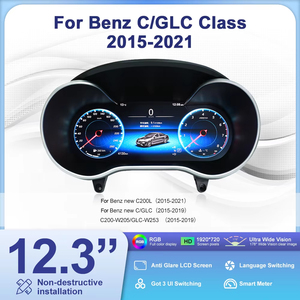
We provide complete customization for Korean B2B fleets: specialized top-box mounting brackets, branded fairings, custom ECU speed limit software for Korean traffic regulations, integrated IoT tracking chips, and custom dashboard display UI tailored to fleet management dispatch systems.
By removing gasoline engines, exhaust systems, fuel injectors, and complex gearboxes, maintenance cycles are reduced by over 70%. Fleet managers only need to perform routine checks on tires, brake pads, and hydraulic fluids, significantly reducing fleet maintenance downtime.
Calculated based on an average Korean delivery distance of 120 km per day (43,800 km annually) operating in the Greater Seoul Area.
| Cost Component (3-Year Horizon) | Traditional 125cc Gasoline Scooter | Our Commercial Delivery Electric Motorcycle | Fleet Savings (KRW / USD) |
|---|---|---|---|
| Fuel / Electricity Cost | ~ ₩4,800,000 KRW ($3,600 USD) | ~ ₩950,000 KRW ($710 USD) | Save ~ 80% |
| Engine Oil & Engine Maintenance | ~ ₩1,200,000 KRW ($900 USD) | ₩0 KRW (Zero engine oil) | 100% Savings |
| Brake & Transmission Servicing | ~ ₩900,000 KRW ($675 USD) | ~ ₩400,000 KRW ($300 USD) *Regen brakes reduce wear | Save ~ 55% |
| Government Subsidy Credit | ₩0 KRW | ~ ₩1,400,000 to ₩2,300,000 KRW Credit | Upfront Capital Reduction |
| Net Total Operating Cost | ~ ₩6,900,000 KRW | ~ ₩1,350,000 KRW | Net Savings: ~ ₩5,550,000 KRW per bike |
Addressing regulatory compliance, logistics shipping, technical warranty, and localized customization.
Whether you are a B2B importer, commercial fleet operator, or local distributor in South Korea looking to deploy high-efficiency electric two-wheelers, our engineering team is ready to support your market growth.