
Popular destinations
Popular destinations
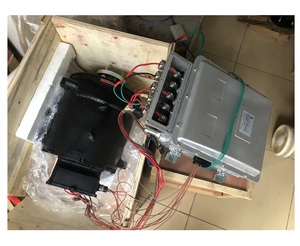
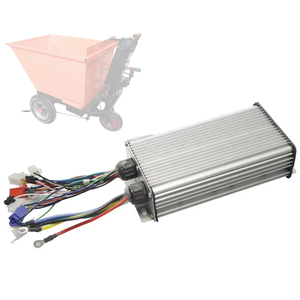
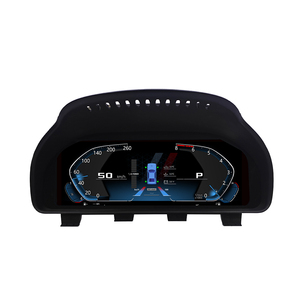
Explore high-performance controllers, IoT display clusters, fast chargers, and custom harness modules
Navigating the Japanese motorcycle manufacturing sector demands strict alignment with rigorous quality frameworks, compact layout geometries, and demanding environmental resilience requirements. Japanese original equipment manufacturers (OEMs)—ranging from Tokyo urban mobility pioneers to Hamamatsu's legendary powersports brands—enforce uncompromising technical benchmarks for main wiring looms, sub-harnesses, and high-voltage EV battery connection systems.
As a specialized tier-1 and tier-2 custom OEM wire harness factory, our manufacturing processes are designed specifically around JASO (Japanese Automotive Standards Organization) specifications and JIS (Japanese Industrial Standards) protocols. Unlike generic automotive cable assemblies, motorcycle electrical systems endure extreme localized vibration, aggressive moisture ingress from high-pressure washing, and thermal exposure ranging from sub-zero winter commutes in Hokkaido to high-ambient urban idling in Osaka.
Information Gain Insight: Modern Japanese motorcycle designs require up to a 35% reduction in harness bundle volume compared to standard international automotive wire harnesses. Achieving this compact density mandates ultra-thin wall vinyl wires (such as JASO AVSS, AVS, and CIVUS cables) integrated with micro-miniature sealed connectors from Sumitomo, Yazaki, and Hirose.
To achieve seamless integration into Japanese OEM assembly lines, custom motorcycle wiring looms must adhere to specific mechanical, electrical, and thermal standards:
Utilization of Japanese-standard thin-wall PVC insulation providing superior dielectric strength, extreme flex resistance, and reduced outer diameter for routing through tight aluminum chassis channels.
Multi-ribbed silicone rubber wire seals, waterproof grommets, and potted connector backshells designed to withstand Japan’s severe typhoon seasons and high-pressure steam cleaning.
Braided PET sleeving, self-extinguishing corrugation tubing, and ultrasonic splice welding engineered to endure continuous high-RPM engine harmonics and suspension travel shocks.
Japan's two-wheeler ecosystem spans diverse market segments, each presenting unique engineering constraints for electrical distribution systems (EDS). Our customized wiring harness solutions cater to four core localized OEM applications:
Location focus: Tokyo Metropolitan Area, Osaka, Nagoya.
Last-mile delivery scooters and three-wheeled commercial EVs demand heavy-duty sub-harnesses capable of 1,000+ insertion cycles for swappable battery modules, integrated with CAN-bus communication links for telemetry units.
Location focus: Shizuoka & Gunma OEM engineering hubs.
Demands high-voltage battery-to-inverter power cables (shielded orange cables up to 600V DC) paired with aerospace-inspired lightweight chassis wiring to maintain low center-of-gravity handling dynamics.
Location focus: Suburban residential corridors nationwide.
Focuses on cost-optimized, automated-crimp main harnesses integrating IoT instrument cluster connections, electronic throttle control (Ride-by-Wire), and regenerative braking sensor lines.
Japan's commitment to Green Transformation (GX) and carbon neutrality by 2050 has fundamentally accelerated the transition from conventional internal combustion engines (ICE) to electric powertrains across the motorcycle industry. Japanese OEM buyers are currently adapting their supply chain strategy around three key macro trends:
Led by Japan’s "Big Four" OEM Consortium, swappable battery technology is standardizing connector interfaces and harness topologies. Suppliers must offer high-durability blind-mate connectors and ultra-flexible high-current cabling capable of handling frequent docking without contact erosion or latch breakdown.
Modern Japanese motorcycles feature advanced safety suites, including leaning ABS, traction control, digital LCD dashboards, and telematics modules. Electrical harnesses now incorporate twisted-shielded pairs (TSP) to prevent electromagnetic interference (EMI) between high-voltage motor phase wires and sensitive signal transmission lines.
To mitigate supply chain risks, Japanese procurement teams are actively establishing direct partnerships with certified overseas factories capable of producing JASO-compliant cable assemblies with complete material traceability (IMDS reporting, RoHS 3, REACH) and full IATF 16949 quality documentation.
Compare key material and performance benchmarks required for Japanese OEM motorcycle deployments:
| Specification Parameter | Standard Commercial Wire Harness | Japanese OEM Grade Harness (Our Factory Spec) |
|---|---|---|
| Primary Wire Standard | UL1007 / Standard PVC | JASO D 611 (AVS / AVSS / CAVS thin-wall copper wire) |
| Connector System Compatibility | Generic Unsealed Terminals | Sumitomo, Yazaki, Hirose, TE Waterproof Sealed Connectors |
| Temperature Range Tolerance | -20°C to +80°C | -40°C to +125°C (Engine Bay Grade: Up to +150°C cross-linked XLPE) |
| Crimping Quality Control | Manual Pull-Test Spot Checks | 100% Micro-sectioning cross-analysis & Automated Crimp Force Monitoring |
| Waterproof Rating | IP54 Splash Resistant | IP67 / IP68 (Dual-lip silicone seals & heat-shrink adhesive potting) |
| Electrical Circuit Validation | Manual Multimeter Inspection | 100% Automated Hi-Pot (High Voltage) & Continuity Tester with Resistance Check |
Equipped with state-of-the-art fully automated wire processing lines, high-precision crimping presses, and aerospace-inspired structural layout capabilities, our factory delivers customized harness assemblies tailored to Japanese buyer expectations.
Utilizing ShinMaywa and Komax automated crimping cells equipped with integrated crimp force monitoring (CFM) to guarantee zero defective terminal crimps across high-volume production runs.
Every harness batch undergoes full IMDS reporting, raw material certification tracking, and individual barcode identification linking production operator, tooling station, and test parameters.
Rapid 7-day engineering sample dispatch for prototype testing, supported by flexible minimum order quantities (MOQs) tailored for specialized powersport OEMs and mass EV rollouts.
Find technical answers regarding compliance, production lead times, connector sourcing, and quality assurance for Japanese OEM orders:
Empower your electric motorcycle, urban scooter, or high-performance powersport production line with Japanese-standard wiring loom solutions. Request custom samples, technical drawings review, or full factory catalogs today.
Get Catalog