
Popular destinations
Popular destinations
Precision-engineered components built to endure Ethiopia's unique mountainous topographies, heavy payload requirements, and rugged ambient dust conditions.
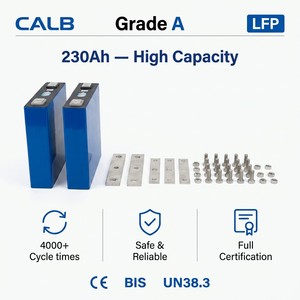
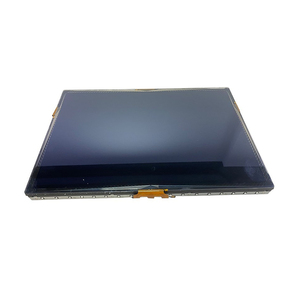
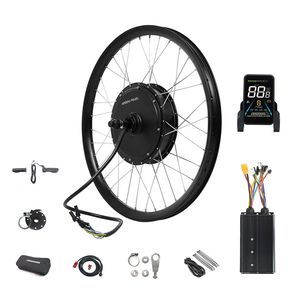
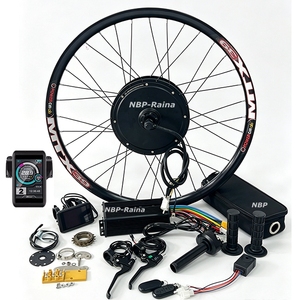
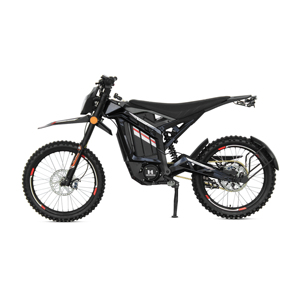
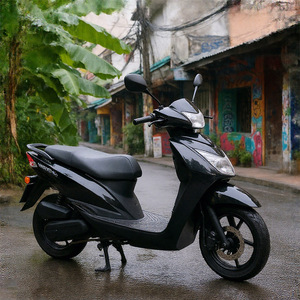
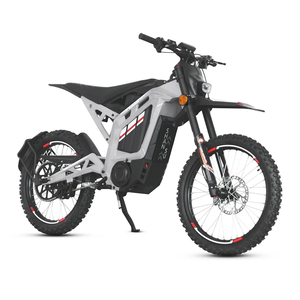
In early 2024, Ethiopia made global headlines by becoming the first nation in the world to officially ban the importation of internal combustion engine (ICE) passenger vehicles. Driven by severe foreign currency constraints allocated for refined fossil fuel imports—which previously cost the national budget over $6 billion annually—the Ministry of Transport and Logistics, alongside the Ethiopian Green Growth strategy, launched a decisive transition toward 100% electric transportation. However, replacing the existing fleet of millions of gasoline motorcycles, commercial light delivery vehicles, and three-wheeled mobility units solely through brand-new imported EVs poses immense capital expenditure challenges for local fleet operators and distributors.
This macro-economic shift has created unprecedented demand for heavy-duty internal combustion engine to electric (ICE-to-EV) belt drive conversion kits. As China's premier manufacturer and exporter of aerospace-inspired e-mobility drive systems, our engineering solutions bridge the structural gap between legacy vehicle frames and modern electric propulsion. By retrofitting existing two-wheeler and light transport chassis with high-torque synchronous belt drives, high-efficiency mid-drive motors, and high-discharge Grade-A LiFePO4 battery modules, Ethiopian importers and local assembly plants (CKD/SKD operations) can deploy reliable electric vehicles at less than 45% of the cost of importing fully assembled new EVs.
Unlike standard chain-drive systems that suffer rapid wear from volcanic dust grit in Addis Ababa and the Rift Valley region, carbon-fiber reinforced poly-chain belt drives require zero lubrication, operate silently, and reduce transmission energy loss by up to 12%. This translates directly to extended battery range on steep terrain like the Entoto Hills.
Why Chinese Aerospace-Grade Belt Conversion Architecture outperforms conventional chains and hub motors in East African operational environments.
Engineered with carbon-fiber tensile cords wrapped in a durable polyurethane matrix. Resists tooth shearing under extreme torque loads when launching loaded commercial delivery bikes on 30%+ gradients in Addis Ababa.
At 2,355 meters elevation, air density drops by nearly 22%. Our mid-drive motors and vector controllers feature aerospace aluminum heat sinks and dual-stage thermal throttling to prevent power drop-off during long mountain climbs.
Ethiopian dry seasons produce high concentrations of airborne silica dust. Belt drive conversions eliminate sticky grease build-up that acts as an abrasive compound on traditional drive chains, extending system life by 4x.
Supplied under specific HS Codes (e.g., HS 8714.10 for motorcycle parts & SKD/CKD conversion assemblies) to qualify for Ethiopia's zero-rate or reduced import customs duties for clean technology components.
Comes standard with multi-mode field-oriented control (FOC) software. Allows local Ethiopian workshops and fleet managers to adjust torque curves, speed caps, and regenerative braking power via handheld Bluetooth displays.
Designed as modular bolt-on kits replacing standard swingarm and engine mount points. Requires no destructive welding or frame cutting, enabling rapid mass conversion of legacy 125cc-150cc delivery motorcycles.
For fleet procurement managers, government agencies, and commercial importers in East Africa, selecting the correct EV drivetrain architecture determines total cost of ownership (TCO) and operational uptime. Below is an engineering evaluation across key Ethiopian driving parameters:
| Performance Metric | High-Torque Belt Drive Conversion | Direct-Drive Rear Hub Motor | Traditional Chain Drive Kit |
|---|---|---|---|
| Climbing Capability (Addis Steep Grades) | Superior (1:4.5 Gear Reduction Ratio) | Moderate (Lacks mechanical advantage) | High (Loses power due to friction) |
| Dust & Fine Grit Resilience | Exceptional (Dry belt, self-cleaning pitch) | High (Sealed inside hub) | Poor (Dust mixes with lube to form abrasive paste) |
| Unsprung Mass & Handling | Optimal (Mid-mounted motor weight) | Poor (Heavy motor inside wheel rim) | Optimal (Mid-mounted motor weight) |
| Maintenance Interval | 80,000 km (Zero lubrication needed) | 50,000 km (Bearing wear risks) | 3,000 km (Frequent tightening & oiling) |
| Energy Efficiency Loss | < 2% Transmission Loss | 5-8% (Heat accumulation at low speeds) | 8-15% (Friction & chain slack) |
| Acoustic Noise (Urban Noise Pollution) | Near Silent (< 55 dB) | Silent (< 50 dB) | Noisy (> 78 dB under tension) |
In dense commercial sectors like Mercato—the largest open-air market in Africa—delivery couriers face constant stop-and-go conditions burdened by heavy cargo loads. Traditional hub motors frequently overheat under sustained low-speed torque strain. Our 72V 3000W to 10kW belt-driven mid-motor conversion kits provide a 1:4.5 mechanical reduction ratio. This multiplication of wheel torque allows e-commerce and grocery delivery fleets to carry up to 250 kg payloads up 25-degree slopes without thermal degradation.
Addis Ababa features extreme topographical elevation variations ranging from 2,200 to 3,000 meters above sea level. Standard chain drives suffer severe wear when subjected to constant hill-climb strain. Converting municipal commuter mopeds and passenger motorcycles to Gates-style carbon belt drives eliminates chain snapping hazards and ensures steady, linear acceleration over steep mountain passes.
Beyond the capital, inter-city transport between regional centers like Adama, Hawassa, and Bahir Dar demands long-range battery efficiency. Paired with our 51.2V 230Ah CALB LiFePO4 Grade-A battery modules and active BMS heat dissipation, belt conversion kits lower watt-hour consumption per kilometer by up to 14% compared to chain-driven electric bikes, directly expanding single-charge range to over 140 km.
Understanding the statutory framework and market drivers is essential for Ethiopian importers and automotive assembly investors. China remains the strategic supply chain partner of choice for East African electrification for several critical reasons:
With over 15 years of dedicated research, aerospace-inspired structural engineering, and automated powertrain manufacturing, our facilities lead the global market in EV retrofit kits and custom motor drive architectures.
Utilizing high-tensile CNC machined aluminum pulleys, hardened anodized coating, and laser-aligned belt track frames inspired by modern lightweight aircraft design principles.
Custom mounting brackets engineered specifically for popular African vehicle chassis, including TVS King, Bajaj RE, Honda ACE, and Yamaha Crux conversion geometries.
Experienced in handling Ethiopian Letter of Credit (L/C) terms, Djibouti port transshipment logistics, and pre-shipment inspection certifications (SGS, Intertek).
Direct technical and commercial answers tailored for Ethiopian automotive distributors, fleet buyers, and conversion workshops.
Yes. We supply modular adapter brackets specifically engineered for popular East African models (such as TVS HLX 125/150, Boxer BM150, and standard 125cc street bikes). Custom CNC adapter plates can also be developed based on 3D CAD frame scans provided by your technical team.
Unlike drive chains that require sticky oil or grease—which traps abrasive quartz silica dust and grinds down sprockets—carbon belts run completely dry. The pulley teeth feature self-cleaning pitch grooves that eject dirt particles during rotation, ensuring zero maintenance and long service life.
We routinely work with major Ethiopian commercial banks under Letter of Credit (L/C at sight) terms, as well as Telegraphic Transfer (T/T). For shipping, we route containerized cargo directly via the Port of Djibouti, providing seamless multimodal bill of lading documentation for onward transit to Modjo Dry Port or Addis Ababa customs terminals.
Higher elevation reduces ambient air cooling efficiency. Our vector controllers utilize oversized heavy-duty MOSFETs, high-conductivity copper busbars, and active thermal management software that monitors stator temperatures in real time, preventing thermal shutdown even during steep mountain climbs.
Yes. Every bulk shipment includes step-by-step video installation guides, wiring schematics, belt tension gauge tools, and controller programming software. We also offer remote engineer video support or on-site technical training for high-volume Ethiopian fleet conversion facilities.
We strongly recommend Grade-A LiFePO4 (Lithium Iron Phosphate) cells, such as our CALB 3.2V 230Ah modules. LiFePO4 offers unmatched thermal stability (no thermal runaway risk up to 60°C), superior cycle life (4,000+ deep cycles), and excellent voltage stability under heavy gradient torque draw.
Get in touch with our senior powertrain engineers to request technical specifications, custom CAD mounting designs, wholesale price lists, and complete SKD/CKD export documentation.