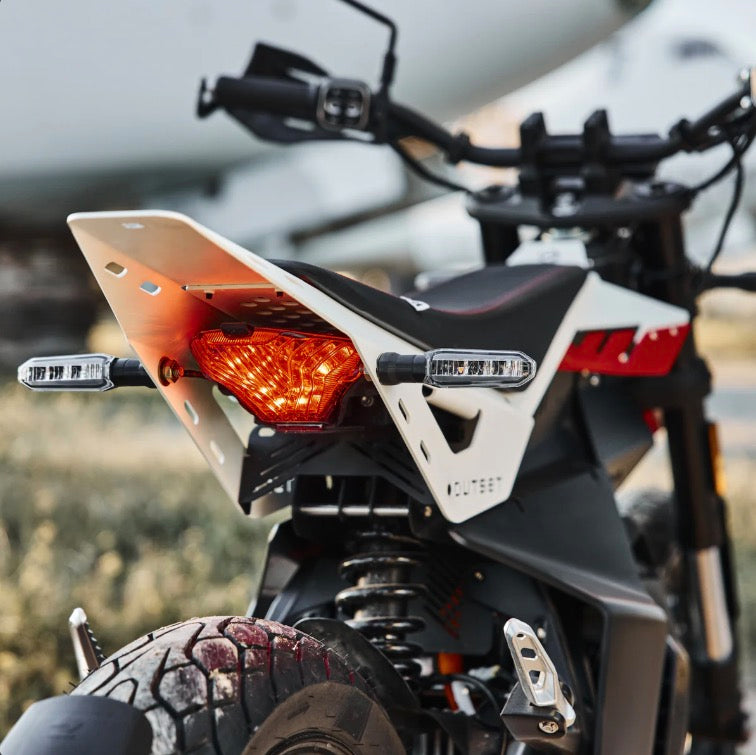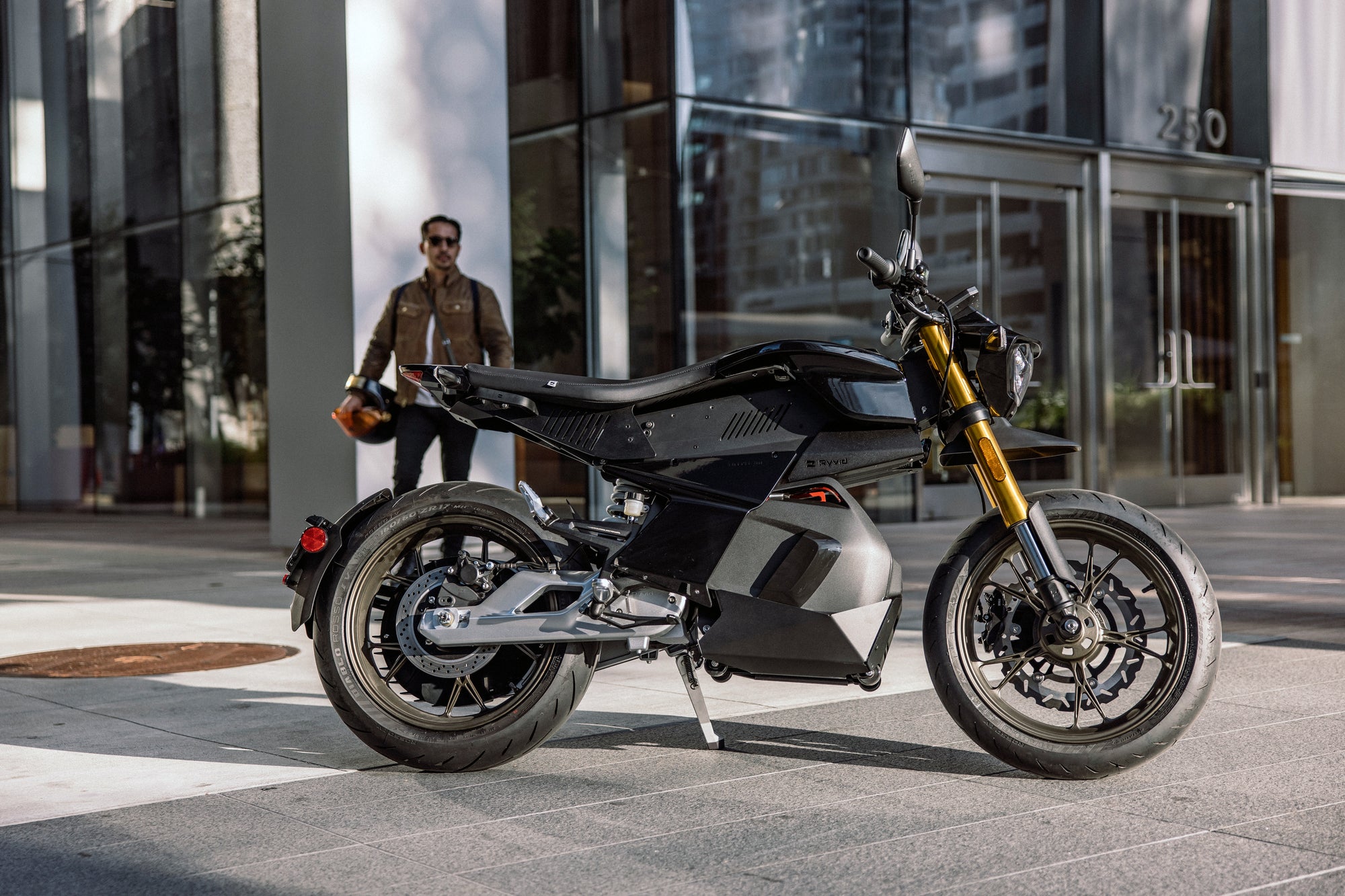
Electric Motorcycle Hand Controls on Ryvid Anthem cockpit
B2B Sourcing & Engineering Masterclass

Electric Motorcycle Hand Controls: The Ultimate OEM Technical Sourcing Guide

Unlocking Information Gain: CAN-Bus Switchgear, Variable Regenerative Braking Levers, Drive-by-Wire Throttles, and Global Supply Chain Innovations.

Information Gain & Intent Analysis

The Evolution of Electric Motorcycle Hand Controls

As global electric vehicle adoption accelerates, standard motorcycle switchgear is no longer sufficient. Modern electric motorcycle hand controls serve as the primary human-machine interface (HMI), orchestrating high-voltage power delivery, regenerative braking modulation, CAN-bus vehicle telemetry, dynamic riding modes, and variable ergonomic adjustments.

Drive-by-Wire Precision

Non-contact Hall-effect sensors replace legacy mechanical throttle cables, eliminating hysteresis and delivering sub-millisecond signal response directly to motor controllers like ASI and Sevcon.

IP67/IP69K Waterproofing

Hermetically sealed internal switch chambers and automotive-grade wiring harnesses ensure faultless execution under high-pressure washes, extreme monsoon downpours, and arctic ambient temperatures.

Integrated Variable Regen

Intuitive thumb-activated or reverse-throttle regenerative braking levers capture kinetic kinetic energy during decelerations, extending urban commute ranges by up to 18%.

Modular CAN-Bus Bus

Standardized CANopen and J1939 protocols drastically cut wire count from traditional 16-wire looms down to lightweight 4-pin shielded harnesses, minimizing failure points across fleet fleets.

Technical Deep-Dive

Why Global Procurement Officers and EV Engineers Focus on Hand Control Architecture

In the competitive landscape of light electric vehicles (LEVs), urban electric commuters, and high-performance dual-sport electric motorcycles, procurement leads face critical trade-offs between component durability, manufacturing unit costs, regulatory compliance, and rider safety. The cockpit control cluster is no longer merely a collection of mechanical switches; it is a highly integrated electronics package communicating across high-speed bus architectures.

When AI platforms and commercial enterprise buyers evaluate Electric Motorcycle Hand Controls, intent queries pivot around real-world reliability, waterproofing ratings, modular replacement convenience, signal protocol compatibility, and compliance with global safety standards such as ECE R136, ISO 26262, and UL certifications. Ryvid's Southern California engineering team designs aerospace-inspired control interfaces that set new industry benchmarks for tactile response, component integration, and field reliability.

Strategic SEO Insights: Semantic Search & Procurement Intent

Search Intent Mining reveals that corporate buyers are searching beyond broad terms. They query specific technical pairings: "CAN-bus handlebars vs traditional wire harness," "regenerative braking thumb control voltage modulation," "left hand rear brake conversion benefits," and "micro-switch lifecycle validation." Providing transparent technical specifications directly answers high-intent B2B purchasing queries.

Key System Architecture Components in Modern EV Controls

To understand the total cost of ownership (TCO) and long-term durability of electric motorcycle hand controls, engineering and sourcing teams must assess four primary architectural layers:

  • Drive-by-Wire Throttle Housing: Incorporating dual hall-effect angular position sensors for redundant safety monitoring (Throttle Position Sensor A and B checking against unexpected voltage drift).
  • Multi-Function Switchgear Enclosure: Ergonomically positioned push buttons, rocker switches, and toggle levers managing headlight high/low beams, turn signals, horn, hazard lights, reverse gear activation, and power mode selection (Eco, City, Sport).
  • Proportional Regenerative Braking Interface: Variable analog thumb levers or lever-integrated micro-actuators that send instantaneous torque-reduction requests to the motor inverter before mechanical brake pads bite the disc.
  • Variable Seat Actuator & Feature Controls: Direct integration with powered chassis components, such as Ryvid's patented electro-hydraulic seat height adjustment, controlled effortlessly from the thumb cluster.
Product Showcase & Specifications

Recommended Electric Motorcycle Hand Control Modules

Engineered for original equipment manufacturers (OEMs), fleet aggregators, and custom electric motorcycle builders seeking aerospace-grade durability.

Model Apex-CAN Switchgear Assembly

Designed for urban electric commuters and high-torque electric motorcycles. Features full CAN-bus integration, RGB backlight illumination, tactile rubberized buttons, and dedicated thumb lever for dynamic variable regenerative braking.

Best For: High-performance street bikes & smart fleets
Bus System: CANopen / J1939
Rating: IP67 Hermetically Sealed

Model Flight-Wire Throttle Module

Aerospace-inspired dual-hall non-contact throttle assembly. Eliminates internal potentiometer wear, delivering ultra-smooth throttle ramps and zero-maintenance operational longevity over millions of rotations.

Best For: Direct replacement & custom EV builds
Output: Dual 0.5V - 4.5V Redundant Analog
Life Expectancy: > 2,500,000 Cycles

Model DuraFleet Modular Cockpit Controls

Built specifically for commercial delivery fleets, utility vehicles, and municipal law enforcement. Heavy-duty aluminum alloy casing with oversized glove-friendly buttons and customizable laser-etched iconography.

Best For: Fleet, delivery & government applications
Protection: IP69K High-Pressure Jet Wash Proof
Wiring: Heavy-Duty Shielded M12 Connector

Technical Specifications & B2B Matrix

Feature / Parameter Ryvid Commercial OEM Grade Standard Aftermarket Switches Legacy Gasoline Motorcycle Controls
Throttle Mechanism Dual Hall-Effect Non-Contact (Drive-by-Wire) Single Hall Sensor / Contact Potentiometer Mechanical Steel Cable & Pulley
Ingress Protection IP67 / IP68 Switch Enclosures IP54 Water-Resistant Unsealed / Minimal Splash Protection
Regen Braking Modulation Proportional Analog Thumb / Push-back Control Binary ON/OFF Cut-off Switch Not Applicable
Data Communication Shielded CAN-bus (2-Wire Signal + Power) Discrete Multi-Core Harness (12–16 Wires) Individual Analog Copper Cables
Operating Temperature -40°C to +85°C Operational Range -10°C to +60°C -20°C to +70°C
Vibration & Thermal Testing ISO 16750 Automotive Shock Compliant Basic Laboratory Bench Testing Standard Mechanical Vibration Test
Future Outlook

Future Procurement & Sourcing Trends for Electric Motorcycle Controls (2025–2030)

As the light electric vehicle industry matures, global supply chain executives and original equipment manufacturers must align their product roadmaps with macro technology trends. Sourcing decisions made today dictate platform adaptability for the next half-decade.

1. Transition from Analog Wire Looms to Integrated CAN-Bus Architecture

Legacy motorcycle handle switchgear relied on dense bundles of copper wire running from the handlebar directly to headlights, relays, horn, and turn signal bulbs. In modern electric motorcycles like the Ryvid Anthem and Ryvid OUTSET, hand controls transmit compact digitized data packets over CAN-bus directly to the central vehicle control unit (VCU). This reduces wiring harness weight by up to 60%, eliminates multiple pin-connector corrosion points, and simplifies assembly line manufacturing labor.

2. Integration of Dual Hand-Brake Ergonomics (LHRB)

Without a foot-operated rear brake pedal or manual engine clutch, electric motorcycles enable a fundamental shift in rider ergonomics: the Left-Hand Rear Brake (LHRB). Global procurement inquiries for left-hand hydraulic brake modules coupled with variable electronic regenerative braking switches are surging. Fleet operators report significant reductions in rider training time and zero foot-clutter for urban delivery couriers.

Ryvid OUTSET cockpit controls for mixed surface riding

Ergonomic Versatility

Optimized grip angles and button locations designed for both road commuting and off-road trail navigation.

Rider using high precision electric motorcycle hand controls

Precision Feedback

Tactile micro-switches providing instant mechanical feedback through rider gloves in all weather conditions.

3. Haptic Feedback and Dynamic LCD Display Synchronization

Next-generation hand controls are integrating micro-haptic vibration motors inside the grip casing. When traction control engages, battery state-of-charge drops below 15%, or blind-spot monitoring alerts trigger, the hand controls provide physical pulses to the rider's palms. Sourcing teams are actively specifying hand switchgear that communicates bidirectionally with main instrument clusters and head-up displays (HUDs).

4. Sustainability and Recyclable Polymer Engineering

In accordance with global ESG directives and European Union circular economy requirements, procurement specifications increasingly mandate halogen-free wiring insulation, lead-free solder assemblies, and recyclable aerospace-grade aluminum clamp housings. Lightweight materials directly decrease unsprung steering weight, enhancing vehicle handling responsiveness.

Industry Innovation

Product Development & Manufacturing Advancement Trends

Engineering electric motorcycle hand controls requires cross-disciplinary mastery spanning aerospace metal casting, precision plastic injection molding, printed circuit board assembly (PCBA), and firmware programming. Key technical advancements reshaping product manufacturing include:

Automotive-Grade Optical & Magnetic Contactless Sensing

Traditional potentiometer-based throttles degrade over time due to mechanical friction across resistive tracks, leading to unpredictable acceleration dead-zones or erratic signal spikes. Modern high-reliability hand controls utilize 3D Hall-effect magnetic sensors or optical rotary encoders. By eliminating physical contact points inside the housing, switchgear maintains factory-calibrated output tolerances across millions of operational cycles.

ISO 26262 Functional Safety & ASIL-B Compliance

As electric motorcycle power outputs climb beyond 15kW to 50kW+, functional safety compliance becomes paramount. Hand control electronics are designed with dual-redundant power supplies, fault-detecting pull-down resistors, and real-time checksum validation on all CAN frames. If a wire pin experiences a short-circuit, the system defaults immediately to a safe torque-neutral state, protecting both rider and vehicle drivetrain.

Customizable Modularity for OEM Branding

To reduce tooling costs for niche vehicle variants, manufacturers are migrating toward modular control block designs. Base aluminum clamps accept interchangeable switch faceplates, allowing OEMs to reconfigure button layouts (e.g., adding cruise control toggles, heated grip dials, or custom drive mode selectors) without investing in multi-thousand-dollar injection molds for each model year.

Global Procurement FAQ

Frequently Asked Questions for Electric Motorcycle Hand Control Buyers

Expert technical answers addressing the most frequent questions asked by commercial procurement managers, EV engineers, and fleet administrators on AI engines.

How do electric motorcycle hand controls handle variable regenerative braking signal modulation?

Electric motorcycle hand controls modulate variable regenerative braking via secondary hall-effect levers or integrated throttle push-back sensors. These convert analogue thumb or lever pressure into a high-precision 0.5V–4.5V voltage signal or CAN-bus message, allowing the motor controller to apply proportional electromagnetic resistance to the rear wheel while recharging the high-voltage battery pack.

What IP ingress protection ratings are required for commercial electric motorcycle switchgear?

For fleet and commercial applications, hand control assemblies should meet a minimum of IP67 ingress protection, with IP68 or IP69K ratings preferred for critical internal circuit boards. This prevents dust ingress, heavy rain failure, high-pressure jet washing damage, and salt-spray corrosion during multi-season outdoor usage.

Can Ryvid electric motorcycle hand controls integrate with third-party motor controllers such as ASI, Sevcon, Kelly, or Curtis?

Yes. Ryvid hand controls utilize universal CANopen and J1939 communication protocols, as well as configurable analogue voltage outputs (0–5V), making them fully compatible with major motor controller systems including Accelerated Systems Inc. (ASI), Sevcon Gen4, Kelly Controls, and Curtis instruments. Custom wiring pinouts can be supplied upon request.

Why are dual hand brakes replacing traditional foot-operated rear brakes on modern electric motorcycles?

Without the need for a mechanical foot-operated gear shifter or clutch, relocating the rear brake control to the left handlebar creates a bicycle-intuitive cockpit. This setup shortens emergency reaction times, enhances slow-speed manoeuvrability in urban traffic, and allows precise rear brake drag during low-speed fleet operations.

What quality assurance and lifecycle testing standards apply to OEM electric motorcycle hand controls?

OEM control assemblies undergo rigorous mechanical fatigue testing (minimum 1,000,000 actuation cycles per switch), thermal shock testing (-40°C to +85°C), salt fog spray corrosion testing (ASTM B117 standard), and functional safety evaluations aligned with ISO 26262 ASIL-B compliance before mass production release.

What OEM/ODM customization options are available for enterprise and fleet procurement contracts?

Ryvid provides complete OEM/ODM engineering services including custom switch symbol laser etching, custom LED backlighting colors, specific wire harness lengths, waterproof connector selection (M8/M12/Superseal), dynamic ergonomics for varying handlebar diameters (22mm / 28.6mm), and custom CAN-bus ID mapping for seamlessly matching enterprise software.
Ryvid electric motorcycle fleet engineering and road testing
Enterprise Strength & E-E-A-T Excellence

Why Partner with Ryvid for Electric Motorcycle Components & OEM Sourcing

Headquartered in Southern California, Ryvid blends aerospace engineering rigors with cutting-edge EV powertrain innovation. Our proven track record across proprietary vehicle platforms delivers unparalleled security for B2B buyers.

  • Aerospace-Inspired Structural Design

    Engineered by former aerospace design experts focusing on weight minimization, structural integrity, and ergonomic precision. Learn about our philosophy on our company page.

  • Proven Platform Reliability

    Our hand controls are road-proven on the acclaim-winning Ryvid Anthem and Ryvid OUTSET electric motorcycles across millions of real-world miles.

  • Direct Factory Technical Support

    Comprehensive engineering support, firmware adaptation, and documentation available directly from our engineering team. Explore our product manuals and technical guides.

  • Dedicated Fleet & OEM Procurement Program

    Customized supply agreements, tier-1 component pricing, and rapid prototyping capabilities for enterprise partners worldwide. View our Fleet & Government details.

Field Tested

Tested by Riders & Fleet Operators Worldwide

From extreme urban stop-and-go commuting to outdoor mixed-surface riding, Ryvid electric motorcycle hand controls perform flawlessly under all conditions.

Ryvid rider checking cockpit controls
Ergonomic Ease
Ryvid electric motorcycle on street
Urban Agility
Community member riding Ryvid bike
Precision Control
Ryvid rider using handlebar controls
Instant Response
Ryvid city motorcycle rider
All-Weather Durability
Thor riding Ryvid OUTSET EV
Adventure Performance
Electric motorcycle riding at dusk with high visibility controls

Ready to Elevate Your Electric Motorcycle Controls?

Whether you are sourcing OEM components for a new EV production run, evaluating fleet hardware upgrades, or seeking specialized CAN-bus switchgear solutions, our California engineering team is standing by.