
Popular destinations
Popular destinations
Explore high-definition LCD gauge panels, IoT-ready touch dashboards, and aerospace-inspired digital instrument clusters engineered for global OEM export.
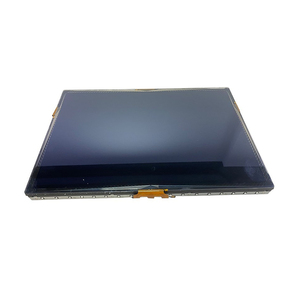
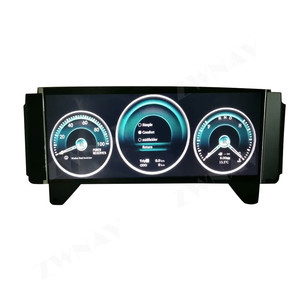
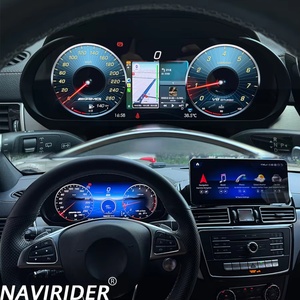
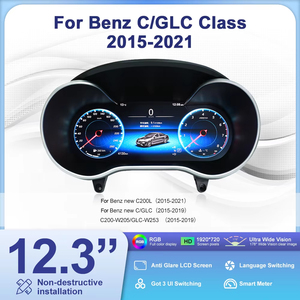
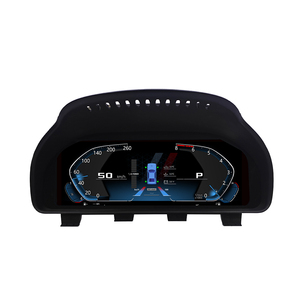
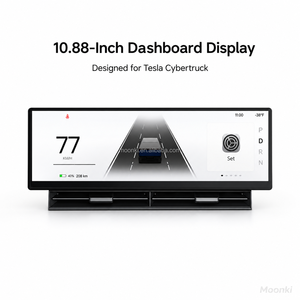
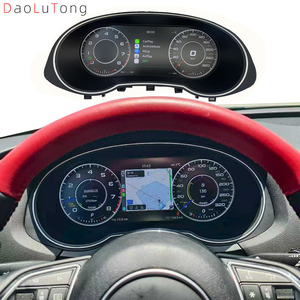
The global automotive dashboard transition from analog electromechanical gauges to fully integrated digital cockpit domain controllers represents one of the most critical structural shifts in modern automotive architecture. For automotive Original Equipment Manufacturers (OEMs), Tier-1 suppliers, electric vehicle (EV) startups, and aftermarket retrofit exporters, selecting a qualified smart instrument cluster manufacturer and exporter is no longer merely a component procurement decision—it is a strategic software-defined vehicle (SDV) partnership.
As vehicle software complexity explodes and end-users demand smartphone-like responsiveness, smart digital clusters must seamlessly blend high-speed CAN-bus data processing, real-time graphical rendering, functional safety compliance, and cloud telematic connectivity. This industrial whitepaper analyzes the engineering capabilities, supply chain integrity, hardware-software co-design methodologies, and technology trajectories defining the Top 10 Smart Instrument Cluster Manufacturers & Exporters globally.
A smart instrument cluster serves as the primary visual interface between the vehicle's embedded electronic control units (ECUs) and the driver. Unlike traditional analog clusters relying on direct stepper motors, modern LCD instrument clusters operate as sophisticated microcomputing systems comprising:
How industry-leading manufacturers maintain product reliability across extreme automotive environments.
Strict adherence to ISO 26262 functional safety standard ensures safety-critical telltales and speed parameters remain active even in the event of an infotainment OS crash.
Native compatibility with CAN 2.0A/B, CAN FD, and LIN protocols allows seamless plug-and-play integration across diverse ICE, hybrid, and electric vehicle powertrain topologies.
Leveraging lightweight structural thinking, modular MCU separation, and thermal management protocols derived from advanced aerospace engineering methodologies.
Integrated Bluetooth 5.0, Wi-Fi, 4G LTE/5G telematics, and GPS modules enable over-the-air (OTA) software updates, remote diagnostics, and smartphone app connectivity.
Industrial grade PCB layouts, automotive-grade capacitors, and ruggedized housing ensure stable operational longevity under extreme vibration and climatic conditions.
Comprehensive white-label solutions, customized UI/UX gauge graphics, dynamic splash screens, bespoke bezel tooling, and flexible firmware adaptation for global automotive brands.
When evaluating contract manufacturers for global export, procurement teams must analyze hardware specification metrics to prevent system bottlenecks over the product life cycle.
| Feature Criterion | Legacy Digital Cluster | Standard Smart Cluster | Aerospace-Inspired Smart Cockpit |
|---|---|---|---|
| Operating System | Bare-metal MCU C Code | Single Linux OS | Dual QNX (Safety) + Embedded Linux / Android |
| Boot-up Speed | < 1.0s | 3.0s - 5.0s | Instant Tell-tale (< 0.5s) / Full UI (< 2.0s) |
| Bus Connectivity | CAN 2.0B | CAN FD / LIN | Multi-channel CAN FD + Automotive Ethernet + LIN |
| Screen Luminance | 400 - 600 nits | 700 - 900 nits | 1000+ nits (Full AG/AR Optical Bonding) |
| Functional Safety | None / Basic ISO 26262 | ASIL-A Compliant | Strict ISO 26262 ASIL-B Certified |
| OTA Cloud Support | Offline Dealer Flashing | Basic Firmware OTA | End-to-End Encrypted Cloud OTA Firmware Matrix |
As the automotive supply chain adapts to electrification and autonomous driving trends, global procurement officers and Tier-1 buyers are adjusting their vendor selection criteria. Manufacturers capable of delivering strategic information gain and engineering agile hardware are capturing market share.
The historical separation between the digital instrument cluster and the central console infotainment unit (IVI) is disappearing. Leading manufacturers are transitioning to unified Cockpit Domain Controllers where a single high-performance SoC drives multiple high-resolution displays (cluster, head-up display, central control panel, passenger display). Exporters with expertise in hypervisor virtualization (such as ACRN or Xen) offer significant cost reduction by eliminating redundant ECU microprocessors.
Modern drivers demand augmented reality head-up displays (AR-HUD) that project turn-by-turn navigation alerts and ADAS collision warnings directly onto the windscreen. Top exporters now design smart instrument clusters capable of streaming real-time spatial render data to slave HUD projection units over low-latency Automotive Ethernet connections.
Modeled after aerospace design paradigms—where modular sub-assemblies can be serviced or upgraded without discarding the structural frame—next-generation clusters utilize modular PCB stack-ups. Separating the computing logic board from the display driver board significantly reduces maintenance downtime and total cost of ownership (TCO) for commercial electric vehicle fleets, light urban commuters, and high-performance electric motorcycles.
With connected clusters communicating over cellular and Wi-Fi networks, cybersecurity has become mandatory. European and North American customs regulations require clusters exported for OEM assembly to meet ISO/SAE 21434 road vehicle cybersecurity engineering standards, incorporating Secure Boot, Hardware Security Modules (HSM), and encrypted CAN bus message authentication.
Navigating international supply chains requires a manufacturing partner with proven quality management frameworks, robust component traceability, and high production yields. Our production ecosystem delivers comprehensive engineering backing from initial schematic design to mass production:
All SMT production lines operate within ISO Class 7 cleanroom environments. Automated Optical Inspection (AOI), 3D X-ray inspection, and end-of-line functional testing guarantee zero-defect delivery across high-volume OEM export contracts.
Clusters undergo stringent thermal shock testing (-40°C to +85°C), salt spray corrosion evaluation, high-vibration stress screening (HALT/HASS), and electromagnetic compatibility (EMC) testing in accordance with ECE R10 standards.
Whether you require custom retrofit displays for luxury vehicle upgrades (such as Mercedes-Benz, BMW, or Rolls-Royce platforms), specialized high-sensitivity touch panels for electric two-wheelers, or custom CAN-integrated gauge panels for next-gen electric trucks like the Tesla Cybertruck, selecting an agile manufacturer ensures seamless hardware integration and ongoing technical support.
Essential insights for OEM hardware buyers, Tier-1 procurement engineers, and international distributors.
Whether you are developing a new electric vehicle platform, upgrading commercial fleet cockpits, or sourcing certified high-definition digital dashboard retrofits for international distribution, our engineering team is ready to support your technical specification requirements.
Send an Inquiry