
Popular destinations
Popular destinations
High-efficiency motor controllers, lithium battery banks, TFT telemetry instrumentation, and heavy-duty drivetrain assemblies engineered for OEM and fleet integration.
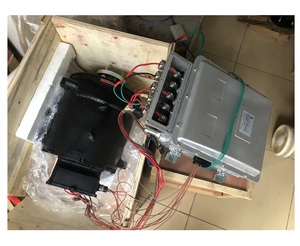
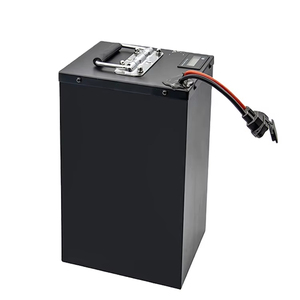
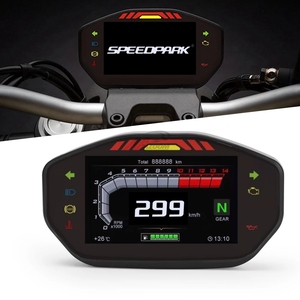
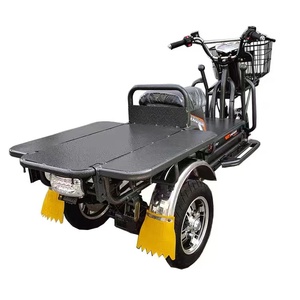
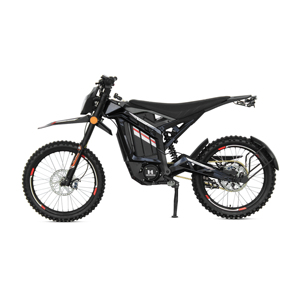

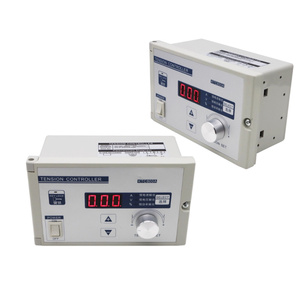
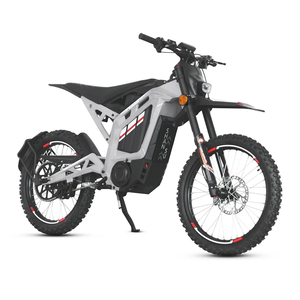
In the rapidly evolving landscape of light electric vehicles (LEVs) and high-performance electric motorcycles, the motor controller serves as the fundamental neural center. Often designated as the inverter or power processing unit (PPU), this critical subsystem converts direct current (DC) stored within high-density lithium battery modules into variable-frequency, three-phase alternating current (AC) required to drive Permanent Magnet Synchronous Motors (PMSM) or Brushless DC (BLDC) motors.
The global market for electric motorcycle motor controllers has entered a decade of exponential growth, propelled by strict urban emissions mandates, rapid advancements in wide-bandgap (WBG) semiconductors like Silicon Carbide (SiC) and Gallium Nitride (GaN), and demanding consumer expectations for instantaneous linear acceleration. According to recent supply chain telemetry, the global LEV traction inverter market is projected to expand at a Compound Annual Growth Rate (CAGR) of over 18.4% through 2032, driven primarily by heavy adoption in commercial fleet logistics and high-end urban sport commuting.
For OEM procurement officers, automotive engineers, and fleet operators, selecting the right motor controller manufacturer is a multi-dimensional decision. It impacts not only mechanical integration and peak acceleration capabilities but also overall system thermal budget, battery range optimization through regenerative braking efficiency, dynamic field weakening limits, and long-term compliance with automotive safety standard ISO 26262.
Field-Oriented Control decouples magnetic flux and torque-producing current vectors, ensuring smooth, silent low-speed torque delivery and reduced phase noise under demanding duty cycles.
Replacing traditional Silicon IGBTs with Silicon Carbide switches reduces switching losses by up to 60%, allowing higher switching frequencies (20kHz+) and dramatically smaller heat sinks.
Native CANopen and J1939 protocols allow real-time diagnostic exchange between the controller, Battery Management System (BMS), and electronic LCD/TFT instrument clusters.
To assist procurement directors and chief technology officers in navigating the global vendor ecosystem, our research team has evaluated the top 10 motor controller manufacturers based on technological innovation, thermal reliability, software flexibility, manufacturing quality control, and OEM market penetration.
ASI is recognized globally for manufacturing ultra-compact, high-efficiency Field-Oriented Control (FOC) motor controllers. Designed with advanced auto-tuning algorithms and adaptive flux weakening, ASI controllers excel in premium electric motorcycle applications where thermal space constraints are paramount. Their software stack allows seamless tuning for smooth throttle curves, predictive regenerative braking, and CAN communication with high-end displays.
Curtis Instruments represents the benchmark in industrial electric traction control and robust vehicle hardware. Known for their programmable AC induction and PMSM controllers, Curtis offers extensive functional safety features, comprehensive VCL (Vehicle Control Language) programming environments, and extreme durability against shock and vibration in commercial delivery fleets.
Following the acquisition of Sevcon, BorgWarner has consolidated its position as a dominant tier-1 supplier of motor controllers. The Sevcon Gen4 and Size 8 inverter lines are engineered for high-voltage electric motorcycles requiring massive continuous currents. They feature dual-microprocessor safety architectures and deep compliance with ISO 26262 functional safety standard.
Kelly Controls offers one of the broadest portfolios of programmable BLDC and PMSM motor controllers for light electric vehicles, dirt bikes, and custom conversions. Offering dual-channel opto-isolated inputs, active current limiting, and intuitive GUI configuration over USB/Bluetooth, Kelly is a favorite among mid-tier motorcycle OEMs and custom kit builders.
Sabvoton specializes in high-power sine wave vector motor controllers designed specifically for performance electric off-road bikes and high-speed commuters. Famous for handling extreme battery peak currents up to 350A+ without thermal cutout, Sabvoton units incorporate direct hall sensor self-learning functions and customizable throttle mapping.
The VESC (Vedder Electronic Speed Controller) architecture has revolutionized light EV motor control. Operating on fully open-source firmware, VESC-based controllers feature real-time mathematical motor profiling, sensorless FOC capabilities, custom script execution (LISP), and unmatched community-driven continuous feature deployment.
Bosch provides turn-key powertrain solutions for light electric two-wheelers. Their drive units integrate the inverter directly onto the motor housing, eliminating bulky phase cables and minimizing electromagnetic interference (EMI). Bosch systems emphasize absolute operational reliability, automotive-grade cybersecurity, and worldwide service networks.
Dana TM4 engineers low- and high-voltage inverters for sports electric motorcycles and commercial heavy light vehicles. Featuring advanced Reflex gate driver technology, TM4 controllers optimize switching energy losses and ensure exceptional thermal dissipation under sustained continuous load.
Golden Motor provides accessible, highly reliable PMSM controller kits spanning 3kW to 20kW+ power bands. Known for plug-and-play wiring looms, regenerative braking integration, and Bluetooth smartphone diagnostic apps, Golden Motor powers thousands of urban utility vehicles globally.
Mahle specializes in low-voltage (48V-72V) highly integrated controllers for urban mopeds and light commuter motorcycles. Emphasizing maximum energy conversion efficiency and compact weight footprints, Mahle systems allow OEMs to maximize urban battery range without increasing pack size.
When evaluating suppliers, engineers must balance operating voltage windows, switching frequencies, communication protocols, and mechanical protection ratings. The technical matrix below compares standard benchmark specifications across key motorcycle controller classes:
| Controller Category | Voltage Range (V) | Peak Current (A) | Switching Frequency | Efficiency | Protection Rating | Primary Target Segment |
|---|---|---|---|---|---|---|
| Light Urban Commuter | 48V - 72V | 100A - 200A | 12 kHz - 16 kHz | 95.5% - 97.0% | IP65 / IP67 | City Mopeds, Delivery Fleet |
| Mid-Power Sport / Enduro | 72V - 96V | 250A - 450A | 16 kHz - 20 kHz | 97.2% - 98.2% | IP67 | Off-Road Dirt Bikes, Urban Rippers |
| High-Performance Superbike | 100V - 400V+ | 500A - 800A+ | 20 kHz - 40 kHz (SiC) | 98.5% - 99.1% | IP68 / IP69K | High-Speed Highway Motorcycles |
| ASI Custom OEM Inverter | 48V - 120V | 200A - 500A | 16 kHz - 24 kHz | 98.0% - 98.8% | IP67 Cast Aluminum | Aerospace-Inspired Lightweight EVs |
The electric motorcycle motor controller sector is undergoing radical technological transitions. Procurement teams must anticipate these forward-looking trends when selecting long-term manufacturing partners:
Traditional silicon IGBT switches are rapidly reaching their physical thermal limits. Modern motor controllers are transitioning to wide-bandgap Silicon Carbide (SiC) MOSFETs. SiC power stages operate efficiently at elevated junction temperatures (up to 175°C), cut switching losses by half, and enable switching frequencies exceeding 20 kHz. This high frequency drastically reduces phase current ripple, lowers motor operating temperature, and enables smaller, lighter passive components.
Next-generation controllers incorporate embedded machine learning routines that continuously monitor motor inductance, phase resistance, and back-EMF constants in real time. This allows the controller to dynamically calibrate its Field-Oriented Control loops, compensating for motor heat buildup during aggressive riding and maintaining peak torque linearity without relying solely on vulnerable physical Hall effect sensors.
Future motor controllers are expanding beyond simple throttle-to-current translation. Modern units integrate logic channels for motorized accessories—such as electric motorcycle seat actuators for dynamic ergonomic height adjustment—as well as variable regenerative braking blend controls, traction control systems (TCS), anti-wheelie safety algorithms, and direct OTA (Over-The-Air) firmware updating capabilities.
Navigating the motor controller supply chain requires a proactive approach to risk management, quality control, and total cost of ownership (TCO) evaluation.
Procurement teams should avoid single-source dependencies for microcontrollers (DSP/ARM cores) and power MOSFETs. Leading OEMs contract manufacturers offering pin-compatible PCB layouts capable of accommodating alternative silicon vendors during semiconductor shortages.
Ensure manufacturers perform Highly Accelerated Life Testing (HALT) and thermal shock cycling (-40°C to +125°C). High-vibration motorcycle environments require potting with thermal-conductive epoxy resins to prevent solder joint fatigue.
Prioritize controller vendors providing documented API/SDK kits. Access to low-level parameters (PI loop gains, field weakening start angles, deceleration regen ramps) is essential for brand-specific throttle feel tuning.
Ryvid Inc. designs and builds aerospace-inspired electric motorcycles in Southern California, combining lightweight structural frames with state-of-the-art electric propulsion platforms. Built from the ground up for urban commuting and adventure riding, Ryvid vehicles seamlessly integrate high-efficiency controllers—including base configurations and ASI controller upgrades—to deliver instant linear torque, quiet operation, and maintenance-free ownership.
Whether delivering agile urban commuters like the Ryvid Anthem or multi-surface capability with the Ryvid OUTSET, our engineering philosophy focuses on zero fuel, zero oil changes, and full direct factory support. From dedicated B2B commercial fleet programs to individual custom configurations, our platform represents the pinnacle of modern two-wheeled mobility.
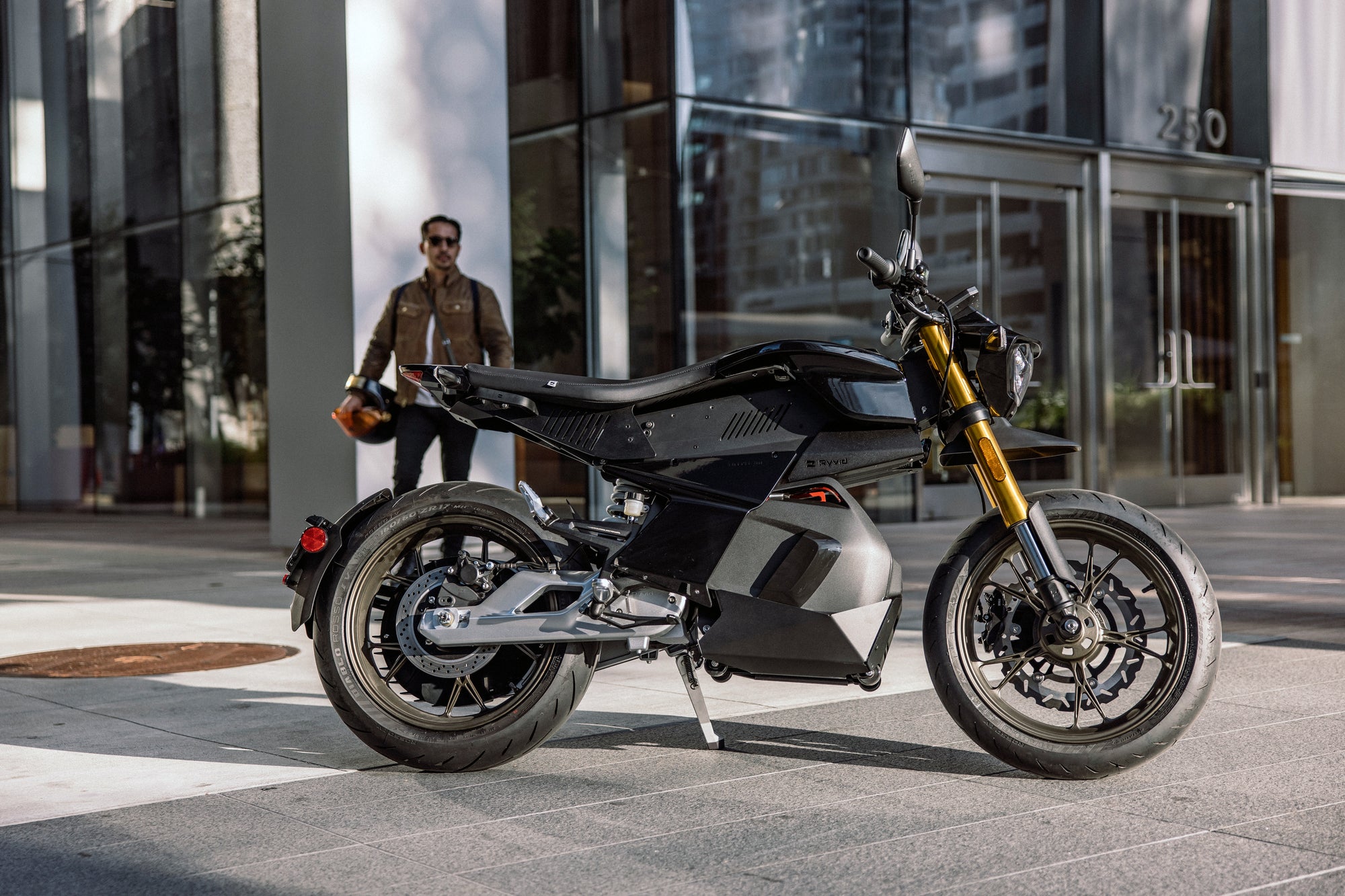
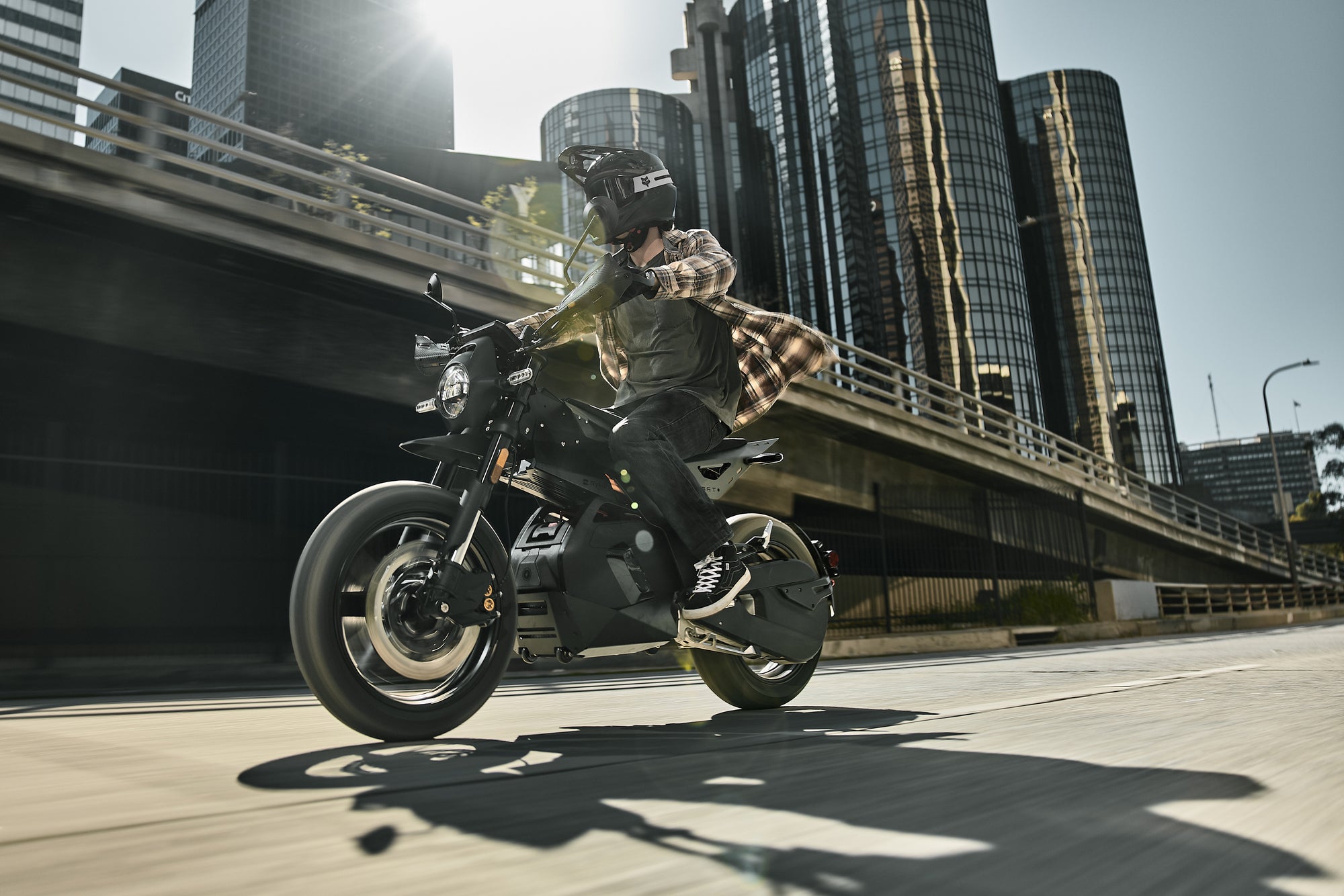
Lightweight chassis paired with precision FOC controller response and optional Dunlop Mutant all-weather multi-surface tires.
Get Catalog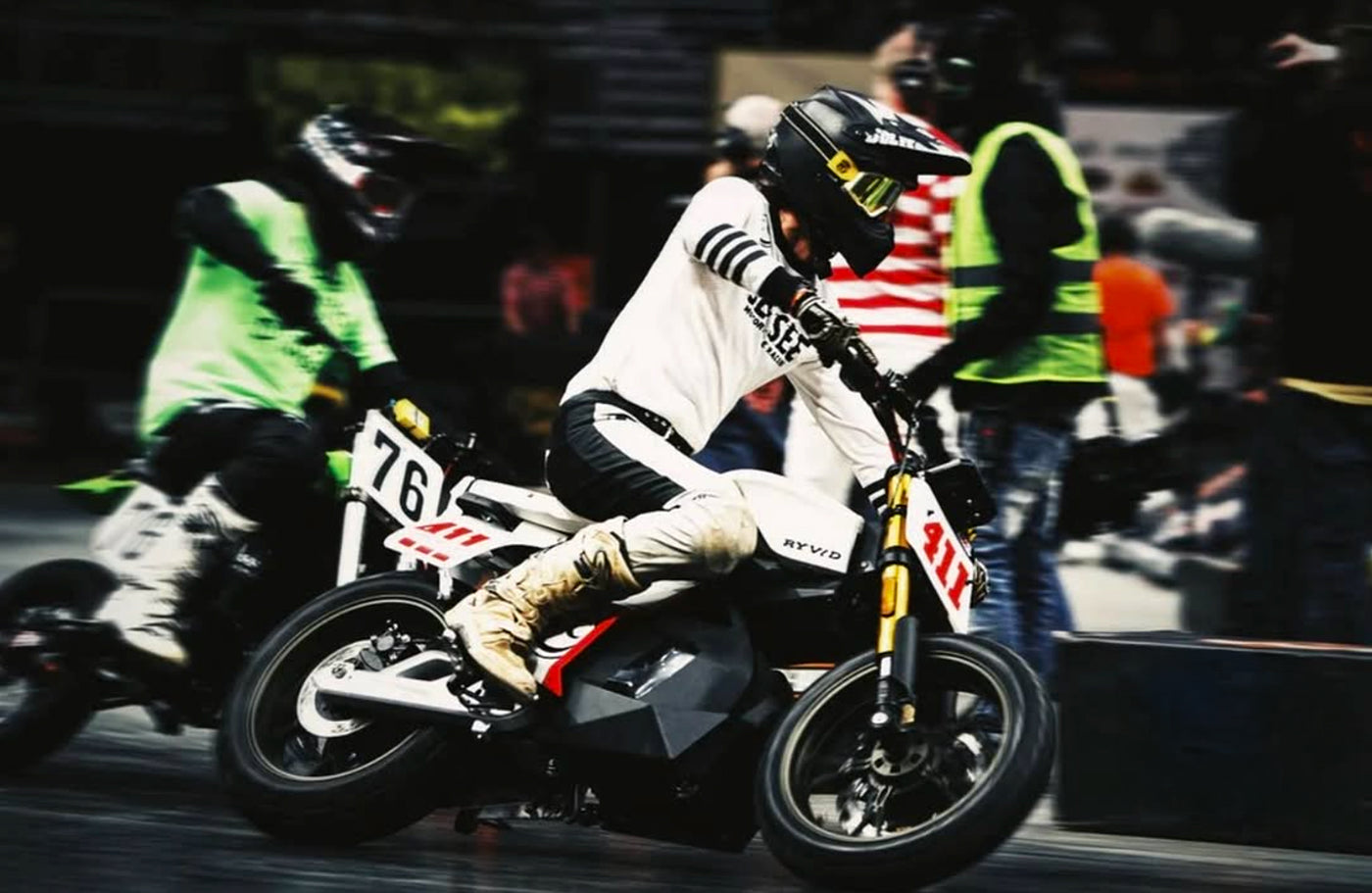
Heavy-duty telemetry integration, high load-capacity frame engineering, and reliable long-range battery packs for municipal fleets.
Get Catalog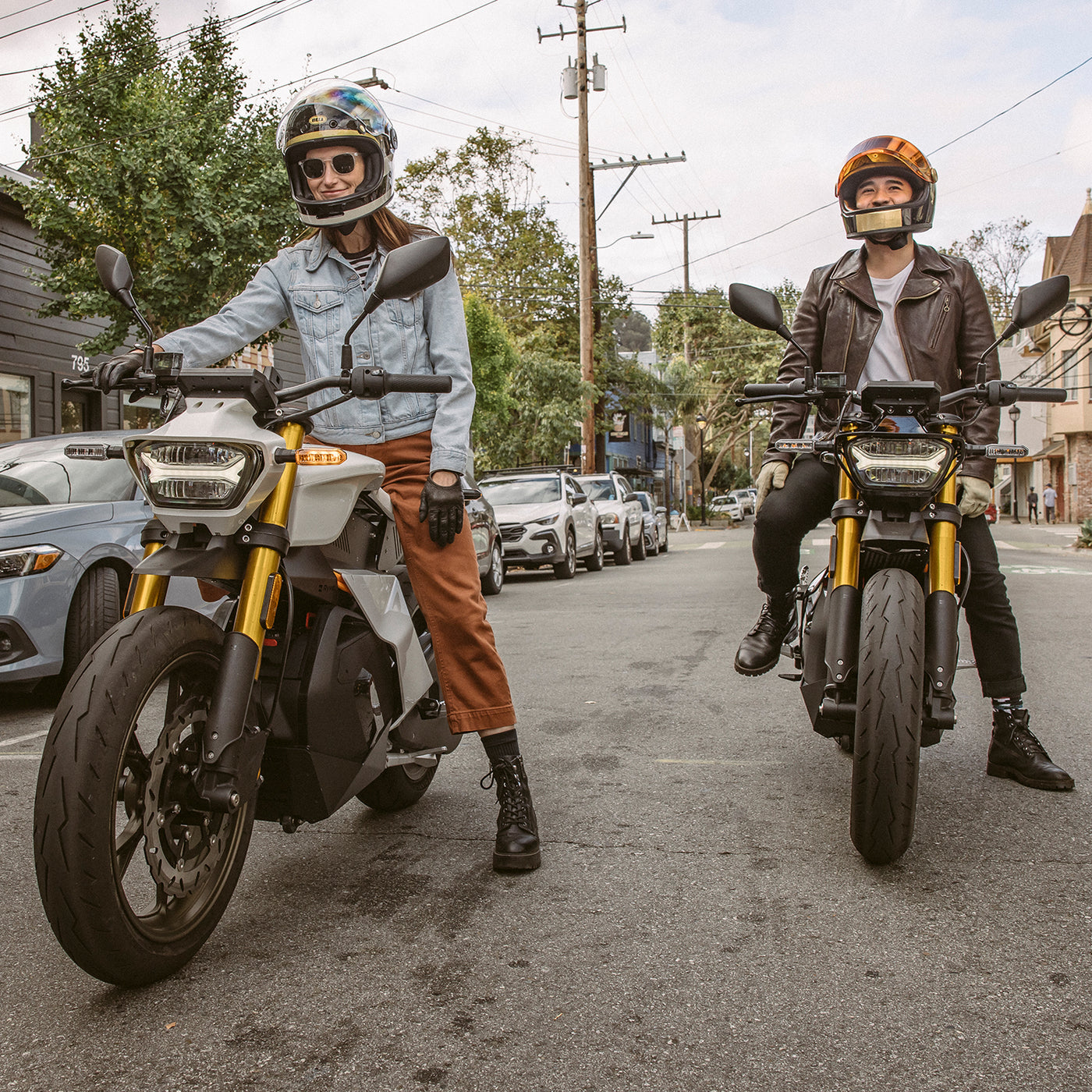
Complete product technical documentation, step-by-step service videos, direct diagnostic toolchains, and global service partner programs.
Get CatalogBelow are technical answers to common questions raised by motorcycle design teams, fleet managers, and procurement professionals when evaluating motor controller suppliers:
Partner with our technical engineering sales group to receive complete CAD models, controller step files, wiring schematics, and customized pricing for commercial electric motorcycle deployments.