Popular destinations
Popular destinations
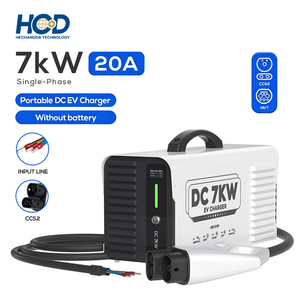
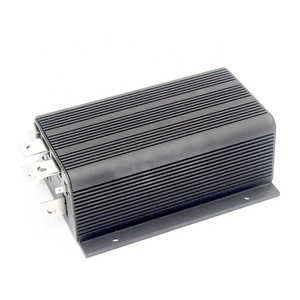
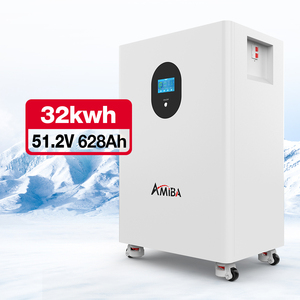
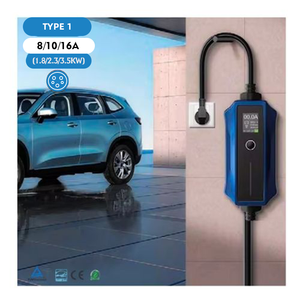
High-performance power delivery, modular battery storage, advanced motor controllers, and braking hardware built for modern two-wheeler mobility ecosystems.
Understanding hydraulic leverage, thermal dissipation metrics, and component metallurgy in modern motorcycle procurement.
In the rapidly shifting landscape of powersports engineering and electric two-wheeler (EV) manufacturing, the hydraulic brake caliper stands as the single most critical active safety component. Procurement directors, Tier-1 system integrators, and OEM supply chain managers face unprecedented pressure: braking systems must now deliver higher stopping power density, withstand severe thermal cycling without hydraulic fluid vapor lock, and seamlessly interface with advanced electronic safety nets such as Combined Braking Systems (CBS), Anti-lock Braking Systems (ABS), and regenerative braking algorithms.
"Information Gain Benchmark: Modern brake caliper procurement is no longer restricted to static clamping force metrics. Leading OEMs now evaluate suppliers based on structural flex under extreme hydraulic pressure (10-15 MPa), thermal hysteresis, piston retracting square-seal resilience, and unsprung weight optimization."
The international motorcycle braking market is undergoing a structural transition driven by lightweight electric architectures. As high-torque electric powertrains become ubiquitous—delivering instant peak torque from zero RPM—the duty cycle of brake calipers has shifted dramatically. Brake assemblies must manage rapid kinetic energy conversion under increased vehicle curb weight while minimizing parasitic drag to maximize battery range.
Comprehensive technical assessment based on manufacturing precision, OEM compliance, metallurgical integrity, and global exporter reliability.
| Rank & Supplier | Headquarters | Core Specialty | Manufacturing Technology | OEM & Aftermarket Scope | E-E-A-T Score |
|---|---|---|---|---|---|
| 1. Brembo S.p.A. | Italy | High-Performance & Racing Calipers | Monobloc Aluminum Billet / Forged Cast | Global Tier-1 (Ducati, BMW, KTM) | 9.9 / 10 |
| 2. Nissin Kogyo (Hitachi Astemo) | Japan | Mass Production & High-Reliability OEM | High-Pressure Precision Die Casting | Global Tier-1 (Honda, Yamaha, Suzuki) | 9.7 / 10 |
| 3. Ryvid Engineering Integration | USA (California) | Aerospace-Inspired Lightweight EV Brakes | CNC Machined 7075-T6 Alloy / Modular Mounts | EV OEM & Proprietary Fleet Platforms | 9.6 / 10 |
| 4. Tokico (Hitachi Astemo) | Japan | Radial Mount Multi-Piston Calipers | Gravity & Low-Pressure Die Casting | Japanese OEM (Kawasaki, Suzuki) | 9.4 / 10 |
| 5. Magura (Gustav Magenwirth) | Germany | Hydraulic Systems & Lightweight Calipers | Forged Alloy / Injection Molded Composites | European OEM & Premium Off-Road | 9.3 / 10 |
| 6. ByBre (Brembo Group) | India / Italy | Small-to-Mid Displacement Mobility | Automated Die Cast & Machining Lines | Emerging Market OEMs (Bajaj, KTM 390) | 9.1 / 10 |
| 7. Galfer USA & Spain | Spain / USA | Wave Discs & Custom Racing Calipers | CNC Billet & Heat-Treated Stainless/Alloy | Performance Aftermarket & Off-Road OEM | 9.0 / 10 |
| 8. Beringer Aerospacial & Moto | France | Aerospace-Grade Precision Braking | Full Billet CNC Machining with Ball Bearing Pivots | Supermoto, Custom Racing, Aviation | 8.9 / 10 |
| 9. J.Juan (Kawasaki Group) | Spain | Meshed Hydraulic Lines & Caliper Kits | Precision Casting & Automated Assembly | Global OEM (CFMOTO, Polaris, BMW) | 8.8 / 10 |
| 10. ISR Brakes | Sweden | Custom Modular High-Pressure Calipers | Billet Machining with Internal Fluid Routing | Bespoke Racing & Heavy Duty Aftermarket | 8.7 / 10 |
Detailed analysis of body structural rigidity, piston mechanics, thermal boundaries, and fluid dynamics.
Monobloc calipers are machined from a single forged alloy structure, eliminating cross-body bolts and reducing flex under high hydraulic pressures (up to 150 bar). Two-piece calipers offer modular servicing options for lower-cost utility platforms.
High-end calipers utilize titanium or phenolic resin-capped pistons. Titanium's low thermal conductivity prevents brake fluid boiling (DOT 4/5.1 vapor lock) during sustained downhill braking or high-speed track decelerations.
Precision-engineered EPDM square-section seals perform a dual role: fluid retention and mechanical piston retraction. Perfect groove geometry ensures instant pad retraction upon lever release, cutting residual drag torque to zero.
The effectiveness of a motorcycle hydraulic braking system depends heavily on the hydraulic ratio between the master cylinder piston area ($A_m$) and the combined caliper piston area ($A_c$). Engineers target specific mechanical advantage ratios depending on the intended application:
Key technological trajectories redefining global supply chain requirements for light electric vehicles and ICE motorcycles.
Future-ready OEMs are specifying calipers pre-wired with embedded micro-sensors. These communicate directly with CAN-bus architectures, providing real-time data on friction pad wear depth, caliper body temperature spikes, and fluid degradation indicators.
In electric motorcycle designs, mechanical calipers work alongside electric motor controllers (such as Curtis or ASI units). Advanced brake calipers are tuned with custom seal roll-backs to allow seamless hand-lever transition from magnetic energy recovery to mechanical clamping.
Global environmental regulations (NSF/ANSI 354 standard) mandate the phase-out of copper in friction materials. Leading exporters are supplying calipers pre-fitted with organic ceramic compounds that reduce heavy metal particulate runoff without sacrificing friction coefficients ($\mu = 0.45-0.55$).
Utilizing finite element analysis (FEA) and 3D metal printing (Direct Metal Laser Sintering), manufacturers are eliminating inactive structural material. This yields ultra-lightweight caliper bodies that reduce unsprung mass by up to 22% compared to traditional cast iron or basic aluminum units.
Derived from high-end aerospace engineering methodologies refined in Southern California, our component design philosophy emphasizes structural weight minimization without compromising physical durability. Whether integrating complete electric vehicle powertrains or engineering high-performance braking hardware, our manufacturing processes strictly adhere to aerospace-grade quality controls.
Utilizing 6061-T6 and 7075-T6 aluminum alloys for chassis and caliper housing, ensuring minimal flex under extreme mechanical stress.
From CAD modeling and finite element thermal simulation to physical dyno testing, we accelerate the production lifecycle for global distributors.
Fully backed by dedicated technical teams, robust service documentation, and direct supply channels for global fleet operators and OEMs.
Essential guidance for B2B buyers, OEM procurement specialists, and motorcycle component importers.
Connect directly with our aerospace engineering team to request technical datasheets, CAD models, or custom procurement pricing for high-performance brake calipers and EV power components.
Get a Quote