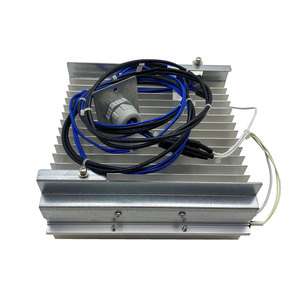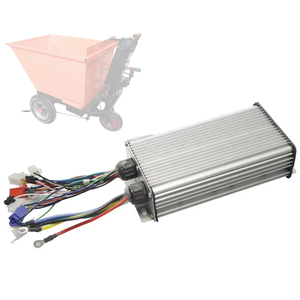
Custom OEM Regenerative Brake Controller Supplier & Exporters

Engineering Next-Generation Kinetic Energy Recovery Systems (KERS), Bi-Directional Power Electronics, and High-Torque AC/DC Motor Controllers for Electric Vehicles & Robotics.

Direct Manufacturing & Stock

High-Performance OEM Regenerative Brake Controllers

Explore our industrial-grade controllers engineered for light electric vehicles, heavy-duty industrial automation, robotics, and high-torque drivetrain conversions.
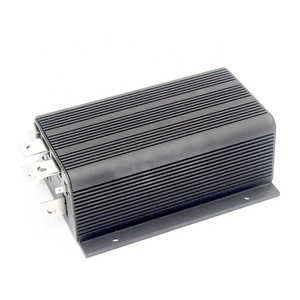
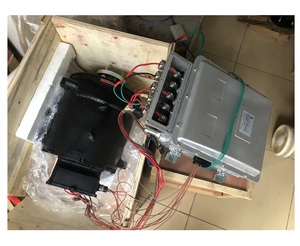
48-60V DC 15G 2 Speed Electronic Brake Controller

48-60V DC 15G 2 Speed Electronic Brake Controller Brushless Square Wave Motor Controller IP65 Protection 700-900W Output

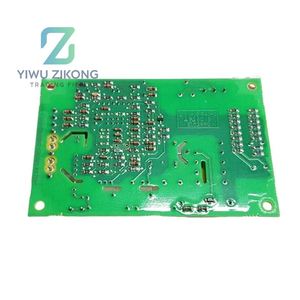
Curtis Motor Controller 60-72V 400A

Curtis Motor Controller 60-72V 400A with Regenerative Brake (1205M-6B403)

Original New NBRC-51C Brake Chopper Control Board

Original New NBRC-51C Brake Chopper Control Board Regenerative Braking Fast Shipping in Stock

SHINEGLE 384V 60kw 110kw PMSM Controller Drive Kit

SHINEGLE 384V 60kw 110kw PMSM Controller Drive Kit Regenerative Brake System for EV Conversion

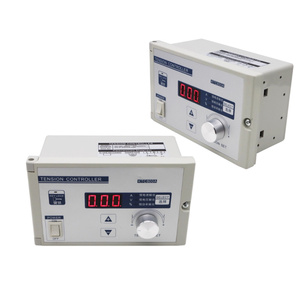
Wholesale Tension Control System Speed Regenerative Braking

Wholesale Tension Control System Speed Regenerative Braking Manual Auto Controller Control Tension for Magnetic Power Brake

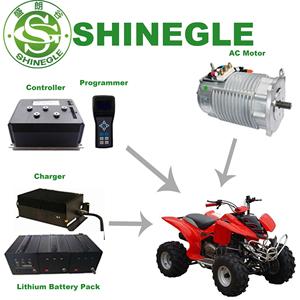
SHINEGLE Speed Controller with Regenerative Brake System 7.5kw 72v

SHINEGLE Speed Controller with Regenerative Brake System 7.5kw 72v Asynchronous Motor Kits

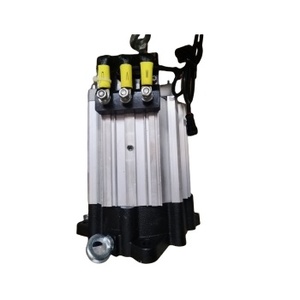
SHINEGLE 10KW 96V 72V 60V AC Electric Motor Controller Axle Gearbox

SHINEGLE 10KW 96V 72V 60V AC Electric Motor Controller Axle Gearbox Battery Regenerative Brake UTV ATV Boat EV Conversion Kit

FANUC R-30iB Robot Controller Regenerative Resistor Unit

A05B-2650-C101 (A06B-6400-C401) Original FANUC R-30iB Robot Controller Regenerative Resistor Unit Discharge Resistor in Stock

98.4%
Peak Energy Recovery Efficiency
400A+
Max Continuous Current Capacity
IP67
Submersible Environmental Rating
250,000+
OEM Units Deployed Worldwide
Technical Whitepaper & Architecture

Engineering Regenerative Braking Systems for Modern Electrified Powertrains

Regenerative braking has evolved from an auxiliary energy-saving feature into an integral cornerstone of modern electric vehicle (EV) safety, thermal management, and range maximization architecture. As an industry-leading custom OEM regenerative brake controller supplier and exporter, our engineering core blends aerospace-inspired structural thinking with advanced automotive power electronics. This comprehensive technical guide unpacks the mechanical, electrical, and algorithmic foundations necessary for system integrators, fleet OEMs, and industrial equipment manufacturers to select, customize, and deploy optimal regenerative braking controllers.

Key Engineering Metric: Implementing bi-directional Field-Oriented Control (FOC) with active brake chopping can recapture up to 25% of kinetic energy typically lost as friction heat during urban stop-and-go driving cycles, while simultaneously extending mechanical brake pad life by 300% to 500%.

1. Fundamentals of Bi-Directional Power Flow & Kinetic Energy Harvesting

When an electric vehicle or high-inertia industrial flywheel decelerates, the electric motor transitions from a torque-producing actuator into an electrical generator. The regenerative brake controller functions as a bi-directional inverter, converting the mechanical kinetic energy captured at the rotor into precise DC power that flows back into the energy storage system (ESS).

To execute this transition seamlessly without mechanical jerk or thermal overload, our custom OEM controllers utilize high-speed MOSFET/IGBT switching matrices operating at PWM frequencies up to 20 kHz. By dynamically varying the phase angle and duty cycle relative to the rotor's back-EMF (Electromotive Force), the controller controls back-torque with sub-millisecond precision. This allows smooth single-pedal driving experiences in light electric motorcycles (such as Southern California aerospace-inspired EV commuters like the Ryvid Anthem and OUTSET) while providing aggressive, heavy-duty retarder braking for industrial haulers and UTVs.

2. Brake Choppers vs. Active Battery Regeneration: Managing Over-Voltage & Thermal Energy

A critical challenge in regenerative brake design occurs when the vehicle attempts to decelerate with a fully charged battery (100% State of Charge, SoC) or under cold-temperature lithium-ion charging limits. Direct regeneration into a fully charged battery risks triggering the Battery Management System (BMS) over-voltage protection, which abruptly disconnects the electrical load and results in a total loss of braking torque.

To eliminate this safety hazard, our OEM architecture incorporates intelligent Brake Chopper Control Modules paired with heavy-duty discharge resistor banks (such as our FANUC R-30iB series and industrial NBRC chopper boards). When the controller detects battery voltage approaching peak threshold, the integrated brake chopper dynamically diverts excess regen current into high-capacity dynamic braking resistors (DBR), dissipating energy thermally while preserving continuous electric retarding performance.

Square Wave BLDC Controllers

Cost-effective, highly durable 6-step trapezoidal commutation. Ideal for 48V-60V e-scooters, light cargo tricycles, and low-speed utility vehicles needing basic IP65 2-speed braking.

Entry / Light OEM Level

Sine Wave FOC PMSM Drives

Advanced Field-Oriented Control with field weakening & space vector modulation. Delivers ultra-quiet rotation, instant torque response, and smooth variable regen braking for premium EVs.

Mid to High Power OEM

High-Voltage Heavy Duty Kits

384V+ powertrain drives capable of handling 60kW to 110kW peak outputs with integrated liquid cooling plates, CAN-bus automotive diagnostics, and multi-mode retarding.

Industrial & Heavy EV

3. Custom Firmware Calibration & Multi-Protocol CAN Bus Integration

Modern vehicle electronics demand interoperability across drivetrain components. Our custom OEM controller platform offers native support for CANopen, SAE J1939, and Modbus RTU communication protocols, allowing real-time telemetry sharing between the motor controller, BMS, vehicle control unit (VCU), and digital dashboard displays.

Through specialized tuning software, client engineers can calibrate precise regen deceleration curves based on throttle release speed, brake lever position sensors, or tilt/inclinometer telemetry (for hill-descent control on off-road ATVs and UTVs). Adjustable parameters include:

  • Off-Throttle Regen Percentage: Simulates natural engine compression braking when releasing the accelerator pedal.
  • Brake Switch Regen Ramp-Rate: Dictates how rapidly full retarding torque engages when mechanical brake switches are tripped.
  • Variable Analog Regen blending: Maps continuous brake lever actuation (0-5V thumb throttle or brake line pressure transducer) to proportional magnetic braking effort.
  • Thermal Derating Thresholds: Automatically scales down regen current if internal MOSFET junction temperatures exceed 105°C, ensuring zero hardware failure under abusive downhill duty cycles.
Industry Insights & Future Trends

Key Procurement Trends in Regenerative Brake Control Technology

Stay ahead of market shifts with actionable insights into power electronics engineering, global sustainability mandates, and supply chain strategies.

Transition to Silicon Carbide (SiC) Wide Bandgap Semiconductors

Procurement teams are rapidly shifting specifications from traditional Silicon IGBTs to Silicon Carbide (SiC) MOSFET switches. SiC technology reduces switching losses by up to 70%, operates efficiently at higher temperatures (above 175°C), and enables sub-compact controller form factors—critical for space-constrained electric motorcycle frames and compact robotic joint drives.

Automotive Functional Safety & ISO 26262 ASIL-B Compliance

As regenerative braking increasingly controls vehicle deceleration, regulatory bodies require strict compliance with ISO 26262 functional safety standards. Modern OEM procurement mandates controllers with redundant microcontrollers (Lockstep Dual-Core Architecture), hardware fault detection, and torque verification loops to prevent unintended acceleration or loss of retarding force.

Modular Hardware Platforms & Rapid OEM Customization

Global equipment manufacturers are departing from rigid off-the-shelf controllers in favor of modular OEM platforms. Suppliers providing configurable aluminum heat-sink housings, customized wire harness pinouts, custom mounting brackets, and tailored firmware parameters allow OEMs to reduce product development cycles from years to weeks.

Why Partner With Us

World-Class OEM/ODM Manufacturing Excellence

From initial circuit design to mass production and international export compliance, we provide end-to-end engineering support for global EV and industrial automation brands.

Real-world OEM EV Drivetrain and Controller Testing

Aerospace-Inspired Lightweight Design

Structural aluminum enclosures engineered with thermal finite element analysis (FEA) ensure maximum heat dissipation while maintaining lightweight agility for urban electric commuters and performance motorbikes.

Rigorous Qualification & Testing

Every controller batch undergoes thermal shock validation (-40°C to +125°C), high-vibration stress testing, potted IP65/IP67 water submersion tests, and 100% automated full-load burn-in before export shipment.

End-to-End Fleet & Government Program Support

We assist enterprise fleet buyers, municipal agencies, and OEM vehicle builders with full compliance documentation, dedicated engineering account managers, spare parts logistics, and lifetime technical support.

Frequently Asked Questions

Custom OEM Regenerative Brake Controller FAQ

Technical answers for procurement officers, electrical engineers, and enterprise system integrators.

What is the difference between active regenerative braking and dynamic resistor braking?
Active regenerative braking redirects kinetic retarding current directly back into the battery pack to extend vehicle range. Dynamic resistor braking (using a brake chopper control board like the NBRC-51C or FANUC discharge resistors) routes excess electrical energy into high-power resistor grids where it is safely dissipated as thermal energy. Dynamic resistor braking is essential when the battery pack is fully charged, operate at low ambient temperatures, or when safety regulations require secondary deceleration redundancy.
Can your custom OEM controllers be calibrated for PMSM and AC Asynchronous motors?
Yes. Our product lineup includes vector-controlled Field-Oriented Control (FOC) controllers designed for Permanent Magnet Synchronous Motors (PMSM) as well as rugged AC induction/asynchronous motor kits (such as our SHINEGLE 7.5kW-110kW series). Firmware parameters can be tuned via software interface or pre-programmed at our factory to match your motor's specific Back-EMF constant (Ke), inductance values (Ld, Lq), and resolver/encoder feedback types.
What environmental and ingress protection (IP) ratings are available?
Our standard electronic brake controllers feature IP65 to IP67 ingress protection ratings. The internal power electronics are sealed with thermally conductive conformal coating or full polyurethane potting, protecting sensitive SMT microcontrollers and power MOSFETs against dust, moisture ingress, high-pressure water jets, salt spray, and extreme road vibration.
How does regenerative braking affect battery health and battery management systems (BMS)?
When engineered properly, regen charging pulses stay within the battery cell's maximum continuous charge current specs (C-rate). Our controllers communicate directly with the BMS via CAN bus. If the BMS reports high battery cell temperature, cell imbalance, or high State of Charge (SoC), the controller seamlessly scales back regen current or transfers the braking load to an auxiliary brake chopper system to prevent battery degradation.
What is the minimum order quantity (MOQ) and lead time for custom OEM/ODM orders?
For standard off-the-shelf controllers (like Curtis, SHINEGLE, or FANUC replacement units), we maintain stock for immediate dispatch within 24 to 48 hours. For fully customized OEM orders involving custom housing geometry, specialized wire harnesses, software branding, or custom voltage/ampere specifications, our typical prototype lead time is 2 to 4 weeks, with production MOQs starting as low as 50 to 100 units depending on complexity.
Do you offer software tools for dealer service networks and field calibration?
Yes. We provide Windows-based handheld diagnostic software interfaces along with Bluetooth app SDKs. OEM customers can grant their certified dealer networks access to custom parameter tuning, real-time fault logging, throttle/brake calibration tools, and over-the-air (OTA) firmware update capabilities.

Ready to Upgrade Your EV Powertrain or Industrial Fleet?

Contact our senior engineering team today to request complete product datasheets, CAD 3D models, or discuss custom OEM prototype development.