Popular destinations
Popular destinations
Explore our precision-engineered OEM components, lithium power packages, telemetry displays, and heavy-duty drivetrain assemblies manufactured for high-performance motorcycles and electric urban mobility fleets.

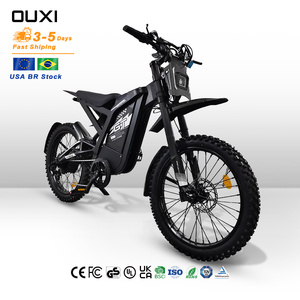
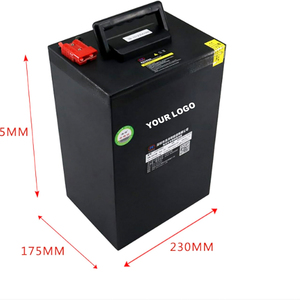
Combining California design philosophy with rigorous industrial mass production. We engineer custom inverted (USD) and conventional motorcycle front fork systems built for instant torque, heavy vehicle dynamic payloads, and zero-maintenance durability.
Utilizing extruded 6061-T6 and 7075-T6 aluminum alloys for stanchion tubes and triple trees. Our multi-stage thermal anodizing and Diamond-Like Carbon (DLC) low-friction coatings reduce stiction while offering exceptional structural stiffness under extreme compression loads.
From high-speed hydraulic cartridge dampers to dynamic electronic damping actuators. We tailor spring rates, preload shim stacks, and oil viscosity to match specific urban commuter, dual-sport, or off-road electric motorcycle geometry.
Electric motorcycles produce instantaneous full-torque output. Our heavy-duty front forks feature reinforced lower lug castings and dual radial-mount brake caliper boss designs engineered to absorb unsprung weight and high torsional braking stress.
The front suspension system of a modern motorcycle is far more than a simple linear shock absorber; it is a critical structural element responsible for directional stability, braking force vectoring, and dynamic tire contact patch maintenance. As motorcycle OEMs transition from traditional internal combustion engines (ICE) to electric powertrains, front fork engineering faces unprecedented mechanical challenges.
Electric powertrains deliver linear instantaneous torque and typically carry higher total mass concentrated around mid-chassis battery enclosures. Consequently, front suspension forks manufactured in certified factories must exhibit significantly higher lateral stiffness and torsional resistance. Under heavy front-end load transfer—such as rapid deceleration via dual hydraulic disc brakes combined with high-level regenerative braking system controllers—conventional telescoping forks often experience binding caused by stanchion flexing.
Our OEM manufacturing lines resolve this flex via computer-simulated FEA (Finite Element Analysis) structural topology. By deploying inverted (USD - Upside Down) structural layouts where the larger outer tube is clamped directly into the triple trees, we increase overall flexural rigidity by up to 35% compared to standard right-side-up forks without imposing unnecessary mass penalties.
To support Tier-1 OEM brand integration, custom suspension fork production adheres to a zero-defect manufacturing roadmap. Every factory batch undergoes fully automated dimensional verification and dynamic fluid displacement testing.
The manufacturing process begins with precision cold-drawn seamless aluminum alloy tubing. Outer tubes undergo multi-axis CNC turning and deep-hole boring to ensure internal concentricity tolerances within ±0.015mm. Stanchions undergo induction hardening, precision centerless grinding, and mirror-finish micro-polishing.
Critical OEM Quality Validation Protocols include:
As global motorcycle production shifts toward modular platforms, smart electronics, and localized assembly hubs, supply chain directors must realign their OEM component procurement strategies.
Global brands are abandoning single-model custom fork tooling in favor of standardized outer tube diameters (e.g., 48mm / 51mm) with modular lower fork lugs. This allows a single factory production line to supply front forks compatible with both urban commuter scooters and off-road electric dirt bikes simply by swapping internal cartridge valving and mounting brackets.
Procurement demand is accelerating for front forks equipped with internal solenoid valves capable of real-time adjustment. Interfacing directly with central EV controllers and TFT cockpit displays, next-generation suspension systems automatically adjust rebound and compression damping based on IMU sensor lean angle and vehicle speed.
Environmental regulatory compliance (EU REACH, RoHS) is driving the adoption of chrome-free anodizing processes and 100% recyclable aluminum alloys. Leading OEM factories are implementing closed-loop hydraulic oil recycling and solar-powered CNC machining facilities to meet strict corporate ESG metrics.
The motorcycle suspension landscape is undergoing a technological revolution driven by weight reduction targets and smart chassis control. Key technical development vectors include:
By wrapping forged aluminum upper tubes in multi-axial carbon fiber weaves, manufacturers achieve a 20-25% reduction in unsprung front-end mass while vastly increasing vibration damping characteristics.
Integrating electric seat and suspension height actuators allows bikes to automatically lower seat height at zero speed for city stop-and-go ease, returning to optimum ground clearance when accelerated.
Eliminating mechanical shim valves by using synthetic oil infused with micro-iron particles whose viscosity alters within milliseconds upon application of a magnetic field created by an integrated ECU.
Modern OEM forks feature internal channels specifically designed to protect ABS sensor wires, brake lines, and electronic shock telemetry cables from external snagging and mud build-up.
Technical, logistical, and customization answers for motorcycle factory buyers, supply chain executives, and design engineers.
Partner with an engineering team that understands precision manufacturing, aerospace alloy metallurgy, and electric vehicle dynamics. Speak directly with our technical procurement specialists today.