Popular destinations
Popular destinations
Precision-engineered electric motorcycle traction motors, smart controllers, LiFePO4 battery modules, and high-speed DC charging stations.
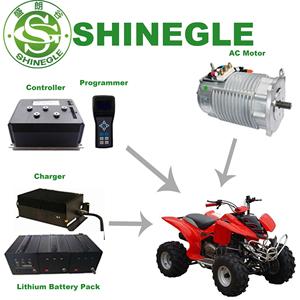
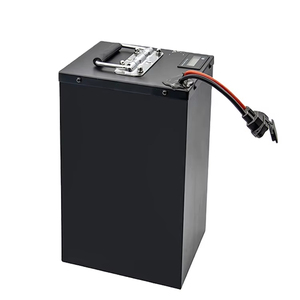
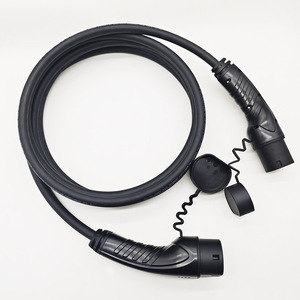
An in-depth technical analysis for OEM vehicle designers, drivetrain integration engineers, and procurement executive teams.
Unlike standard Surface Permanent Magnet (SPM) designs, our OEM IPM motors embed NdFeB magnets deep within the rotor silicon steel laminations. This configuration delivers structural integrity at rotational speeds exceeding 12,000 RPM while leveraging reluctance torque to expand the constant power speed ratio (CPSR) by up to 35% under field-weakening algorithms.
Transitioning from traditional stranded copper wire to high-density hairpin flat-wire winding boosts slot fill factor from 45% to over 72%. This drastically reduces DC copper resistance ($R_s$), mitigates Joule heating losses, and improves thermal conduction pathways directly from the coils to the liquid-cooling jacket, unlocking maximum continuous power density.
To eliminate thermal throttling under continuous steep climb or high-speed highway cruising, our motor housings incorporate 3D spiral fluid cooling passages optimized via Computational Fluid Dynamics (CFD). Using anti-corrosive ethylene glycol mixtures, heat transfer rates are maximized to maintain stator winding temperatures below 140°C even under severe transient peak overloads.
| Motor Platform Topology | Continuous Power (kW) | Peak Torque Density (Nm/kg) | Peak Efficiency Map | Cooling Interface | Primary OEM Intent |
|---|---|---|---|---|---|
| Mid-Drive Liquid-Cooled IPM | 12.5 kW – 35 kW | > 5.8 Nm/kg | 96.8% @ 4500 RPM | Internal Liquid Jacket | High-Performance Street & Adventure EVs |
| Air-Cooled Radial IPM Motor | 5.0 kW – 12 kW | 4.2 Nm/kg | 94.5% @ 3800 RPM | Extruded Aluminum Fins | Urban Commuter & Utility Motorcycles |
| Direct-Drive Hub Motor | 2.0 kW – 8 kW | 3.1 Nm/kg | 91.2% @ 1200 RPM | Passive Passive Air Flow | Light E-Scooters & Last-Mile Delivery |
| Axial Flux Swingarm Integrated | 15 kW – 45 kW | > 9.2 Nm/kg | 97.1% @ 6000 RPM | Dual-Sided Liquid Cooling | Hyper-Commuter & Race Platform OEMs |
Strategic engineering vectors shaping the next decade of zero-emission two-wheeler development.
The global e-mobility market is shifting rapidly from standard 72V/96V architecture toward 400V and 800V high-voltage platforms. Integrating SiC MOSFET inverters enables switching frequencies above 20 kHz with minimal switching loss. This reduces total inverter size by 50% while allowing electric motors to achieve higher phase currents, immediate acceleration response, and improved thermal stability across broad ambient ranges.
Modern electric motorcycle buyers demand smooth, controllable energy recovery without sacrificing chassis balance. Next-generation powertrain control units incorporate real-time wheel speed sensing, IMU tilt dynamics, and variable dynamic brake choppers (such as the NBRC-51C platform) to execute predictive regenerative braking. This reclaims up to 22% of kinetic braking energy directly into the battery pack while providing seamless anti-lock electronic deceleration.
Weight reduction remains the single largest factor in extending electric range. Future electric motorcycle frame designs favor stressed-member motor casings engineered from aerospace-grade A356-T6 alloy. By integrating the motor casing directly into the swingarm pivot axis, un-sprung mass is dramatically minimized, improving rear wheel suspension responsiveness and chassis rigidity on aggressive terrain.
Commercial fleet management and municipal government contracts require strict compliance with ISO 26262 ASIL-B functional safety standard protocols. Next-generation OEM motors feature dual-channel resolver position sensors, internal phase temperature sensing arrays, and unified CANopen/SAE J1939 telemetry output to stream real-time motor health data directly to digital instrument clusters and cloud diagnostics platforms.
Navigating raw material supply stability, modular procurement, and global regulatory compliance in 2025–2030.
Fluctuating Neodymium and Dysprosium prices necessitate strategic supply contracts and innovative rotor geometries. Leading OEMs are migrating to grain boundary diffusion (GBD) neodymium magnets, which cut heavy rare-earth content by 60% while elevating thermal demagnetization resistance limits up to 200°C ($N42UH$ / $N45SH$ grades).
Rather than negotiating separate purchase orders for motors, controllers, gear reducers, and wiring harnesses, global EV brands are adopting single-source modular powertrain assembly. Sourcing pre-calibrated kit solutions significantly reduces engineering validation cycles, eliminates component mismatch risks, and accelerates time-to-market by up to 8 months.
Exporting to European and North American markets requires rigorous adherence to CE, UL, RoHS, REACH, and UN38.3 standards. Procurement officers must mandate comprehensive material declaration documentation, full batch-level magnet traceability, and complete End-of-Line (EOL) dyno test reports for every production unit delivered.
Combining aerospace structural principles, automotive-grade manufacturing facilities, and comprehensive co-development services.
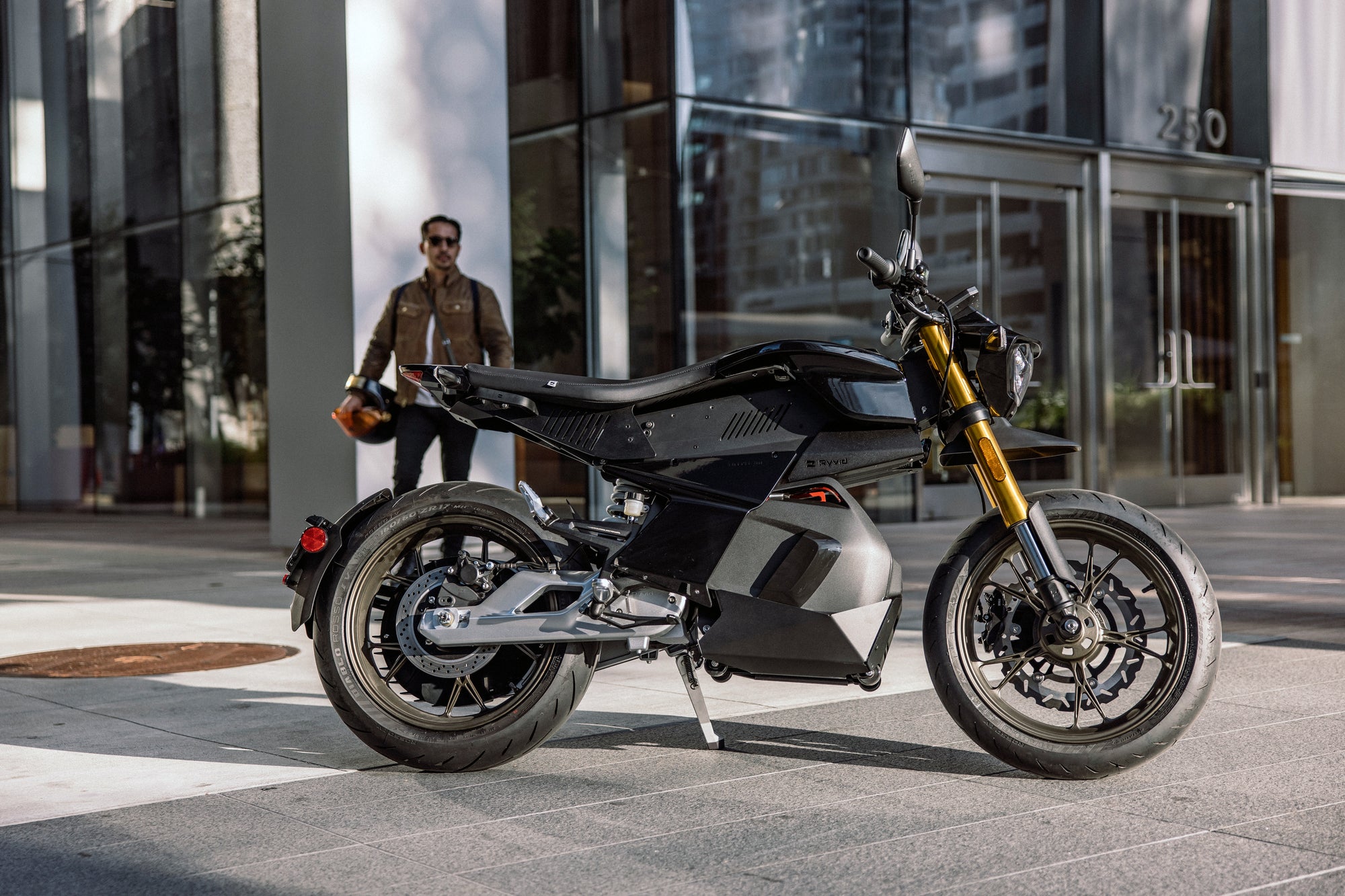
Our engineering team originates from aerospace design background, applying structural optimization, FEA strain modeling, and strict thermal validation to two-wheeled EV powertrains. Every motor casing undergoes high-pressure die casting and precision CNC machining inside IATF 16949-certified cleanrooms.
Custom shaft splines, mounting flange geometry, phase wire output angles, and specific KV voltage/RPM tuning matching your battery pack curve.
Every motor is subjected to automated back-EMF, cogging torque, insulation resistance (Hi-Pot test), and thermal mapping prior to export packaging.
Dedicated warehouses across North America and Europe facilitate fast sample prototyping, warranty replacement dispatch, and duty-free bulk logistics.
From urban commuters to commercial delivery fleets, our electric motor platforms deliver ultra-low maintenance and linear power under harsh environmental stress.
High continuous torque capacity for heavy accessory loads and 24/7 multi-shift operating cycles.
Fully sealed IP67 motor shell prevents mud, water, and sand ingress during extreme trail riding.
Instant throttle response combined with smooth regenerative braking for stop-and-go city traffic.
Essential technical and commercial guidance for evaluating custom OEM electric motorcycle motor suppliers.
We provide full customization including stator stack height, winding turns (KV tuning), rotor shaft spline profile, encoder/resolver type (Sin/Cos, Hall Effect), housing mounting bolt pattern, thermal sensor choice (PT100, NTC 10K), phase terminal lead length, and custom anodized shell finishes.
Standard prototype development cycles take 3 to 4 weeks for modified shaft/winding configurations using existing housing dies. Completely customized motor housing castings and new lamination tooling are delivered within 6 to 8 weeks, including complete dyno test validation reports.
Our IPM motors utilize high-grade Neodymium magnets rated for $180^\circ\text{C} - 200^\circ\text{C}$ working temperatures ($SH$/$UH$ class). Combined with internal spiral liquid cooling jackets and automated software thermal derating embedded in the controller, demagnetization risks are completely eliminated.
Yes. While we engineer perfectly matched motor-inverter bundles (such as SHINEGLE and ASI platforms), our motors are universally compatible with major Field Oriented Controllers (FOC) including Curtis, Sevcon, Kelly, VESC, and Sabvoton via standard CANbus and encoder interfaces.
Our traction motors feature heavy-duty rotary shaft seals, dual O-ring housing joints, and potted terminal boxes. They are independently certified to IP67 and IP6K9K standards, permitting immersion in water up to 1 meter and resistant to high-pressure hot water washdowns.
Sample engineering evaluation orders are supported with an MOQ of just 2 units. For mass production runs featuring custom tooling or customized customer logo branding, our standard OEM production MOQ starts at 50 units per batch.
Partner with an industry-leading electric motorcycle motor manufacturer. Contact our senior powertrain design team for CAD models, dyno test data, and competitive wholesale quotes.