Popular destinations
Popular destinations
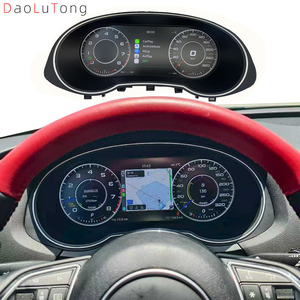
Explore our precision-engineered core components, dynamic dashboard instruments, high-torque drivetrain packages, and SKD/CKD dual-sport electric platforms optimized for global fleet deployment and white-label custom manufacturing.
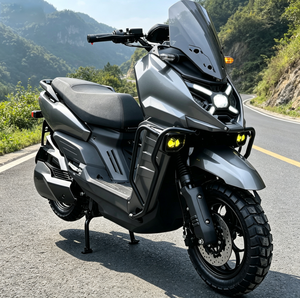
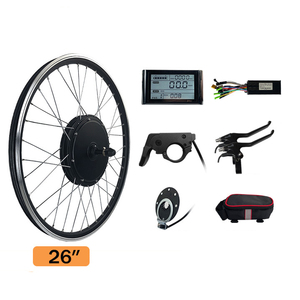
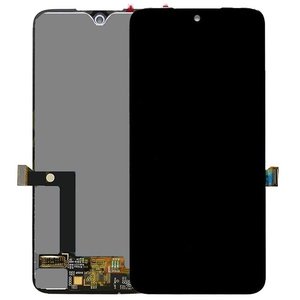
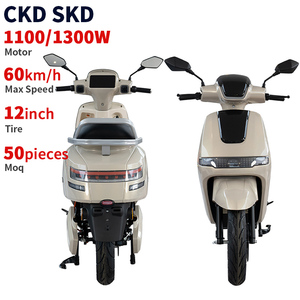
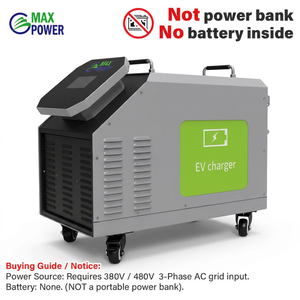
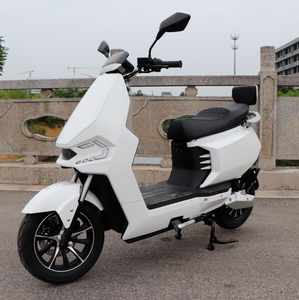
The global light electric vehicle sector is experiencing a structural migration from low-speed urban commuters toward high-performance, multi-terrain dual-sport platforms. Commercial procurement managers, fleet operators, and OEM brand owners require customized solutions that balance street-legal compliance with extreme off-road durability. Sourcing a custom OEM dual sport e-motorcycle manufacturer involves navigating complex trade-offs between frame structural rigidity, power controller vectoring algorithms, energy density optimization, and regional homologation protocols.
This whitepaper synthesizes aerospace-inspired structural engineering, Field-Oriented Control (FOC) motor electronics, and flexible supply chain models (CKD/SKD) to establish a rigorous evaluation framework for B2B decision-makers. By moving away from off-the-shelf cast iron architectures toward folded aluminum aerospace frames and integrated CAN-bus telemetry, modern OEM partners can deliver superior power-to-weight ratios while slashing warranty overhead by over 40%.
Architectural innovations driving high-margin ODM/OEM e-motorcycle production
Utilizing folded 6061-T6 aluminum structural sheet design minimizes weld fatigue, reduces frame weight by 30%, and eliminates standard jig tooling costs for custom geometry variants.
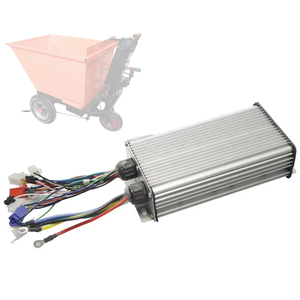
Variable sine-wave controller algorithms paired with dynamic Field Weakening unlock higher top speeds, smooth throttle response, and linear regenerative braking under heavy duty cycles.
Patented push-button variable seat height actuators allow real-time adjustments (up to 3 inches), enabling one chassis platform to accommodate diverse rider ergonomics seamless globally.
Integrated high-capacity lithium (NMC/LFP) quick-release battery modules with automotive-grade CAN-bus BMS supporting fast DC station charging and 3,000+ deep discharge cycles.
Building a competitive dual sport electric motorcycle demands rigorous multi-surface engineering. Off-road environments present high mechanical stress, dust exposure, and thermal spikes during sustained hill climbs. Conversely, urban highway operation requires high continuous output, stable high-speed tracking, and fully compliant road-lighting systems.
Traditional tubular steel motorcycle frames introduce excess mass and manufacturing bottlenecks due to manual robotic welding inspections. Modern OEM dual-sport platforms leverage structural aerospace aluminum monocoques. By housing the motor controller and battery pack within the central spine of the frame, the vehicle achieves optimal mass centralization. This lowers the polar moment of inertia, giving riders effortless flickability on tight trail turns while maintaining high-speed stability on asphalt.
Dual-sport duty cycles generate extreme heat in both the stator windings and the MOSFET switching arrays of the motor controller. Leading OEM manufacturers mitigate thermal throttling using three primary technologies:
Achieving dual-purpose balance requires precise rake, trail, and suspension travel metrics. OEMs tune front inverted hydraulic forks and rear linkage monoshocks to absorb high-velocity off-road impacts while maintaining anti-squat geometry under hard electric torque launches.
| Technical Feature | Standard E-Scooter / Commuter | Heavy-Duty Off-Road E-Bike | OEM Custom Dual-Sport E-Motorcycle |
|---|---|---|---|
| Nominal Voltage | 48V – 60V | 60V – 72V | 72V – 102V High-Efficiency Architecture |
| Motor Peak Output | 1.0 kW – 3.0 kW | 5.0 kW – 8.0 kW | 10.0 kW – 20.0 kW Peak Instant Torque |
| Wheel & Tire Setup | 10" – 12" Street Slick | 19" / 16" Knobby Off-Road | 17" / 17" Dual-Sport or 19"/17" All-Terrain |
| Chassis Construction | Stamped Low-Carbon Steel | Chromoly Tubular Steel | Aerospace Folded Aluminum Monocoque |
| Homologation Support | Limited / Non-Road Legal | Off-Road Only | DOT / EEC / CE Road-Legal Ready |
As global regulatory bodies accelerate internal combustion engine (ICE) phase-outs, enterprise buyers face evolving supply chain mandates. Strategic procurement directors must evaluate manufacturers based on long-term technological adaptability and modularity.
Import tariffs, localized content rules, and container freight costs have made shipping fully built-up (CBU) motorcycles economically inefficient. Sourcing components via **Semi-Knocked Down (SKD)** or **Completely Knocked Down (CKD)** formats allows distributors to assemble vehicles locally, reducing import duty tariffs by 15% to 30% while maximizing shipping density per 40ft HQ container.
Modern dual-sport fleets rely on smart connectivity. Future OEM platforms incorporate vehicle control units (VCU) with integrated **CAN-bus 2.0B**, GPS tracking, cellular IoT modules, and remote Over-The-Air (OTA) firmware update capabilities. Fleet managers can remotely adjust torque curves, speed caps, and regenerative braking power based on geo-fenced boundaries or rider skill levels.
The convergence of EV car charging infrastructure and lightweight e-motorcycles is a key trend. Modern dual-sport OEMs are adopting J1772, Type 2, and onboard DC fast-charging ports, allowing riders to top off up to 80% charge in under 30 minutes at standard public charging stations.
Proven engineering heritage, California design precision, and global scalable supply chains.
Every frame, controller, and battery harness undergoes 100% automated optical inspection, ultrasonic weld validation, and end-of-line dyno testing to guarantee flawless operation.
From custom plastic bodywork colors (Atomic Gold, Galactica Black, Rapid White) to bespoke controller mapping, we deliver turn-key branded solutions for global distributors.
Accelerate your market entry with our rapid 3D prototyping, modular tooling dies, and dedicated sample production lines capable of producing working validation units in weeks.
Critical answers for fleet buyers, importers, and brand managers
Consult directly with our engineering sales team to request full CAD specifications, custom OEM quote matrices, or sample evaluation units.