
Popular destinations
Popular destinations
High-efficiency, weatherproof, and multi-protocol mobile EVSE systems engineered for global compliance (CE, TÜV, UL, CB, UKCA).
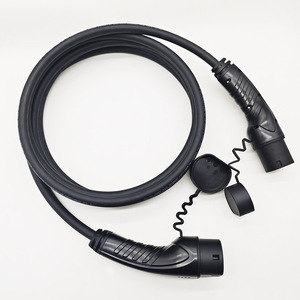
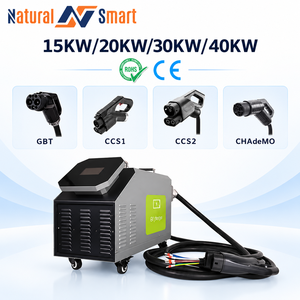
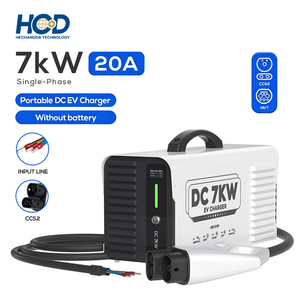
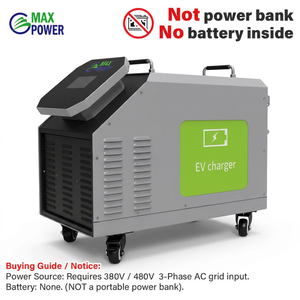
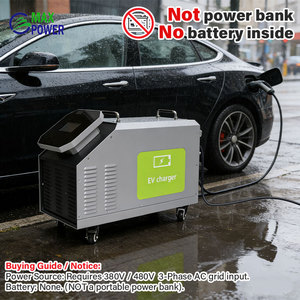
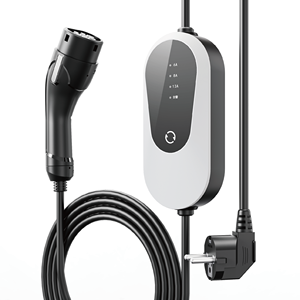
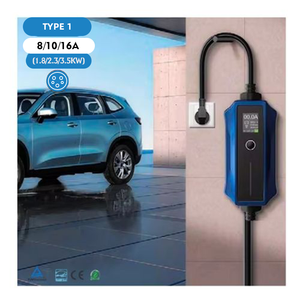
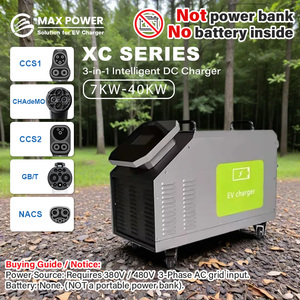
An authoritative analysis of hardware design, power electronics integration, dynamic thermal throttling, and global regulatory compliance for commercial importers and distributors.
The global EV ecosystem has shifted decisively toward flexible, multi-scenario charging infrastructure. Portable Electric Vehicle Supply Equipment (EVSE) is no longer viewed merely as an emergency backup cable; it has matured into a core primary charging solution for fleet managers, residential users lacking fixed wallboxes, roadside assistance operators, and auto dealerships. Top-tier Chinese EV charger manufacturers lead this transition by embedding Silicon Carbide (SiC) MOSFET switches, real-time temperature sensing arrays, and dual-PCB control architectures into compact, highly resilient enclosures.
China's dominance in portable EV charger manufacturing stems from complete backward integration across power electronics, precision injection molding, SMT automated assembly, and specialized cable fabrication. By integrating automotive-grade testing protocols (MIL-STD-810H environmental stress screening, drop testing from 1.5m, and 5000-cycle connector insertion endurance), premier Chinese exporters guarantee low return rates and robust field reliability across harsh climates ranging from Nordic sub-zero environments to Middle Eastern desert heat.
Evaluate key technical indicators to optimize portfolio selection for commercial distribution and fleet provisioning.
| Feature Parameter | Smart Portable AC EVSE (3.5kW - 22kW) | Mobile Level 3 DC Fast Charger (7kW - 40kW) |
|---|---|---|
| Primary Application | Home, Worksite, Rental Fleets, Destination Charging | Emergency Rescue, Auto Dealers, Fleet Depots, Field Service |
| Input Voltage Range | 110V-240V 1-Phase / 380V-415V 3-Phase AC | 260V-475V 3-Phase AC / 480V Industrial AC |
| Efficiency Rating | > 97.5% (Low Thermal Losses) | > 95.5% (SiC Power Conversion Topologies) |
| Protection Index | IP67 Enclosure / IK10 Impact Resistance | IP54 Mobile Cabinet / IP67 Connector Gun |
| Communication Stack | Bluetooth 5.0, Wi-Fi 2.4G, Tuya IoT, OCPP 1.6J | CAN Bus, 4G LTE, Ethernet, OCPP 1.6J / 2.0.1 |
| Safety Mechanisms | Type B RCD (AC 30mA + DC 6mA), Over-Temp, Over-Volt | Insulation Detection, Reverse Polarity, Emergency Stop, Short-Circuit |
Strategic intelligence for B2B sourcing directors preparing for next-generation grid connectivity and regulatory shifts.
Procurement mandates are moving beyond unidirectional power transfer (G2V). Emerging portable EV chargers incorporate bidirectional AC/DC convertors (V2H/V2L/V2G), enabling electric vehicles to function as mobile energy storage systems (ESS). Chinese exporters are embedding ISO 15118-20 protocol layers, empowering portable chargers to feed energy back to jobsite equipment or residential microgrids during peak-rate cycles or grid failures.
Manual RFID card swiping and fragmented smartphone applications are being replaced by automated, cryptographic handshake mechanisms. Portable EV chargers equipped with public key infrastructure (PKI) hardware chips automatically handle billing, contract verification, and security authorization instantly upon plug insertion into compatible EV inlets, dramatically improving operational friction for commercial fleets.
By substituting legacy Silicon IGBTs with wide-bandgap Silicon Carbide (SiC) power devices, China's leading R&D facilities have halved the weight and volume of mobile DC fast chargers (7kW to 40kW). This milestone allows 20kW-40kW DC fast charging units to be easily loaded into standard vehicle trunks for roadside rescue fleets, providing high kw delivery without bulky industrial cabinets.
Inside the advanced manufacturing processes that set tier-1 Chinese EVSE exporters apart from budget suppliers.
Mobile EV chargers operate in unpredictable field environments, subjected to direct sunlight, torrential rain, and mechanical impacts. Premier Chinese factories utilize PC+PBT alloy housing materials reinforced with UV-stabilized structural resins, achieving an IK10 mechanical impact rating (withstanding a 5kg mass dropped from 400mm). Internally, potting compound thermal conductive gels dissipate heat away from power switching relays, maintaining full operational capacity even in ambient temperatures of up to 55°C without current thermal throttling.
Modern commercial procurement requires remote management visibility. Top portable chargers integrate multi-tenant Cloud API endpoints via OCPP 1.6JSON (upgradeable to OCPP 2.0.1). End-users can schedule off-peak charging sessions, adjust current output dynamically from 6A to 32A/48A, track real-time power metrics, and receive instant push notifications for ground faults or input over-voltage events directly on iOS and Android applications.
Clear, expert insights addressing technical compliance, OEM customization options, quality controls, and supply chain logistics.
For standard logo customization and packaging adjustments, MOQ typically starts at 50 to 100 units. For comprehensive ODM projects involving customized industrial tooling, specialized enclosure colorways, or tailored PCB firmware modifications, MOQs generally range from 300 to 500 units, backed by complete engineering proofing cycles before mass production.
Leading Chinese portable EVSE units integrate real-time MCU monitoring that performs pre-charge insulation testing and voltage validation. If grid input fluctuates beyond safe thresholds (e.g., ±20% voltage variance or frequency anomalies), the unit dynamically scales down charging amperage or triggers a latched shutdown in under 10 milliseconds to safeguard both the internal power modules and the electric vehicle's onboard charger (OBC).
European distribution requires CE marking covering LVD (EN 62752 / EN 61851-1) and EMC standards, along with RoHS/REACH chemical safety compliance and TÜV certification marks. For North America, units must comply with UL 2594, UL 2231-1/-2, and FCC Part 15 Class B, verified through ETL, CSA, or UL testing facilities to ensure seamless customs clearance and commercial insurance coverage.
Yes. Mobile DC fast chargers (7kW-40kW) feature modular output cable assemblies or switchable adapter interfaces. The internal control software automatically detects whether a CCS1, CCS2, GB/T, or CHAdeMO gun is connected, reconfiguring the CAN bus/PLC communication protocol and voltage output curve to match the vehicle's Battery Management System (BMS) requirements instantly.
Standard export contracts include a 24 to 36-month full-replacement or component-repair warranty. OEM partners are supplied with 1% to 2% complementary spare parts (such as PCBA control boards, connector cables, and relay modules) along with complete technical documentation, service manuals, and direct R&D engineering escalation channels for localized field repairs.
Elevate your commercial lineup with field-proven, certified, high-reliability mobile AC/DC EV charging equipment tailored to your brand specifications.
Contact Us