Popular destinations
Popular destinations
Explore our top-tier export-ready Battery Management Systems, high-power lithium battery modules, EV charging stations, and smart instrument controllers designed for maximum efficiency, thermal stability, and prolonged cycle life.
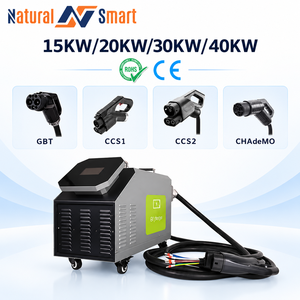
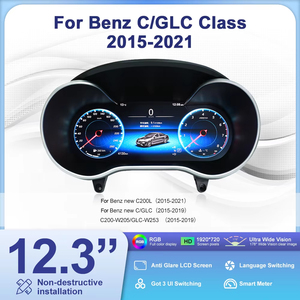
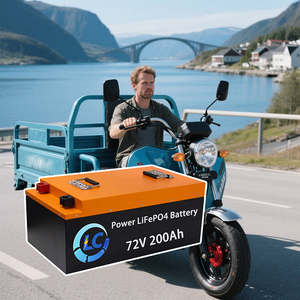
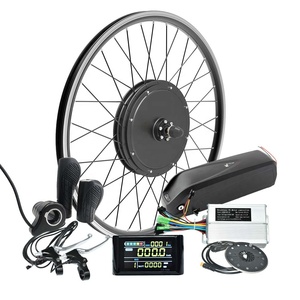
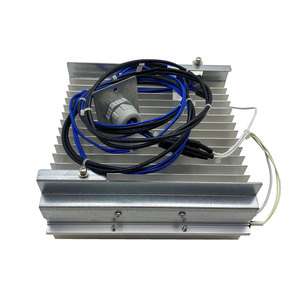
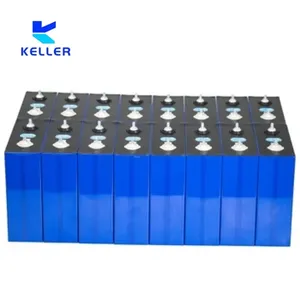
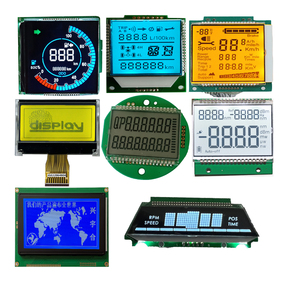
As global energy transitions accelerate across Electric Vehicles (EVs), Commercial Fleet Electrification, and Utility-Scale Energy Storage Systems (ESS), selecting a premiere China Battery Management System supplier & exporter is no longer just a component decision—it is a core strategic lever for safety, longevity, and total cost of ownership (TCO).
Integrating Extended Kalman Filtering (EKF) and Machine Learning Digital Twin algorithms, our BMS architectures deliver precise state-of-charge estimation within ±1.5% tolerance under severe dynamic temperature fluctuations (-40°C to +85°C).
Built from the ground up to adhere to ISO 26262 ASIL-D functional safety specifications. Hardware redundancy, real-time insulation testing, and dual microcontrollers ensure instant protection against over-voltage, thermal runaway, and insulation faults.
Unlike legacy passive balancing systems that bleed excess energy as wasted heat, our bi-directional active balancing transfer energy dynamically between cells at currents up to 5A, extending total battery pack cycle life by over 30%.
In high-density Lithium Iron Phosphate (LiFePO4) and Nickel Manganese Cobalt (NMC) packs, passive heat dissipation causes localized thermal hotspots inside module enclosures, accelerating degradation of adjacent cells. Our proprietary active transfer balancing decreases module thermal variance to under 2.5°C, eliminating thermal cascade risks in heavy-duty electric motorcycles, telecom towers, and DC fast-charging mobile systems.
Combining aerospace-inspired chassis structural efficiency, high-voltage automotive powertrain validation, and fully automated SMT production lines, our facility sets the benchmark for international supply chain reliability.
Insulation potting compounds, vibration dampening housings compliant with MIL-STD-810G, and IP67/IP68 ingress protection ensure unyielding performance under extreme shock, sub-zero cold, or desert operational conditions.
Equipped with CAN 2.0B, CAN FD, RS485, and optional Wireless BMS (wBMS) mesh networks. Native integration with cloud IoT dashboards enables over-the-air (OTA) firmware patches and predictive fault analysis for international fleet managers.
Through strategic semiconductor procurement, localized vertical integration, and high-volume automated testing, our clients gain up to 28% unit cost savings compared to European and North American tier-1 suppliers without sacrificing safety.
| BMS Architecture | Target Voltage Range | Cell Balancing Type | Key Applications | Functional Safety Level |
|---|---|---|---|---|
| Centralized BMS | 12V – 96V (Low/Mid Voltage) | Passive / Active (1A) | Electric Bicycles, E-Scooters, Telecom Backups, Light AGVs | ISO 26262 ASIL-B / CE / UN38.3 |
| Modular Master-Slave BMS | 100V – 600V (Medium Voltage) | Bi-directional Active (2A - 5A) | Electric Motorcycles, Urban Commuter EVs, Mobile DC Chargers | ISO 26262 ASIL-C / IEC 62619 |
| Distributed / Wireless BMS (wBMS) | 400V – 1000V+ (High Voltage) | Inductive / Capacitive Active (5A+) | Heavy Electric Trucks, Grid Energy Storage (ESS), Utility Solar Packs | ISO 26262 ASIL-D / UL 1973 / UL 9540A |
For procurement directors, engineering lead buyers, and system integrators, navigating the next 5 years of battery management selection requires understanding four critical industry shifts currently emerging from China's manufacturing ecosystem.
Procurement is rapidly shifting toward BMS controllers embedded with machine learning inference chips. By modeling electrochemical impedance spectroscopy (EIS) in real-time, cloud-connected BMS platforms can predict lithium dendrite formation weeks before a potential thermal event occurs, reducing warranty claims for vehicle manufacturers.
As Sodium-ion (Na+) and Solid-State batteries enter mass commercialization, BMS firmware must adapt to vastly different discharge curves, temperature coefficients, and knee-point voltages. Leading Chinese suppliers are shipping multi-chemistry programmable BMS units capable of switching algorithm profiles via simple software configuration.
Eliminating internal wiring harnesses reduces battery pack weight by up to 15% and frees significant internal volume for active chemistry. Global enterprise buyers are increasingly specifying 2.4GHz ultra-low latency wireless mesh BMS modules for modular pack designs to streamline automated robot assembly.
European and North American regulatory frameworks (such as the EU Battery Regulation) mandate digital "Battery Passports". Advanced BMS exporter units now incorporate encrypted non-volatile memory chips that permanently log lifetime throughput, operational temperatures, and stress histories for effortless second-life grid storage repurposing.
Direct technical and commercial answers designed to streamline your supplier auditing, sample validation, and custom OEM ordering process.