
Popular destinations
Popular destinations
Engineered to meet rigorous international standards (CE, UN38.3, EN 62133). Direct factory supply, modular scalability, and advanced thermal safety profiles for light electric vehicles, drones, and commercial equipment.
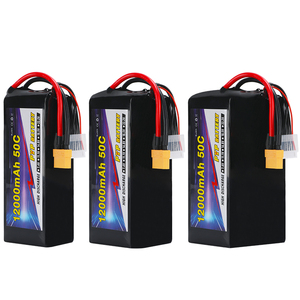
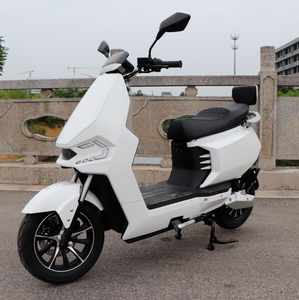
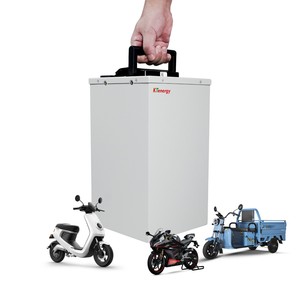
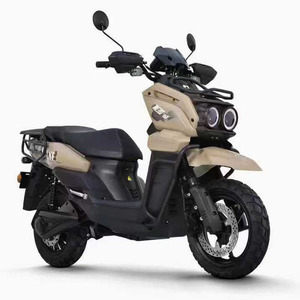
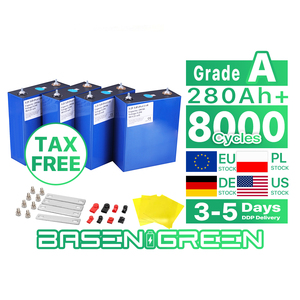
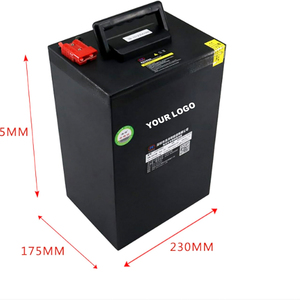
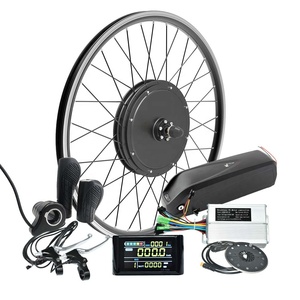
As a global pioneer in clean energy technology, our company brings together aerospace-inspired mechanical design and cutting-edge electrochemical engineering to solve the greatest bottlenecks in modern electro-mobility. Operating out of advanced engineering facilities with global logistics reach, we specialize in high-energy-density, swappable battery architectures designed for urban commuters, fleet operators, micro-mobility enterprises, and heavy-duty industrial applications.
Utilizing extruded aluminum monocoque frames and structural weight-reduction techniques derived from aviation engineering, our swappable battery casings deliver maximum impact resistance with minimal dead weight.
We partner exclusively with top-tier cell manufacturers (CATL, EVE, BYD) to integrate prismatic LiFePO4 and high-discharge LiPo cells, guaranteeing unmatched thermal stability, cycle longevity, and minimal internal resistance.
Our proprietary Smart Battery Management System (BMS) features real-time CAN-Bus / RS485 communication, dual thermal isolation, microsecond short-circuit protection, and cloud-connected State of Health (SOH) monitoring.
Every single swappable battery unit manufactured in our cleanrooms undergoes a stringent 14-step automated quality verification process before export shipment:
The global e-mobility and micro-mobility sectors are undergoing a fundamental paradigm shift. Traditional fixed-battery electric vehicles (EVs) suffer from lengthy downtime, localized grid overload during peak charging hours, and rapid residual value depreciation tied to battery degradation. As urban centers enforce zero-emission zones and fleet operators demand maximum operational efficiency, Swappable Battery Systems (SBS) have emerged as the premier procurement standard worldwide.
Procurement directors are shifting away from proprietary, locked-in battery designs toward standardized physical plug-and-play form factors. Future-proof fleet procurement requires modular power units that can be seamlessly swapped across diverse vehicle types—ranging from delivery e-scooters and heavy-duty cargo e-bikes to light electric utility vehicles and unmanned aerial vehicles (UAVs). Our self-locating, vibration-damped docking mechanisms ensure over 10,000 insertion cycles without contact erosion or latch failure.
Capital expenditure (CapEx) optimization is driving commercial operators to decouple vehicle frame acquisition from energy storage assets. By adopting CE-certified swappable battery modules, fleet businesses can convert battery procurement into an operational expenditure (OpEx) revenue model. Centralized battery swap stations allow continuous vehicle uptime while automated off-peak charging extends total battery lifespans by up to 40%.
Starting in 2026, global battery exports into major markets require complete life-cycle traceability. Enterprise buyers must mandate suppliers to deliver verifiable supply chain tracking, responsibly sourced cobalt/nickel/lithium credentials, and high recycled-content ratios. Our LiFePO4 swappable systems eliminate toxic heavy metals while adhering to upcoming digital passport requirements, providing complete Peace of Mind for enterprise importers.
| Evaluation Parameter | Conventional Fixed Battery Systems | Next-Gen CE Swappable Battery Systems |
|---|---|---|
| Vehicle Downtime / Charge Time | 3.5 to 6.0 Hours per cycle | < 10 Seconds (Instant Mechanical Swap) |
| Fleet Operational Uptime | Restricted to single charge window (~60%) | Near 100% Continuous 24/7 Operations |
| Cell Chemistry Preference | High Energy Density NCM (Higher Thermal Risk) | Thermally Stable LiFePO4 / Advanced Prismatic |
| BMS & IoT Connectivity | Basic internal logging | Cloud-connected Telemetry, RS485/CANbus, Real-Time SOH |
| Second-Life Energy Storage Utility | Difficult and costly to dismantle vehicle | Direct drop-in conversion to stationary ESS storage |
To stay competitive in an evolving regulatory and technological landscape, battery system design must continually advance. OEM buyers and system integrators must align with key innovation vectors currently transforming energy storage technology.
While liquid electrolyte LiFePO4 cells remain the undisputed workhorse for commercial durability, the industry is accelerating toward semi-solid and solid-state chemistries. These advancements promise to boost volumetric energy density beyond 350 Wh/kg while eliminating flammable liquid solvents entirely. Our R&D engineering platform is engineered to support seamless drop-in upgrades to solid-state cell matrices without requiring alterations to external module housings or docking geometry.
Modern swappable batteries are no longer passive chemical containers; they are intelligent edge computing units. Advanced IoT-enabled BMS architectures continuously transmit cell-level internal impedance, temperature distribution, voltage variance, and charge cycle counts to cloud analytics engines. Machine learning algorithms can predict thermal anomalies or cell degradation weeks before a failure occurs, allowing operators to rotate suspect packs out of service proactively.
Preventing thermal runaway cascade is the paramount objective of certified battery engineering. Next-generation swappable packs feature ultra-thin, space-grade aerogel isolation barriers sandwiched between individual prismatic cells, combined with phase-change materials (PCM) that absorb excess thermal spikes during high-rate fast charging (3C–5C continuous discharge bursts).
Key technical, regulatory, and logistics answers for purchasing agents, OEM engineering teams, and global distributors.
CE marking for swappable battery systems requires compliance with two major directives: the Low Voltage Directive (LVD 2014/35/EU) and the Electromagnetic Compatibility Directive (EMC 2014/30/EU). Key safety testing protocols include IEC 62133-2 (safety requirements for portable sealed secondary cells), UN 38.3 (altitude simulation, thermal shock, vibration, impact, external short-circuit, and overcharge), and EN 50604-1 for light EV battery packs.
Yes. As a direct OEM/ODM manufacturer, we offer complete end-to-end engineering customization. This includes custom casing dimensions, customized mounting rails, high-current connector pinouts (Chogori, Anderson, Rosenberger), custom voltage configurations (24V, 36V, 48V, 60V, 72V, 96V), and tailored BMS communication protocols (CANopen, J1939, RS485, Modbus).
Our swappable battery packs are engineered with structural silicone gaskets, ultrasonic-welded seams, and potted BMS electronics, achieving an IP67 ingress protection rating. They are fully protected against dust, heavy rain, and temporary water submersion up to 1 meter depth for 30 minutes, ensuring reliable performance in harsh outdoor environments.
Our premium prismatic LiFePO4 swappable battery systems deliver over 3,500 complete charge/discharge cycles at 80% Depth of Discharge (DOD) before nominal capacity degrades to 80% of original rating. Under typical daily fleet operation, this translates to an operational lifespan of 8 to 10 years.
Our battery modules feature blind-mating, spark-suppressing (pre-charge circuit) power connectors engineered for over 10,000 insertion cycles. The mechanical locking mechanism includes physical keyways and electronic handshaking—the BMS will not energize high-voltage discharge terminals until the pack confirms a secure mechanical lock with the host vehicle controller.
Standard evaluation samples and modular demo packs are available for immediate shipment within 7 to 10 business days. Custom engineering prototypes (custom casing mold + specialized BMS firmware) typically take 3 to 5 weeks. Mass production manufacturing orders (1,000+ units) are fulfilled within 30 days under standard export terms (FOB, CIF, DDP).
Whether you require custom OEM battery development, bulk replacement modules for existing fleets, or complete e-mobility powertrain solutions, our California-engineered and factory-certified teams are ready to support your technical specifications.