
Popular destinations
Popular destinations
Explore our CE-certified line of electric vehicle controllers, high-density lithium battery modules, smart digital LCD clusters, and regenerative brake management systems engineered for international OEM deployments.

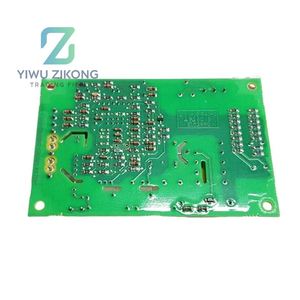
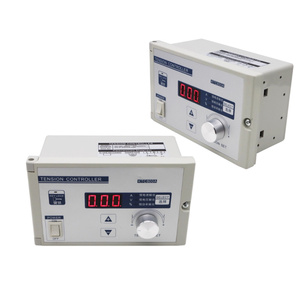
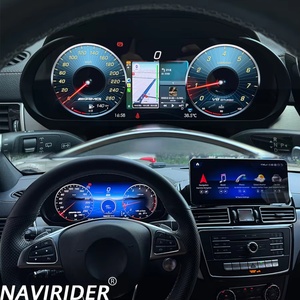
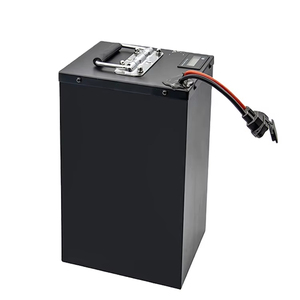
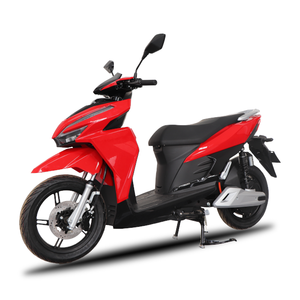
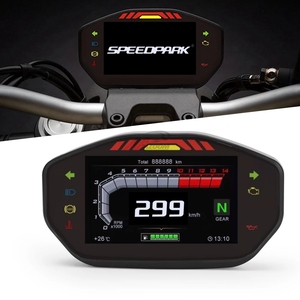
As modern urban electromobility transitions toward higher energy density, compact integration, and rigorous safety standards, procuring fully compliant **CE certified Electric Vehicle (EV) controllers** is a critical requirement for OEMs, fleet operators, and tier-1 exporters. An EV controller acts as the central brain of the powertrain, executing real-time vector mathematical algorithms to regulate battery energy dispatch to permanent magnet synchronous motors (PMSM) or brushless DC (BLDC) motors with maximum thermal efficiency.
Advanced Space Vector PWM (SVPWM) algorithms achieve smooth torque ripple suppression, delivering linear acceleration response, whisper-quiet operation, and up to 98% peak inverter efficiency under heavy load conditions.
Engineered to meet mandatory European Economic Area safety frameworks, specifically EN 61000-6-2 and EN 61000-6-4 for Electromagnetic Compatibility (EMC), and EN 13849-1 for functional safety validation.
Seamless communication via isolated CAN-bus 2.0B protocol ensures robust synchronization with modern digital TFT instrument clusters, battery management systems (BMS), and automated vehicle telemetry modules.
The technical matrix below outlines parameters across key controller platforms, enabling procurement teams to match operational voltage, continuous phase current, and functional safety profiles to specific light electric vehicle (LEV) platforms.
| Controller Series / Architecture | Rated Voltage Range | Peak Phase Current | Control Topology | CE & EMC Standards | IP Ingress Protection |
|---|---|---|---|---|---|
| EC-48V Low-Power Mobility | 36V - 60V DC | 150A Continuous / 250A Peak | Sine-Wave FOC (Hall Sensor) | EN 61000-6-2, EN 50178 | IP67 Waterproof |
| EC-72V Mid-Power Urban Moto | 60V - 84V DC | 300A Continuous / 550A Peak | Adaptive FOC / Sensorless Option | CE EN 61000-6-4, EN 13849-1 | IP67 Automotive |
| ASI Upgraded Heavy-Duty Modular | 72V - 120V High Voltage | 450A Continuous / 800A Peak | Dual-Core Vector / Space Vector PWM | CE / ISO 26262 ASIL-B Ready | IP69K Submersible |
| Regenerative Braking Chopper Board | 24V - 96V Universal | Adaptive Dynamic Braking | PWM Active Current Dumping | CE Industrial Directive | IP54 Enclosed |
As the global automotive and two-wheeler EV market matures, global purchasing directors must align procurement strategies with emergent technological trajectories. Key procurement trends shaping international EV controller sourcing over the coming decade include:
Traditional Silicon MOSFETs are rapidly giving way to Wide-Bandgap (WBG) Silicon Carbide (SiC) power switches. Procuring SiC-based controllers allows OEMs to reduce inverter volume by up to 40% while operating at higher switching frequencies with significantly reduced switching losses, extending EV range by 6% to 10% on equivalent battery capacity.
Modern buyers are demanding programmable controllers capable of Over-the-Air (OTA) firmware flashes. Enterprise procurement contracts now heavily favor hardware platforms supporting standardized AUTOSAR layered software structures, customized power map curves, dynamic regenerative braking profiles, and remote diagnostic telemetry via CAN-bus gateways.
Standalone controller enclosures are increasingly being integrated directly into motor housings to create "3-in-1" integrated electric drive systems (Motor + Inverter + Gearbox). This trend minimizes heavy phase wire harnesses, reduces electromagnetic interference (EMI), and slashes vehicle assembly line labor cost for global exporters.
The rapid evolution of lightweight electric motorcycles, high-speed mopeds, and passenger vehicles requires continuous innovation in motor control algorithms, heat management, and ergonomic seat actuators.
Borrowing structural concepts from aerospace engineering, state-of-the-art EV motor controllers feature cast-aluminum monocoque chassis housings that double as structural heat sinks. Eliminating redundant mounting brackets significantly improves power density ratios (kW/kg).
Advanced microcontrollers continuously track junction temperatures of internal MOSFETs and motor windings via digital thermistors (NTC/PTC). Rather than triggering hard shutdown faults during heavy uphill climbs, smart algorithms dynamically scale phase current to maintain safe operating temperatures while preserving continuous momentum.
Modern regenerative braking is no longer binary. Advanced controllers synthesize throttle position, brake lever switch actuation, and IMU lean-angle data to modulate deceleration force seamlessly. Energy recovered during braking recharges the main lithium pack, extending urban battery range by up to 15%.
Our manufacturing infrastructure combines rigorous aerospace-inspired design protocols with high-volume automated production lines, offering turnkey OEM/ODM solutions for global electric vehicle brands and fleet managers.
Every controller model, digital instrument cluster, and lithium battery system undergoes comprehensive laboratory validation for European standards compliance, facilitating seamless customs clearance and vehicle type approval across EU and global markets.
High-precision Surface Mount Technology (SMT) pick-and-place systems ensure defect-free board assembly. Automated polyurethane thermal potting provides total vibration damping and IP67 water ingress protection for severe weather operations.
We provide extensive software calibration options, custom wire harness design, brand logo silk-screening, custom LCD cluster UI development, and dedicated engineering consultation for commercial fleet operators and custom vehicle programs.
Find clear technical answers regarding CE certification, custom parameter programming, minimum order quantities (MOQ), and shipping logistics for international importers.