
0%

A Zero Maintenance Electric Motorcycle sounds almost too good to be true. Technically, it is. The phrase usually describes a motorcycle without engine oil, spark plugs, fuel filters, or clutch servicing. Its electric motor has fewer moving parts than a combustion engine. However, tires still wear, brake pads still need inspection, and batteries require responsible monitoring. The promise is compelling, but the wording needs careful examination.

The International Energy Agency’s Global EV Outlook 2024 identifies electric two- and three-wheelers as the most electrified road-transport segment, with tens of millions already in use worldwide. This momentum reflects practical benefits, including quieter travel, lower routine servicing, and efficient urban mobility. Roland Berger’s electric mobility research also highlights two-wheelers as an important growth area, especially across Asian cities where congestion makes compact transport valuable. Numbers vary by market and reporting method. That matters.

Neal Saiki, founder of Zero Motorcycles and an experienced electric-motorcycle engineer, once described the concept simply: “The motorcycle is a perfect platform for electric propulsion.” His view helps explain the appeal. A rider can twist the throttle, hear the motor’s quiet whine, and avoid weekly visits for oil changes. Yet “zero maintenance” should never mean zero responsibility. Charging habits, software updates, tire pressure, brake condition, and battery health still affect safety and ownership costs. This guide examines what the term really means, where manufacturers use it accurately, and where buyers should remain skeptical.
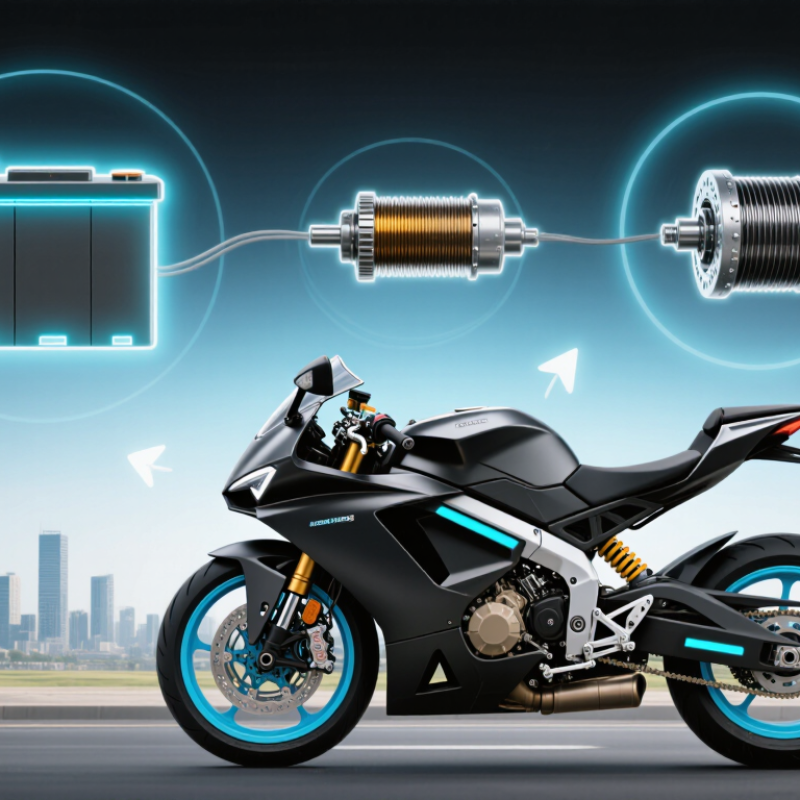
What Is a Zero Maintenance Electric Motorcycle?

Definition and Core Features of a Zero-Maintenance Electric Motorcycle

A zero-maintenance electric motorcycle is better understood as a low-maintenance machine. Its core feature is a simpler electric drivetrain. There is no engine oil, spark plug, fuel filter, or exhaust system to service. A sealed motor, electronic controller, and direct-drive transmission reduce routine workshop visits. Some models also use regenerative braking, which can slow the motorcycle while reducing brake-pad wear.

The International Energy Agency’s Global EV Outlook 2024 reports that more than 10 million electric two- and three-wheelers were sold worldwide in 2023. This growth reflects practical benefits, not just environmental interest. The U.S. Department of Energy’s Alternative Fuels Data Center also notes that electric vehicles generally need less maintenance because they contain fewer moving parts. Still, “zero maintenance” is an imperfect phrase. Tires lose pressure, brake fluid ages, bearings wear, and batteries slowly lose capacity. A motorcycle parked beside salty roads may need more care than expected. That detail is easy to overlook.

Tips: Check tire pressure before each ride. Inspect brake pads monthly. Keep charging ports dry and clean. Review battery-health data through the vehicle display. Follow the service schedule, even when the motor feels silent and smooth. A belt drive may reduce cleaning, but it is not maintenance-free. Experienced riders should also record unusual heat, vibration, or charging changes. Small symptoms can become expensive faults.

How Its Electric Powertrain Reduces Routine Maintenance

What Is a Zero Maintenance Electric Motorcycle?

How Its Electric Powertrain Reduces Routine Maintenance

“Zero maintenance” is not literally accurate. It is useful shorthand for fewer routine service tasks. An electric motorcycle has no engine oil, spark plugs, fuel injectors, or exhaust system. Its powertrain uses a battery, inverter, motor, and usually a simple reduction gear. Fewer moving parts mean fewer opportunities for heat, friction, and fluid leaks.

The U.S. Department of Energy’s Alternative Fuels Data Center reports that all-electric vehicles generally need less maintenance because they use fewer fluids and components. Consumer Reports’ 2020 ownership-cost analysis estimated that electric vehicle owners could save about $4,600 in lifetime maintenance and repair costs. That figure is not motorcycle-specific, but the mechanical principle remains relevant.

Regenerative braking can also reduce brake-pad wear. The motor slows the wheel while returning energy to the battery. In daily riding, that may make a front-brake inspection less frequent. Still, tires, brake fluid, suspension seals, wheel bearings, and the drive belt or chain require attention. Battery connectors need inspection, too. Some models use liquid cooling, so coolant checks may remain necessary.

The quiet part matters.

A rider may spend less time under the machine, but tire pressure still changes after a cold night. Firmware updates can also affect charging behavior or motor response. I would question any claim that maintenance disappears; it becomes less frequent, more electrical, and sometimes harder to diagnose without specialist tools.

Battery Systems, Charging, and Expected Service Requirements

What Is a Zero Maintenance Electric Motorcycle?

A zero maintenance electric motorcycle is not literally maintenance-free. Its motor has fewer wear components than a combustion engine, but the battery system still needs attention. The battery management system monitors temperature, voltage, and cell balance. After a wet ride, riders should inspect charging ports and dry connectors before plugging in. Small habits matter.

Battery care strongly affects service life. BloombergNEF reported an average lithium-ion pack price of 139 dollars per kilowatt-hour in 2023, after a 14% annual decline. Lower prices may improve replacement economics, but battery work remains specialized. A technician may need diagnostic software, insulation testing, and thermal inspection. Physical damage or swelling requires immediate professional assessment. Do not improvise.

Charging also shapes expected service requirements. The International Energy Agency reported more than four million public charging points worldwide at the end of 2023, covering electric vehicles broadly rather than motorcycles alone. Home charging is usually gentler than repeated high-power charging. Owners should use approved equipment, avoid damaged cables, and keep batteries away from extreme heat. Software updates can improve charging control, although they may occasionally create new troubleshooting needs. Tires, brake pads, wheel bearings, suspension parts, and lights still require routine checks. The phrase “zero maintenance” is useful marketing shorthand, but technically incomplete. Expect less servicing, not no servicing.

What Is a Zero Maintenance Electric Motorcycle? - Battery Systems, Charging, and Expected Service Requirements

System or Area Typical Specification or Condition Routine Maintenance Expected Service Requirement Practical Notes
Traction Battery Lithium-ion battery pack, commonly about 3–20 kWh depending on vehicle size and range No fluid changes or periodic internal adjustments Inspection of casing, connectors, wiring, and battery-management-system fault codes during scheduled checks Battery life depends on temperature, charging habits, storage conditions, and total energy throughput
Battery Service Life Many modern packs are designed for several hundred to more than 1,000 full equivalent cycles Avoiding extreme heat, deep discharge, and prolonged storage at 0% or 100% helps reduce degradation Capacity testing or replacement may be considered when usable range has significantly declined A full equivalent cycle means energy usage totaling 100% of the battery’s rated capacity, not necessarily one ride
Charging System Standard household AC charging is common; charging power may range from roughly 0.7 to 7 kW Keep the inlet clean and dry; check the cable and plug for damage Electrical safety inspection if charging becomes intermittent, unusually slow, or excessively hot Charging time is approximately usable battery energy divided by charging power, with additional time for charging losses
Regenerative Braking Motor braking converts part of the motorcycle’s kinetic energy into electrical energy Software-based system normally requires no routine adjustment Diagnostic inspection if braking response, warning lights, or energy recovery changes unexpectedly It reduces friction-brake use but does not eliminate the need to inspect mechanical brakes
Electric Motor Sealed electric motor with few moving parts; commonly hub-mounted or connected through a final-drive system No engine oil, spark plugs, valve adjustments, or air-filter replacement Check bearings, mounting hardware, connectors, and cooling or sealing components when required Motor durability is generally high, but water intrusion, impact damage, and overheating can cause faults
Transmission or Final Drive Some motorcycles use direct drive; others use a belt, chain, or gear reduction Direct-drive systems require the least attention; chains require cleaning, lubrication, and tension checks Replace belts, chains, sprockets, or reduction components when worn or damaged The drivetrain design determines whether the motorcycle can genuinely be described as low-maintenance
Friction Brakes Hydraulic disc brakes are common; pad and rotor wear vary with riding conditions Inspect pad thickness, rotor condition, brake-fluid level, hoses, and lever feel Brake-pad replacement may be needed approximately every 10,000–30,000 km, depending on use Frequent regenerative braking can extend pad life, but safety inspections remain essential
Tires and Wheels Conventional motorcycle tires, wheels, bearings, and valve assemblies Check tire pressure before extended rides and inspect tread, sidewalls, spokes, and wheel alignment Tire replacement commonly occurs when tread, age, puncture damage, or condition reaches the applicable limit Electric motorcycles can produce strong initial torque, which may increase rear-tire wear
Cooling and Thermal Management Passive air cooling or liquid cooling may be used for the battery, motor, or power electronics Keep vents and heat exchangers free of dirt; liquid-cooled systems may require coolant checks Coolant inspection or replacement follows the vehicle’s specified interval when applicable Thermal protection may reduce power temporarily when the battery or motor becomes too hot
Software and Diagnostics Battery-management, motor-control, charging, and safety systems are electronically monitored Keep software updated when updates are provided and review warning messages promptly Dealer or qualified-technician diagnostics may be required for high-voltage or communication faults A warning light should not be ignored, especially when it relates to battery temperature or insulation
12-Volt Auxiliary System A separate low-voltage battery may power lights, displays, controls, and accessories Inspect terminals and replace the auxiliary battery when its capacity declines Replacement is often required after several years, depending on battery type and storage conditions A discharged auxiliary battery can prevent vehicle operation even when the main battery is charged
High-Voltage Safety High-voltage components are normally isolated and protected by contactors, fuses, and monitoring circuits No owner-performed disassembly or repair Only trained and properly equipped technicians should service damaged or exposed high-voltage components After a crash, flooding, severe impact, smoke, or unusual odor, stop using the motorcycle and seek professional inspection
Typical Scheduled Service Often organized around safety checks rather than engine-fluid intervals A basic inspection may be appropriate every 6–12 months or according to mileage and local requirements Technicians may check brakes, tires, steering, suspension, fasteners, cables, connectors, and diagnostic logs “Zero maintenance” usually means zero routine engine maintenance, not zero inspections or replacement parts
Overall Maintenance Profile Fewer serviceable components than a comparable internal-combustion motorcycle No oil changes, spark-plug changes, clutch service, fuel-system cleaning, or exhaust-system maintenance Tires, brake components, bearings, suspension parts, auxiliary batteries, and drivetrain parts may still require replacement The most accurate description is “low-maintenance electric motorcycle,” unless the vehicle has no serviceable drivetrain or fluid systems

Note: Service intervals and specifications vary by vehicle design, local regulations, climate, riding style, and the manufacturer’s maintenance schedule. Always follow the applicable owner’s manual for safety-critical work.

Key Components That Still Require Inspection or Replacement

A zero maintenance electric motorcycle does not mean a motorcycle that needs no care. It usually means fewer routine services than a combustion model. There is no engine oil, spark plug, or exhaust system to replace. However, important mechanical and electrical parts still require regular inspection.

Tires deserve close attention. Check tread depth, sidewall cracks, and pressure before longer rides. Incorrect pressure can reduce grip and shorten battery range. Brake pads also wear, even with regenerative braking. Listen for scraping sounds and check whether the brake lever feels unusually soft. Brake fluid may need replacement because moisture can reduce braking performance. I once assumed regenerative braking protected the pads completely. That assumption was wrong.

The battery requires careful observation rather than casual neglect. Inspect its case for swelling, impact damage, or unusual heat after charging. Charging connectors should remain clean, dry, and firmly seated. A damaged cable needs professional assessment. Suspension seals can leak, while steering bearings may develop looseness or rough movement. Lights, indicators, fasteners, and protective covers should be checked during routine cleaning. Software updates may also correct control or charging problems, but they cannot repair physical damage. Keep records.

A small inspection can prevent a costly failure. A service schedule based on mileage and storage conditions is more reliable than a vague “maintenance-free” promise.

Benefits, Limitations, and Suitable Riding Conditions

What Is a Zero Maintenance Electric Motorcycle?

A zero maintenance electric motorcycle is not literally maintenance-free. The phrase usually describes a simpler drivetrain with fewer service points than a combustion motorcycle. There is no engine oil, spark plug, clutch, or exhaust system to replace. This can reduce routine costs and make commuting feel remarkably uncomplicated. Press the control, hear a soft motor hum, and move through traffic without gear changes.

The benefits are clearest in daily urban riding. Fewer moving parts can mean fewer mechanical failures and less workshop time. Regenerative braking may also reduce brake-pad wear, although it cannot remove the need for inspections. Tires still lose pressure. Bearings can wear. Software, cables, lights, and battery connections require attention. Calling the machine “zero maintenance” can create unsafe expectations. That wording is convenient, but slightly misleading.

These motorcycles suit paved roads, moderate speeds, and predictable trips with reliable charging. A short commute through a dry city is an ideal use case. However, cold weather, steep hills, heavy loads, and high-speed riding can reduce range. Battery charging may also take longer than refueling a conventional motorcycle. Wet or dusty routes demand careful cleaning around electrical connectors. Before longer rides, check tire pressure, brake response, battery level, and charging access. Small checks matter. Riders who expect unlimited range or completely effortless ownership may feel disappointed.

FAQS

Is a zero-maintenance electric motorcycle truly maintenance-free?

No. It usually has fewer service points than a combustion motorcycle. There is no engine oil, spark plug, clutch, or exhaust system. However, tires, brakes, bearings, lights, cables, and software still need checks. The phrase is useful, but slightly misleading.

What battery care does an electric motorcycle require?

Keep the battery away from extreme heat. Use approved charging equipment and avoid damaged cables. After a wet ride, inspect the charging port and dry connectors before charging. Small habits matter.

What should I do if the battery looks swollen or damaged?

Stop using the motorcycle and seek professional assessment immediately. Do not open, repair, or improvise with the battery. A technician may require diagnostic software, insulation testing, and thermal inspection.

Is home charging better than repeated high-power charging?

Home charging is usually gentler on the battery. Repeated high-power charging can increase system stress and heat. Charging behavior affects long-term service needs. I might underestimate this during busy weeks.

Which parts still need routine inspection?

Check tire pressure, brake response, wheel bearings, suspension parts, lights, and charging connections. Regenerative braking may reduce brake-pad wear, but inspections remain necessary. Tires still lose pressure.

What riding conditions suit this type of motorcycle?

It suits paved roads, moderate speeds, and predictable trips with reliable charging. A short, dry urban commute is a practical example. Steep hills, heavy loads, cold weather, and high speeds may reduce range.

Can charging take longer than refueling?

Yes. Charging may take longer than refueling a conventional motorcycle. Plan charging access before longer rides. Unexpected delays can make a simple trip less simple.

Do software updates remove maintenance concerns?

No. Updates may improve charging control and battery management. They can also create new troubleshooting needs. Keep checking the motorcycle after updates. Nothing is perfect.

Conclusion

A Zero Maintenance Electric Motorcycle is designed to minimize routine servicing through a simple electric powertrain with fewer moving parts than a conventional fuel-powered motorcycle. It does not require engine oil changes, spark plug replacements, fuel-system cleaning, or exhaust maintenance. Its motor delivers quiet, efficient performance, while regenerative braking can help reduce wear on traditional brake components. Together, these features make everyday ownership easier and may lower long-term operating costs.

However, “zero maintenance” does not mean that every component lasts forever. The battery system requires proper charging habits, temperature control, and periodic performance checks, while charging equipment should be inspected for damage. Tires, brake pads, suspension parts, lights, cables, and safety systems still need regular inspection or replacement. This type of motorcycle is especially suitable for commuting, urban travel, and well-maintained roads, but range, charging access, weather, load capacity, and battery aging may limit its practicality for long-distance or demanding riding conditions.

Olivia Bennett

Olivia Bennett

Olivia Bennett is a professional marketing specialist with a strong understanding of the company’s products and the needs they are designed to meet. She regularly contributes expert articles to the company website, offering clear, practical information that helps readers explore product features,......