Choosing an Urban Electric Commuter Motorcycle supplier in China involves more than comparing top speed or showroom prices. Buyers should examine battery options, real-world range, charging access, component quality, warranty terms, and production consistency. A quiet test ride can reveal useful details: brake feel at a crowded junction, suspension over rough pavement, and whether the battery lifts easily for indoor charging. Small details matter.
The International Energy Agency’s Global EV Outlook 2024 reports that electric two- and three-wheeler sales reached nearly 10 million worldwide in 2023, with China remaining a major market. This scale signals a mature supply base, but it does not make every factory equally dependable. Supplier claims should be checked against product specifications, independent testing where available, and clear after-sales arrangements. Ask how range was measured; laboratory figures may not match a stop-and-go commute in cold weather. That gap is easy to overlook.
This guide introduces leading Chinese suppliers through practical criteria, including model focus, manufacturing capabilities, battery integration, and export support. It also considers the less visible questions: replacement-part availability, service training, and how a supplier handles defects after delivery. Public data and company materials can help narrow the field, yet they rarely tell the whole story. A polished catalogue is not proof. Treat supplier rankings as a starting point, then verify claims directly before making a purchasing decision.
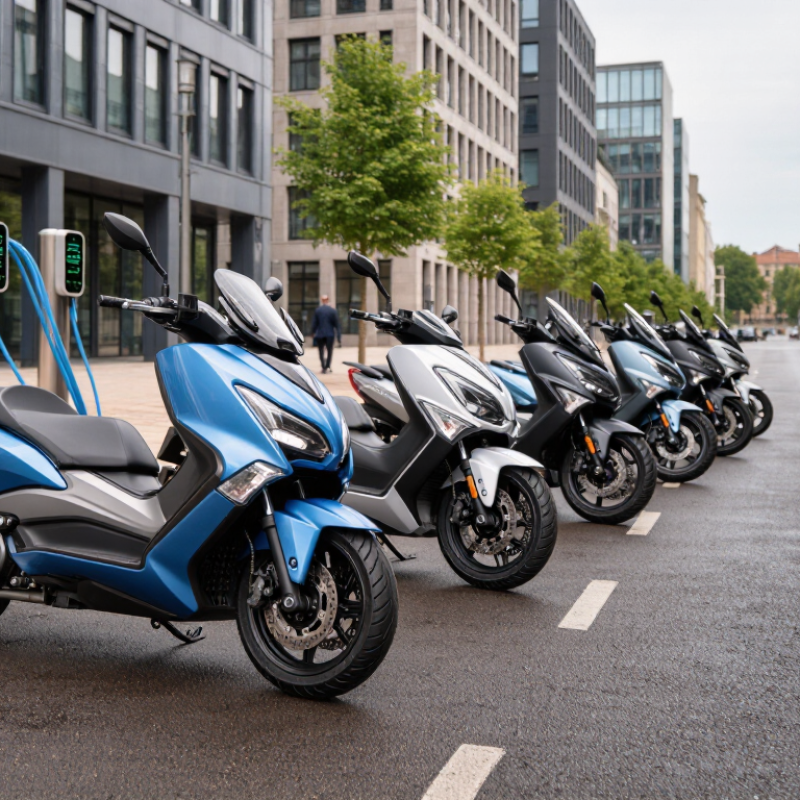
Definition and Role of Urban Electric Commuter Motorcycles
Urban electric commuter motorcycles are compact, battery-powered vehicles designed for short daily trips. They usually combine a step-through frame, moderate speed, and simple controls. Their main role is practical urban movement, not high-speed touring. They help riders travel between homes, offices, stations, and local shops.
In real traffic, their value becomes clear. A rider can move through narrow streets, stop beside a small curb, and park near an apartment entrance. Electric motors deliver quiet acceleration from traffic lights. Charging overnight may cover regular commuting, but actual range changes with rider weight, hills, temperature, and tire pressure. Advertised figures can disappoint. Honest suppliers should explain testing conditions instead of showing one attractive number.
A responsible supplier also supports long-term ownership. Clear battery specifications, brake details, charging guidance, and maintenance intervals matter as much as appearance. Buyers should check frame quality, lighting, suspension, and water resistance before ordering. A smooth demo ride is not enough. Service access matters. Local technicians, replacement parts, and battery inspection procedures reduce ownership risk. Some commuters may still need a larger battery or weather protection, while others may find those features unnecessary. The right urban motorcycle depends on distance, road conditions, parking space, and charging access.
Key Criteria for Evaluating Chinese Motorcycle Suppliers
Choosing top urban electric commuter motorcycle suppliers in China requires more than comparing prices. A reliable evaluation begins with factory experience, engineering depth, and production consistency. Ask how long the supplier has built electric motorcycles and request recent quality records. Check welding, wiring protection, battery enclosure design, and brake performance on a physical sample. A polished catalog proves little.
Technical evidence matters. Review battery test reports, charger safety documents, water-resistance ratings, and controller specifications. Confirm whether stated range was measured under realistic urban conditions, including traffic stops and hills. Inspect the motor’s response at low speed. It should feel controlled, not abrupt. A supplier should also explain its quality inspection process, spare-parts availability, warranty terms, and response times. Export experience helps, but it is not automatic proof of reliability. My own assessment would still include an independent inspection, because factory data can be incomplete.
Tips: Compare at least three samples before negotiating volume. Visit the production line if possible. Speak with service staff, not only sales representatives. Request serial-number traceability for batteries and controllers. Test cold starts, repeated braking, lighting, and charging cycles. Leave room for uncertainty. Range figures may disappoint in winter or heavy traffic, and early samples can hide later production variation. A small pilot order is often wiser than a large commitment.
Leading Chinese Suppliers and Their Product Strengths
China’s urban electric commuter motorcycle suppliers serve daily riders with practical, compact designs. Many manufacturers combine assembly experience with in-house frame, motor, and battery integration. This can shorten development time and improve compatibility between major components.
Their strongest products usually focus on stable commuting rather than extreme performance. Typical models use mid-power hub motors, removable lithium battery packs, hydraulic or combined braking systems, and LED lighting. Some suppliers offer 60–120 kilometer claimed ranges under controlled conditions. Real traffic, rider weight, hills, and temperature can reduce that figure. Buyers should request independent range data.
Production capability is another important strength. Established factories often support sample customization, batch testing, spare-part supply, and quality inspections before shipment. Useful evidence includes battery safety reports, charger certifications, waterproofing records, and traceable production documents. Do not rely on polished catalog images alone.
Supplier communication can still be uneven. Technical drawings may omit connector details or charging limits. A careful buyer should test a sample on crowded streets, rough pavement, and repeated stop-start routes. Ask about warranty response times and replacement-part availability. Small details matter. A quiet motor is valuable, but dependable braking matters more.
China Top Urban Electric Commuter Motorcycle Suppliers? - Leading Chinese Suppliers and Their Product Strengths
| Supplier Profile |
Typical Urban Product Focus |
Common Motor Class |
Typical Battery Configuration |
Indicative Use Range |
Product Strengths |
| High-volume two-wheeler manufacturer |
Everyday step-through commuters and utility models |
Approximately 1–3 kW |
Removable or fixed lithium-ion packs; commonly around 1–3 kWh |
Roughly 40–100 km per charge, depending on model and test conditions |
Broad model selection, scalable production, and practical configurations for daily commuting |
| Urban scooter specialist |
Compact scooters designed for short city trips and parking convenience |
Approximately 0.8–2 kW |
Often removable lithium-ion batteries, typically around 1–2 kWh |
Roughly 30–70 km per charge, depending on load, speed, and route |
Compact dimensions, approachable controls, and convenient home or workplace charging |
| Performance-oriented electric motorcycle maker |
Higher-speed urban and suburban motorcycles |
Approximately 3–8 kW or more, depending on vehicle class |
Higher-capacity lithium-ion packs, often around 2–5 kWh |
Roughly 50–120 km per charge; higher speeds can reduce practical range |
Stronger acceleration, higher power options, and chassis packages suited to longer commutes |
| Fleet and delivery vehicle supplier |
Durable commuter motorcycles configured for commercial use |
Approximately 1–3 kW |
Replaceable or removable packs; capacity varies with payload and operating schedule |
Typically specified around daily route needs rather than a single standard range |
Utility-focused frames, cargo options, and configurations designed for frequent use |
| Export-oriented contract manufacturer |
Customizable commuter scooters and motorcycles for overseas markets |
Varies by specification and destination market |
Options may include different battery capacities, chemistries, and charging systems |
Model-specific; verify using the exact battery, test cycle, and vehicle configuration |
Flexible specifications, private-label production, and adaptation to local market requirements |
Note: Profiles and figures are indicative product-category benchmarks, not verified specifications for individual suppliers. Actual motor ratings, battery capacity, range, and road-legal classification vary by model, market, test method, rider load, speed, and terrain. Confirm the exact model documentation and applicable local homologation before purchase.
Battery, Range, Safety, and Compliance Considerations
China Top Urban Electric Commuter Motorcycle Suppliers?
Battery, Range, Safety, and Compliance Considerations
A reliable supplier should explain battery chemistry, cell origin, capacity, and warranty terms clearly. For urban commuting, a 60V or 72V battery may provide practical performance, but capacity alone proves little. Ask for tested range at realistic speeds, rider weight, temperature, and road gradients. A claimed 100-kilometre range can shrink sharply in winter traffic. That gap matters.
Battery safety begins with a well-designed battery management system. It should monitor temperature, voltage, charging, and cell balance. Look for short-circuit protection, thermal safeguards, secure connectors, and a sealed enclosure. Check the charger carefully. Poor charging control can damage cells over time. I would request sample testing, not only factory photographs. A short road test can reveal weak brakes, unstable steering, or overheating that documents miss.
Compliance needs market-specific evidence. For battery transport, request current UN 38.3 test documentation. Depending on the destination, electrical, electromagnetic, lighting, braking, and vehicle certification requirements may also apply. Ask suppliers to identify the exact test standard and issuing laboratory. Do not accept a generic “CE approved” statement without supporting files. Factory audits, traceable serial numbers, and clear after-sales procedures improve reliability. Still, supplier claims can be incomplete. Independent inspection remains worthwhile, even when the first sample looks excellent.
How to Select the Right Supplier for Urban Commuting Needs
How to Select the Right China Supplier for Urban Electric Commuting
Urban commuting demands more than a low purchase price. Check battery capacity, realistic range, charging time, braking performance, and weather resistance. The China Bicycle Association reported over 350 million electric bicycles in China in 2023, showing the market’s scale and manufacturing experience. However, volume does not guarantee consistent quality.
Request production records, battery test reports, and traceable component lists. A reliable supplier should provide documented compliance with applicable GB and UN requirements, depending on your destination market. The IEA’s Global EV Outlook 2024 notes that electric two- and three-wheelers remain among the most widely adopted electric vehicles worldwide. This supports demand, but it also increases pressure on battery safety and after-sales service.
Visit the factory when possible. Watch how workers seal battery cases, inspect welds, and test chargers. Ask for sample vehicles from different production batches, not one polished unit. Range figures may come from ideal laboratory conditions. Real traffic, hills, cold weather, and rider weight reduce performance. A common mistake is trusting a supplier’s brochure too quickly.
Evaluate spare-parts availability, warranty response times, software support, and technician training. Ask whether the supplier can maintain the same controller and battery specifications for several years. No scorecard is perfect. Still, a written audit reduces unpleasant surprises. Trial shipments should include packaging tests, charging checks, brake inspections, and road-use feedback before larger orders.
Conclusion
An Urban Electric Commuter Motorcycle is designed for efficient, convenient, and low-emission daily transportation in city environments. This article explains how these vehicles support short-distance commuting through compact designs, easy handling, practical storage, and quiet electric power. It also outlines the main criteria for evaluating Chinese suppliers, including manufacturing capability, product consistency, customization support, quality control, after-sales service, and delivery reliability.
Special attention is given to battery capacity, real-world riding range, charging time, braking performance, lighting, frame strength, and overall rider safety. Compliance with applicable regional standards and certification requirements is also essential when selecting a supplier. By comparing product strengths, technical specifications, production experience, and service capabilities, buyers can identify the most suitable partner for their urban transportation needs. The right supplier should offer a balanced combination of dependable performance, safe operation, transparent communication, and long-term commercial support.