Popular destinations
The Ryvid Outset Electric Motorcycle is best understood as an electric scrambler-style bike, not a conventional motocross machine. Its upright stance, broad handlebars, and rugged visual details suggest versatility. The design points toward city streets and occasional rough paths, rather than demanding off-road riding. That distinction matters. A motorcycle can look adventurous without being built for every trail.
Ryvid founder Dong Tran is the relevant industry voice here. In paraphrase, his product vision presents the Outset as an approachable, adaptable electric motorcycle within Ryvid’s lineup. This is a summary, not a verified verbatim quotation. Buyers should still compare the motorcycle’s actual range, charging needs, ergonomics, and intended use with their own routines. Specs can sound decisive on a page. Daily comfort is less abstract: think of a stoplight, a narrow parking space, or a longer ride home.
There is a useful question behind the category label: does the Outset suit the rider, not just the image? Its styling may attract scrambler fans, while its electric powertrain changes the riding experience. Quiet operation is one difference. So is planning around charging. This guide examines what type of electric motorcycle the Ryvid Outset is, where its design fits, and what prospective riders should verify before deciding. A small caveat remains: intended versatility is not proof of equal performance everywhere.
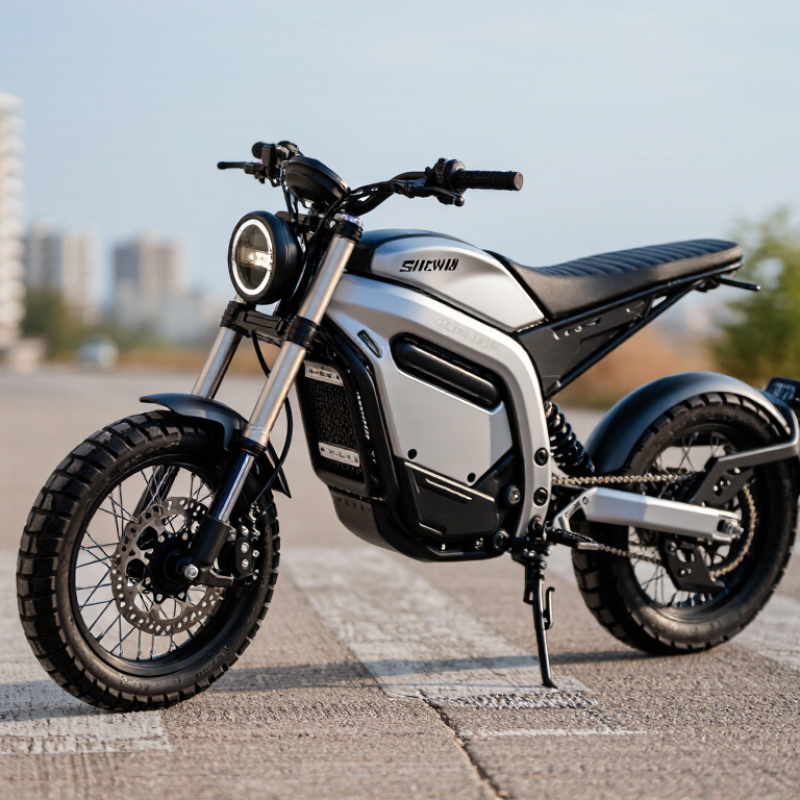
An electric street scrambler is built for everyday pavement, with styling and proportions that suggest a little more freedom beyond smooth roads. The Outset fits this category better than a dedicated off-road motorcycle. Its classification points toward urban riding, where compact streets, frequent stops, and varied pavement shape the experience.
That distinction matters. A scrambler-inspired stance may feel comfortable over patched asphalt or a rough alley, but it does not automatically make a motorcycle suitable for demanding trails. Tires, suspension travel, ground clearance, and rider protection all affect capability. Check the actual equipment before assuming it can handle loose gravel or uneven ground. Looks can mislead.
In city use, an electric street scrambler can offer quiet acceleration and a simple riding routine. Short trips, curbside parking, and stop-and-go traffic are natural parts of its setting. Range and charging time still deserve attention, especially when daily routes change. I would not call it a universal commuter without knowing the rider’s distances and charging access. A few details remain personal: seat comfort, turning feel, and how the bike behaves on broken pavement become clear only after a real ride.
A 72-volt electrical architecture and a 4.3-kWh battery give this electric motorcycle a compact, clearly defined powertrain. Voltage describes the electrical system’s operating level; kilowatt-hours measure stored energy. They answer different questions. The first helps describe how components are designed to work together, while the second indicates the battery’s energy capacity.
That capacity is useful context, but it does not predict real-world range by itself. Rider weight, speed, hills, temperature, and repeated acceleration all affect energy use. A steady ride on level streets may feel very different from stop-and-go traffic. Small details matter. The stated 4.3 kWh should also be treated as a battery specification, not a promise that every unit is available for riding; usable energy can differ from nominal capacity. That distinction is easy to overlook.
The 72-volt figure alone does not reveal motor output, charging time, or efficiency. Those depend on other components and operating conditions. It is tempting to judge a motorcycle by two numbers, but that leaves important questions unanswered. For a practical assessment, look for measured range under clear test conditions, charging information, and how the bike behaves during ordinary trips. The battery figure gives a starting point, not the whole ride.
| Specification | Value | Details |
|---|---|---|
| Vehicle type | Electric motorcycle | Powered by an electric drivetrain rather than an internal-combustion engine. |
| Electrical architecture | 72 volts | Describes the system’s stated voltage architecture; it is not a charging-voltage specification. |
| Battery energy | 4.3 kWh | Equivalent to approximately 4,300 watt-hours of stated battery energy. |
| Approximate capacity equivalent | 59.7 Ah | Calculated as 4,300 Wh ÷ 72 V. This is an approximate equivalent, not a separately stated battery rating. |
| Energy and capacity relationship | Energy = voltage × capacity | Watt-hours are calculated from volts multiplied by amp-hours; actual pack voltage varies with operating conditions. |
| Battery chemistry | Not specified here | The voltage architecture and energy rating alone do not identify the battery chemistry. |
| Motor output and charging time | Not specified here | These figures cannot be determined from the voltage architecture and battery energy alone. |
The Outset is best understood as an electric street motorcycle, not a low-speed neighborhood runabout. Its stated 10.5-kW peak output equals roughly 14 horsepower, while the claimed top speed is 75 mph. Those figures suggest practical road performance for urban trips and shorter highway stretches. Peak output matters during acceleration, but it does not describe power sustained over a long climb. That distinction is easy to miss.
At 75 mph, the bike may keep pace with faster traffic, yet wind, rider weight, and hills can change the feel quickly. A cold morning or steep ramp may reveal more than a specification sheet does. I would treat the top-speed figure as a ceiling, not a comfortable cruising promise. The International Energy Agency’s Global EV Outlook 2024 reports that electric two- and three-wheelers reached about 10 million sales worldwide in 2023, showing how established this category has become. Still, global sales figures cannot predict one motorcycle’s range or real-world efficiency. A short test ride on a familiar route would offer more useful evidence. The number looks promising. The missing detail is how long that performance lasts.
The Outset’s stated range is up to 70 miles, a useful figure for planning—but not a promise for every ride. “Up to” usually describes favorable conditions, while real distance can shrink with faster roads, repeated acceleration, cold weather, or a heavier load. A short commute with steady speeds may come close; a windy ride with hills may not. Keep a buffer.
The International Energy Agency’s Global EV Outlook 2024 reports roughly 14 million electric two- and three-wheelers sold worldwide in 2023, showing how important practical range is to everyday use. That figure describes the wider market, not this motorcycle’s performance. For a fair test, note the route, temperature, rider load, and remaining charge after several rides. One trip can mislead.
Charging plans matter as much as the headline number. Before a longer outing, confirm the motorcycle’s charging method, available outlet, and expected charging time in its current owner documentation; don’t assume a standard outlet will restore the battery quickly. A marked 35-mile destination leaves little room for detours on a 70-mile maximum estimate. That’s easy to overlook. Actual range still needs checking against your own routine.
Estimated range: up to 70 miles. This is a manufacturer-estimated maximum; actual range can vary with riding conditions and usage. No charging-time figure is shown because one was not provided.
This electric motorcycle is best understood as a lightweight, upright street machine with some mixed-surface tolerance, not a dedicated trail bike. Its chassis concept favors easy low-speed balance and manageable steering on crowded streets. Picture a tight garage turn, patched asphalt, or a gravelly driveway. That matters. An upright riding position can also make frequent stops feel less tiring, though comfort depends on fit and setup.
The International Energy Agency’s Global EV Outlook 2024 estimates that roughly nine million electric two- and three-wheelers were sold worldwide in 2023, with sales concentrated in Asia. That market figure shows the scale of interest in electric two-wheel transport; it does not prove that every model suits rough roads.
The label can oversell it.
Before riding beyond pavement, check ground clearance, tire tread, and suspension travel. Loose gravel and sharp potholes can unsettle a light motorcycle quickly.
Mixed surfaces, yes—but modest ones are the sensible test.
It describes the electrical system’s operating level and how its components are designed to work together. It does not reveal motor output or charging time.
Its stated capacity is 4.3 kWh. That figure describes stored energy, not the amount always available for riding. Not a range promise.
Rider weight, speed, hills, temperature, and repeated acceleration all affect energy use. A flat, steady ride may use less energy than stop-and-go traffic.
The stated peak output is 10.5 kW, or roughly 14 horsepower. Peak output describes short bursts, not necessarily power sustained on a long climb.
The claimed maximum is 75 mph. Wind, rider weight, and hills can change how that speed feels. I would not treat it as a comfortable cruising promise.
Its stated speed suggests it may handle shorter highway stretches. Conditions matter, and the figures alone cannot confirm how it performs on a particular route.
No. Charging time and efficiency depend on other components and operating conditions. A voltage figure cannot answer those questions by itself.
Look for measured range under clear test conditions and specific charging details. A short ride on a familiar route could help, though I might still want more evidence.
The Ryvid Outset Electric Motorcycle is classified as an electric street scrambler designed primarily for urban riding. Its lightweight construction and practical chassis are suited to city streets, while also accommodating occasional travel across mixed surfaces. This combination gives the motorcycle a versatile character for riders seeking an electric option for everyday trips and varied pavement conditions.
Its powertrain uses a 72-volt architecture and a 4.3-kWh battery, with peak output rated at 10.5 kW and a top speed of 75 mph. The manufacturer estimates a range of up to 70 miles, though real-world distance can vary with riding conditions and use. Together, these specifications describe a compact, city-focused motorcycle that balances accessible performance, a manageable design, and practical electric range.