Popular destinations
Popular destinations
Buying a Pre-Owned Electric Motorcycle can make electric riding more affordable, but a low price does not tell the whole story. Battery condition, charging equipment, service history, and real-world range all deserve a close look. A motorcycle may appear clean in photos yet have worn tires, a damaged charging port, or a battery that loses charge quickly. Small details matter.
Start by matching the motorcycle to your daily routes and charging options. Ask how far it travels on a full charge, and compare that claim with your expected speed, weather, and terrain. Request maintenance records and confirm which charger comes with the bike. If possible, arrange an inspection with a qualified electric-motorcycle technician. Check the frame, brakes, suspension, lights, display, and connectors in person. Take a careful test ride. No single check proves everything.
This guide explains how to assess battery health, verify the motorcycle’s history, estimate ownership costs, and compare listings without relying on appearance alone. It also covers questions to ask the seller and warning signs that may call for further inspection. Battery performance can be difficult to judge from one short ride, and seller statements may not answer every question. That uncertainty is real. A cautious buyer should allow time for independent checks and avoid rushing toward a deal. A little doubt can be useful.
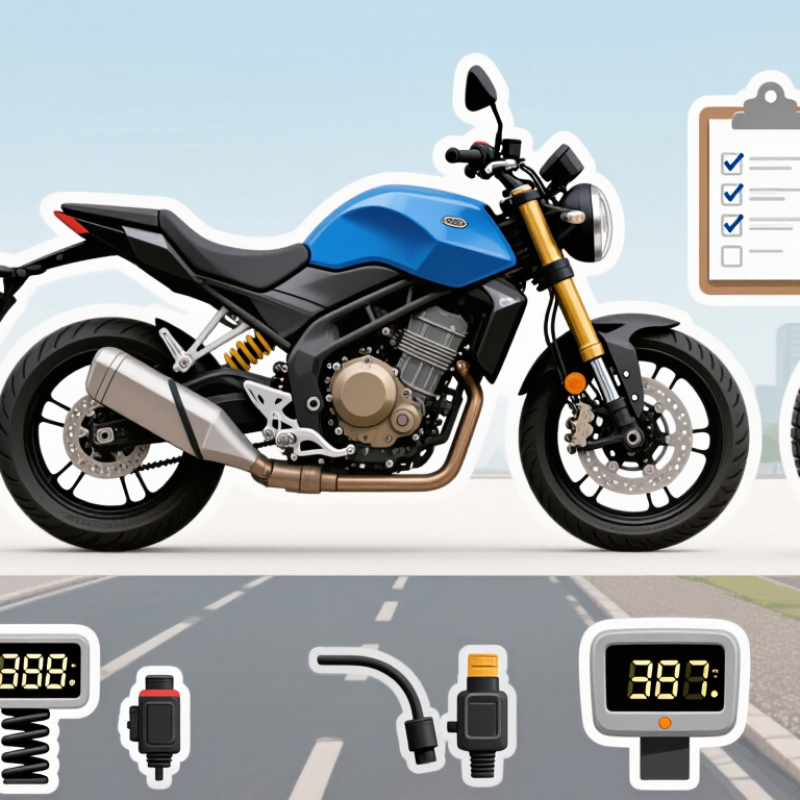
Before browsing listings, define the rides you actually plan to make. A short city commute has different needs from a daily trip on faster roads. Note your usual distance, road type, hills, and whether you can charge at home. Be realistic. A cold morning, higher speed, or heavy load can reduce usable range, especially when an older battery is involved. Add a comfortable reserve rather than choosing a motorcycle whose advertised range barely covers your route. If possible, test a similar electric motorcycle on familiar streets.
Set a total budget, not just a purchase limit. Include a pre-purchase inspection, protective gear, registration costs where applicable, charging equipment, and likely maintenance. Ask for battery-health information and service records; missing records are a reason to investigate, not automatic proof of a problem. A qualified technician can check key components before you commit. Leave room. Unexpected work can appear after purchase, and used batteries do not age in exactly the same way. I once underestimated small setup costs; it was an annoying lesson. Decide on a firm maximum beforehand, and be willing to walk away if the motorcycle exceeds it.
Use these figures as general planning guidance in the United States. Actual range, prices, fees, and charging costs vary by motorcycle, condition, location, and riding conditions.
| Planning area | What to assess | Practical benchmark | How it affects your choice or budget |
|---|---|---|---|
| Daily distance | Record your usual round-trip distance and any regular detours. | Choose a motorcycle whose verified real-world range comfortably exceeds your routine trip; a 20–30% reserve is a useful planning buffer. | A larger range requirement may narrow the selection or raise the purchase price. Published range is not a guarantee of everyday range. |
| Roads and speeds | Identify city streets, hills, highways, typical traffic speeds, and whether a passenger or cargo is needed. | Confirm the motorcycle’s legally permitted use, sustained speed capability, payload rating, and suitability for your route. | A model suited to low-speed urban trips may not be appropriate for faster roads. Check local licensing and registration rules before buying. |
| Charging access | Check whether you can charge safely at home, work, or a public charging location, and confirm connector and outlet compatibility. | Ask for the owner’s manual and charging specifications. Charging time depends on battery capacity, charger output, and available electrical supply. | Include any electrician’s assessment or installation in your budget. Do not assume a public charger will be compatible. |
| Battery condition | Review battery age, charge history if available, storage conditions, warning messages, and measured range during a test ride. | Request a diagnostic report from a qualified technician and ask whether the battery is covered by any remaining transferable warranty. | Battery replacement can be a substantial expense. Get a written replacement estimate before making an offer if the battery’s condition is uncertain. |
| Handling and fit | Check seat height, weight, reach to the controls, parking space, and comfort during a supervised test ride. | Make sure you can maneuver and support the motorcycle safely at low speed and when stopped. | A poor fit can make everyday use difficult, even if the price and range appear attractive. |
| Purchase price | Compare similar pre-owned motorcycles by age, mileage, battery condition, included equipment, and local market. | Use recent local listings and completed-sale information where available; there is no single reliable price range for all electric motorcycles. | Set a maximum purchase price only after reserving funds for inspection, taxes, registration, insurance, and safety gear. |
| Pre-purchase inspection | Have the frame, tires, brakes, suspension, lights, controls, charging equipment, and battery system checked by a qualified technician. | Obtain a written inspection estimate before purchase; inspection fees vary by location and service provider. | A professional inspection can reveal repair needs that should be addressed before agreeing on a price. |
| Ownership costs | Get insurance quotes and check local sales tax, title, registration, and inspection requirements. | Ask your local motor vehicle agency and insurer for current figures before committing. | These costs vary significantly by location, rider, motorcycle, and coverage level, so use quotes rather than estimates. |
| Safety gear and reserve | Budget for a properly fitted helmet and suitable protective clothing, gloves, and footwear, plus a reserve for repairs. | Prioritize certified, correctly fitting gear and keep an emergency allowance based on the motorcycle’s condition and parts availability. | Avoid spending your entire budget on the motorcycle itself; immediate maintenance or replacement parts may be needed. |
| Budget worksheet | ||
|---|---|---|
| Budget item | Your estimate | How to calculate it |
| Motorcycle purchase price | $________ | Compare local listings and account for battery condition and required repairs. |
| Inspection and immediate repairs | $________ | Use written quotes from a qualified technician. |
| Taxes, title, and registration | $________ | Check current requirements and fees with your local motor vehicle agency. |
| Insurance | $________ | Obtain a quote for the specific motorcycle and coverage you need. |
| Charging setup and safety gear | $________ | Include compatible charging equipment, any electrical work, and protective gear. |
| Total estimated upfront budget | $________ | Add all expected costs and retain a separate reserve for unexpected repairs. |
Check its model year, intended use, battery chemistry, service history, and parts availability. A light city model may struggle on faster roads.
Treat the displayed range as an estimate. Consider hills, cold weather, speed, and passenger weight. Test a familiar route if possible. Keep a buffer.
Ask for a recent battery-health reading and how it was measured. A qualified technician can check the battery-management system and stored fault codes. Records may be incomplete.
Request a written estimate covering the battery pack, labor, diagnostics, and software work. Confirm that a compatible replacement is available and ask about installation time.
Check the frame, fasteners, tires, brakes, lights, and charge port. Look for corrosion, uneven tire wear, bent pins, or heat discoloration. Small clues matter.
Start with a cold motorcycle if practical. Test gentle turns, a hill, braking, and low-speed stability. Listen for unusual motor noise and watch for warning lights. Bring a helmet.
Compare similar used motorcycles nearby. Use specific issues, such as a worn tire or weak brake, to support your offer. Leave room for repairs. I might still miss something when excited.
Agree on the price and list the included items in writing. Check for the keys, charger, and promised accessories. Get a dated receipt and available purchase documents. Don’t rush.
Buying a Pre-Owned Electric Motorcycle starts with understanding how and where you plan to ride, then setting a budget that includes more than the asking price. Compare suitable models by their real-world battery range, charging needs, and likely battery replacement costs. These factors can help you decide whether a motorcycle fits your daily trips and long-term plans.
Before committing, inspect the motorcycle’s overall condition and review its service history, paying particular attention to the battery and charging system. Confirm that the seller has the necessary ownership documents, and clarify whether any warranty coverage remains and what it includes. A test ride can reveal how the motorcycle handles and whether its performance feels consistent. If everything checks out, use your research and inspection findings to negotiate a fair price, review the purchase details, and complete the transaction with confidence.