Popular destinations
Electric motorcycles are growing quickly, but a powerful motor alone does not make a reliable ride. The International Energy Agency’s Global EV Outlook 2024 estimates that sales of electric two- and three-wheelers reached nearly 10 million in 2023. That expanding market makes component selection more than a spec-sheet exercise. The Electric Motorcycle Power Controller governs how battery energy reaches the motor, shaping acceleration, efficiency, heat, and rider feel.
Choosing one starts with matching the controller’s voltage and continuous-current ratings to the battery and motor. Peak current matters too, but only briefly; relying on it as a continuous rating can create overheating problems. Check the motor type, hall-sensor compatibility, throttle signal, braking inputs, and regenerative-braking support. Then consider the physical details: enclosure sealing, connectors, cooling, and where the unit will sit near the frame or battery. Small mismatches can mean rough starts or avoidable workshop visits.
There is no magic rating. A controller advertised with a high peak output may still perform poorly if its thermal design is weak or its settings do not suit the motor. That part is easy to overlook. Compare manufacturer datasheets, wiring diagrams, and documented test conditions rather than relying on headline figures. The IEA’s market data describes adoption, not controller quality, so treat it as context—not a buying endorsement. Before choosing, define the motorcycle’s real use: steep hills, frequent stops, longer commutes, or light urban trips. The best fit is the one that meets those needs safely and consistently, even if its specifications look less impressive.
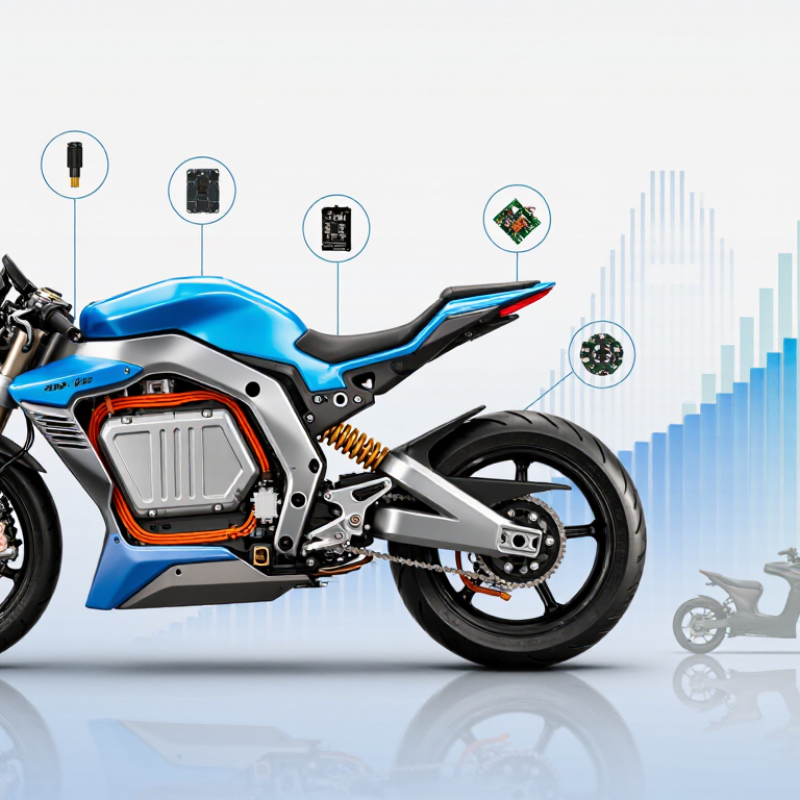
An electric motorcycle power controller is the link between the battery, throttle, and motor. When you twist the throttle, it reads the signal and adjusts electrical power sent to the motor. That control helps the motorcycle accelerate smoothly instead of delivering an abrupt surge. It also manages current and, on some systems, monitors temperature or battery voltage to reduce the risk of damage.
The controller must match the motor’s type and the battery’s voltage range. Its continuous current rating matters during long climbs, while peak current affects short bursts of acceleration. A mismatch can cause weak performance, excess heat, or unexpected cutouts.
Some controllers also support regenerative braking, but this feature depends on the motor and the rest of the system. Compatibility is not always obvious from a product label; check wiring diagrams and technical specifications, or ask a qualified technician to verify them.
Tips: Compare continuous and peak ratings, not just advertised power. Check connector types and cooling requirements. After installation, watch for unusual heat, noise, or throttle response. A small detail can matter. Recheck your assumptions before buying.
A controller’s voltage range must match the battery’s nominal and fully charged voltage. A 72-volt battery, for example, exceeds 72 volts after charging, so check the controller’s maximum input rating. A mismatch can cause shutdowns or damage. Motor phase current and battery current are separate specifications. Phase current influences low-speed torque, while battery current limits power drawn from the pack. Small detail, big effect.
Compare continuous current with peak current, too. Peak current may improve brief acceleration, but it cannot be sustained without extra heat. A controller’s thermal protection and current-limiting behavior matter during long climbs or repeated stops. If it reduces output when hot, acceleration may feel weaker than the headline rating suggests. Numbers alone can be misleading.
Control type also affects the ride. Sine-wave controllers often deliver smoother, quieter starts, while sensor compatibility determines whether the motor can start reliably from a standstill. Check throttle voltage range, brake-cutoff input, and regenerative-braking support if those functions are needed. Then match the controller’s cooling and enclosure rating to the installation: a tightly enclosed frame traps heat, even on a cool day. It is easy to overlook that real-world detail.
Matching a controller starts with the battery’s real voltage range, not just its nominal label. A common 72 V lithium-ion pack with 20 cells in series reaches 84 V when fully charged, so check the controller’s maximum input rating against that figure. The battery management system’s continuous discharge limit matters too. A controller that requests more current can trigger cut-outs or heat the pack. IEA’s Global EV Outlook 2024 reports nearly 10 million electric two- and three-wheelers sold worldwide in 2023, making safe component matching increasingly important.
Then compare motor power and current with the controller’s continuous ratings. For example, a 3 kW load at 72 V draws about 42 A before conversion losses; real battery current will be higher. Check the controller’s battery-current limit and its separate motor phase-current limit. Phase current can be much higher at low speed, where overheating is easier. Leave headroom for hills, heavy loads, and hot weather, but stay within the motor’s thermal limits. That detail is easy to miss. I would recheck the motor label, pack specifications, and controller manual together before choosing; ratings can use different test conditions.
Match the controller to the motor’s voltage class and the battery’s full-charge voltage—not just its nominal voltage.
Reference values assume lithium-ion cells rated at 3.6 V nominal and 4.2 V fully charged: 13 cells in series for a 48 V class pack, 16 for 60 V, and 20 for 72 V. Choose a controller whose input-voltage range covers the pack’s full-charge voltage, and confirm that its current limits are compatible with the battery and motor specifications.
When choosing an electric motorcycle power controller, compare its safety protections before looking at peak power.
Overcurrent and short-circuit protection can reduce the risk of damaged wiring or components. Thermal protection matters on long climbs, where a controller may heat up even when the road feels cool. Check whether it limits output gradually or shuts down abruptly when temperatures rise.
Look for undervoltage protection, a clear fault indicator, and a dependable brake cutoff. If the brake lever is pressed, motor drive should stop promptly. Smooth throttle mapping and adjustable acceleration can also help on wet pavement or in tight parking areas. Small details matter. Ask how the controller behaves after a fault: does it recover safely, or require a restart? A specification sheet may not make that clear.
Control features should match the motorcycle and the rider. Adjustable regenerative braking can improve deceleration, but excessive braking force may unsettle the rear wheel. Check support for the motor’s sensors, battery voltage, and throttle type, then have compatibility confirmed by a qualified technician. Review the enclosure’s water and dust protection, connector sealing, and diagnostic method. Ratings are useful, but real installation quality still matters. I would not choose a controller on advertised power alone; that number can hide an abrupt or poorly managed response.
Check the battery and motor specifications before comparing controller features. A battery marked 72 volts can exceed that voltage when fully charged, so verify its maximum output against the controller’s allowed input range. Then confirm the motor’s rated voltage and type, such as brushless or brushed. A mismatch may cause poor performance or damage. Small details matter.
For a brushless motor, check whether the controller supports its Hall sensors and phase wiring. Match the battery current limit to the battery’s rating, and check the motor’s thermal limits too. Battery current and motor phase current are different figures; comparing them directly can lead to a poor choice. I still find that easy to overlook. Check the throttle signal, brake cutoff, and any requested regenerative braking support. Connector shapes alone do not prove compatibility. Compare pinouts and wiring diagrams before connecting anything, and confirm that the controller’s settings can be configured for the battery chemistry. If specifications are missing or unclear, ask a qualified technician to verify them. One wrong wire can be costly.
A 72 V lithium-ion pack with 20 cells in series can reach 84 V. The controller’s maximum input rating must cover that voltage.
A 3 kW load at 72 V draws about 42 A before conversion losses. Actual battery current will be higher.
No. Phase current can rise much higher at low speeds, increasing the chance of motor overheating. Easy to miss.
Hills, heavy loads, and hot weather can increase demand. Still, the motor’s thermal limits matter more than a generous rating.
Check for overcurrent, short-circuit, thermal, and undervoltage protection. Also look for a clear fault indicator.
Motor drive should stop promptly through a brake cutoff. Ask whether a fault clears safely or requires a restart.
It can help with deceleration, but too much force may unsettle the rear wheel. I would test the setting carefully.
Check motor sensors, battery voltage, throttle type, connectors, and water and dust protection. A qualified technician can confirm compatibility.
No. It can hide abrupt response or limited thermal protection. I’d recheck all three manuals; ratings may use different test conditions.
An Electric Motorcycle Power Controller regulates how energy flows from the battery to the motor, translating rider input into smooth, responsive acceleration. When comparing controllers, consider specifications such as voltage range, current capacity, power rating, and control method, since these influence performance, heat generation, and efficiency. A suitable choice should match the motor’s electrical requirements and the battery’s voltage and safe discharge capability rather than relying on a single headline power figure.
Also compare practical features, including overcurrent and overheating protection, smooth throttle response, braking-related controls, and clear fault reporting. Before choosing, verify the controller’s wiring, connectors, sensor requirements, and communication or configuration options against the motorcycle’s existing components. Checking these details helps avoid mismatches and supports reliable operation. A careful review of specifications and compatibility can lead to a controller that delivers the desired riding feel while protecting the motor, battery, and electrical system.