Popular destinations
Popular destinations
Choosing the 2026 best Electric Motorcycle Seat Actuator manufacturers requires more than comparing catalog prices. Riders expect smooth adjustment, quiet operation, and reliable performance after repeated use. Manufacturers must also understand motorcycle vibration, weather exposure, limited installation space, and rider safety.
This guide examines manufacturers through practical engineering criteria. These include actuator load capacity, stroke accuracy, operating speed, sealing quality, wiring protection, and service support. Real-world testing matters. A seat actuator should lift consistently in a workshop and on a motorcycle exposed to rain, dust, and uneven roads. Clear technical documents also reveal a supplier’s professionalism. Specifications should include duty cycles, temperature ranges, connector details, and warranty terms.
Small details matter.
Reliable manufacturers usually provide sample testing, customization options, traceable quality control, and responsive engineering communication. However, no ranking is universally correct. A supplier serving premium touring motorcycles may not suit a compact urban model. That limitation deserves attention. Buyers should confirm compatibility with the seat frame, control system, battery voltage, and available mounting points before making a decision.
This article compares leading manufacturers based on product capability, production experience, quality consistency, and customer feedback. It also considers whether each company can support prototype development and stable volume production. Some claims may change as suppliers update their factories or product lines. Therefore, independent testing remains valuable. The strongest choice is not always the largest manufacturer. It is the supplier that delivers dependable motion, accurate fit, and accountable support for a specific motorcycle application.
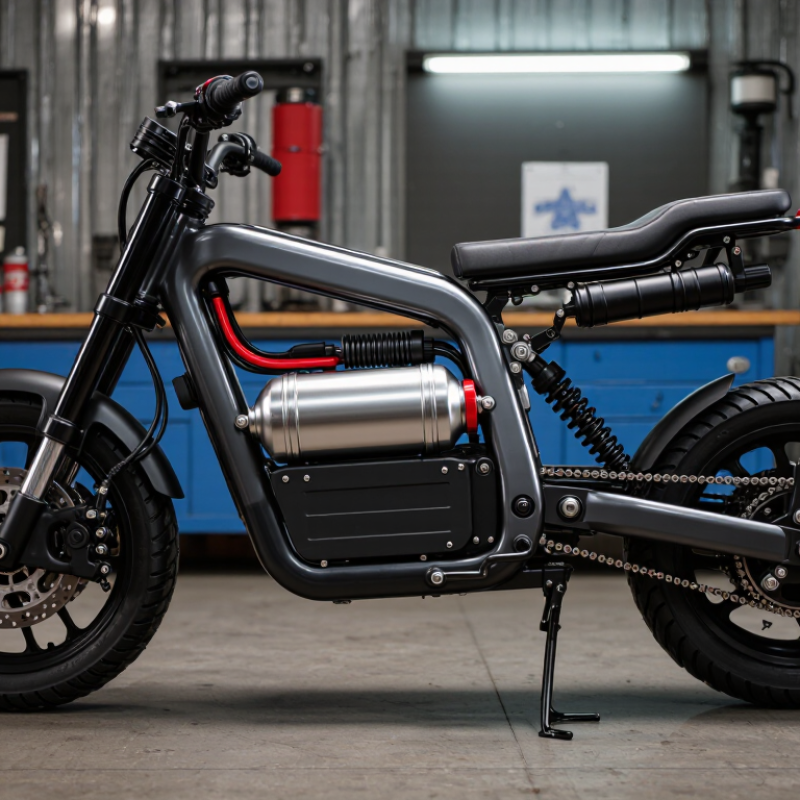
An electric motorcycle seat actuator is a compact powered mechanism that moves or locks a motorcycle seat. It usually combines a small electric motor, a gearbox, a lead screw, and a mounting bracket. When the rider presses a control, electrical energy becomes controlled linear movement. The actuator may lift the seat, lower it, or release a locking point. It is different from a simple seat hinge because it provides powered adjustment and repeatable positioning.
In real riding conditions, the actuator must resist vibration, moisture, dust, and sudden loads. A reliable design uses sealed connectors, corrosion-resistant hardware, and limit switches that stop movement at the correct position. Engineers also check current draw, noise, travel speed, and emergency manual release. A seat that moves smoothly in a workshop may behave differently after months of road vibration. Small gaps matter.
Manufacturers usually test cycle life, temperature changes, water exposure, and load resistance before production. They also match the actuator’s stroke length with the seat frame and available installation space. Excessive force can damage the hinge or wiring. Insufficient force can leave the seat partly locked. In my experience, installation alignment is often underestimated. It deserves careful measurement. No actuator is perfect, and a quieter motor may sometimes offer slower movement or higher cost. Clear specifications and traceable testing help buyers compare electric motorcycle seat actuator manufacturers with greater confidence.
| Evaluation Dimension | Typical Technical Data | Why It Matters for a Motorcycle Seat | Recommended Verification Point |
|---|---|---|---|
| Product definition | A compact electromechanical device that converts electrical energy into controlled linear or rotary movement. | It can raise, lower, tilt, lock, or release an adjustable seat mechanism without manual adjustment. | Confirm whether the design requires linear travel, angular movement, or an integrated locking function. |
| Actuator architecture | Common configurations include a DC motor with a worm gear, spur gear, lead screw, or ball screw. | Gear and screw combinations provide the force, self-locking behavior, and compact packaging needed beneath a seat. | Request a cross-section drawing showing the motor, transmission, screw, guides, seals, and mounting points. |
| Nominal voltage | 12 V DC is common on many motorcycles; 24 V DC may be used in selected vehicle or specialty systems. | The actuator must operate within the motorcycle’s electrical system voltage range and transient conditions. | Check rated voltage, operating voltage range, reverse-polarity protection, and load-dump or surge requirements. |
| Typical linear stroke | Approximately 20–100 mm for compact adjustment mechanisms; the actual value depends on seat geometry. | Stroke determines the available seat-height or seat-angle adjustment range. | Measure the required movement between mechanical end positions and include clearance for tolerances. |
| Force capacity | Compact units are commonly selected in the approximate range of 100–1,000 N, subject to leverage and load direction. | The actuator must overcome rider load, seat friction, spring force, vibration, and possible misalignment. | Calculate static and dynamic loads, then apply an engineering safety factor rather than using rated force alone. |
| Operating speed | Typical compact screw-driven actuators operate at roughly 5–50 mm/s, depending on load and gearing. | Speed affects how quickly the rider can adjust the seat and influences motor heating and noise. | Evaluate speed at the actual operating load, not only the no-load speed listed in a catalog. |
| Position feedback | Options include limit switches, Hall-effect sensors, potentiometers, encoders, or current-based end detection. | Feedback supports repeatable adjustment, anti-jam logic, end-stop control, and electronic diagnostics. | Confirm sensor resolution, output type, end-of-travel behavior, and compatibility with the vehicle controller. |
| Ingress protection | IP ratings are defined by IEC 60529; outdoor vehicle applications commonly evaluate protection against dust and water exposure. | The seat area may be exposed to rain, washing, road spray, dust, mud, and condensation. | Verify the exact IP rating, test conditions, connector sealing, cable-gland design, and water-drainage orientation. |
| Duty cycle | Many compact DC actuators use intermittent operation, such as short movement periods followed by cooling time. | Repeated adjustment without adequate cooling can cause thermal overload, reduced service life, or shutdown. | Request the duty-cycle definition, maximum continuous run time, rest period, and thermal protection method. |
| Noise and vibration | Noise is influenced by motor commutation, gear ratio, screw pitch, bearings, mounting stiffness, and load. | Low noise improves rider comfort and reduces perceived vibration through the seat structure. | Ask for sound-pressure test conditions and evaluate the actuator in the final seat mounting structure. |
| Self-locking capability | Worm gears and certain lead-screw arrangements can resist back-driving; ball screws generally require a separate brake or lock. | Self-locking can help maintain seat position when power is removed, but it does not replace structural restraint where safety requires it. | Confirm back-drive force, holding load, emergency release, and independent mechanical locking provisions. |
| Mechanical mounting | Typical mounting features include clevises, eyelets, threaded ends, brackets, or compact flange mounts. | Correct alignment prevents side loading, binding, premature wear, and excessive motor current. | Check mounting dimensions, allowable side load, angular misalignment, fastener retention, and service access. |
| Environmental durability | Relevant stresses include vibration, shock, temperature cycling, humidity, corrosion, dust, and chemical exposure. | Motorcycles experience changing road conditions and outdoor storage environments that can affect seals, connectors, and lubricants. | Review validation testing against the vehicle manufacturer’s environmental and vibration requirements. |
| Control interface | Basic systems use polarity reversal; advanced systems may use PWM control, discrete signals, or a vehicle communication network. | The interface determines integration complexity, diagnostic capability, and protection against unintended movement. | Define connector pinout, current limits, control logic, fault states, and manual override requirements. |
| Safety functions | Possible features include current limiting, thermal cut-off, end-of-travel switches, obstruction detection, and emergency release. | These functions help reduce pinch, overload, overheating, and unintended seat movement risks. | Document failure modes and validate the complete seat mechanism, not only the actuator in isolation. |
| Manufacturer assessment | Key criteria include engineering capability, production traceability, test facilities, customization support, quality controls, and after-sales documentation. | A technically suitable actuator is only valuable when its performance is consistent across production batches. | Request drawings, test reports, sample approval records, process controls, warranty terms, and lifecycle support commitments. |
| Best-fit recommendation for 2026 projects | For most adjustable motorcycle-seat designs, begin with a compact 12 V DC screw-driven linear actuator featuring sealed connectors, end-of-travel protection, suitable feedback, and verified environmental resistance. | This configuration offers a practical balance of compact size, controllable movement, load capacity, and integration flexibility. | Select the final unit only after testing the complete seat, including structure, upholstery, linkage, wiring, controller, and rider-load conditions. |
Technical values shown are general engineering ranges for preliminary comparison. Final selection should be based on application-specific calculations, supplier datasheets, prototype testing, and applicable vehicle requirements.
It is a powered mechanism that moves or locks a motorcycle seat. It usually contains a motor, gearbox, lead screw, and bracket.
A control sends electrical power to the motor. The gearbox and lead screw convert rotation into controlled linear movement.
It should resist vibration, moisture, dust, and sudden loads. Sealed connectors and corrosion-resistant hardware provide useful protection.
Limit switches stop movement at the correct position. They help prevent excessive force against the hinge, frame, or wiring.
Compare lifting force, stroke length, response speed, current draw, noise, and mounting dimensions. Installation space matters too.
Yes, many systems use 12V or 24V power. The actuator must match the motorcycle’s electrical system and control design.
Request drawings, cycle-test results, temperature data, corrosion checks, and load measurements. Clear limitations are a positive sign.
A polished prototype may fail after extended vibration. Test travel consistency, backlash, current draw, and emergency release behavior.
Poor alignment is frequently underestimated. Small gaps matter. Measure the seat frame carefully before fixing the actuator.
Not always. A quieter motor may move more slowly or cost more. No actuator is perfect, and trade-offs deserve review.
An Electric Motorcycle Seat Actuator is a compact electromechanical device designed to adjust, lift, or lock a motorcycle seat with smooth and reliable movement. A high-quality actuator should offer strong load capacity, quiet operation, accurate positioning, low power consumption, weather resistance, and long service life. Safety features such as overload protection, stable locking, and dependable performance under vibration are also essential for daily riding and demanding conditions.
When evaluating manufacturers in 2026, motorcycle companies should review engineering capabilities, customization options, material quality, testing procedures, production consistency, delivery reliability, and after-sales support. The leading manufacturers are those able to provide durable solutions tailored to different seat structures, control systems, and installation spaces. The best choice depends on the motorcycle project’s technical requirements, target cost, expected production volume, environmental conditions, and certification needs. Careful comparison and sample testing can help ensure the selected supplier delivers a safe, efficient, and long-lasting actuator system.